Digital Transformation has pushed different tech domains to the next level in recent years, and data science is at the top of the sphere. Demand for data science professionals will continue to grow as organizations across different sectors like e-commerce, finance, and technology increasingly rely on data-driven decision-making. Industrial reports state India currently has over 84,000 active Data Science job listings, while the country is expected to require more than 1 million Data Science and AI professionals by 2027. This is causing a significant increase in interest for direct admission in data science courses. In today’s date, students have options to choose between different data science admission pathways, which include either the traditional way to enter through entrance-based admissions or merit-based admissions that offer an industry-focused degree program. This change in trends shows the growing popularity of skill-based education and overall data science as a domain globally. In this guide, we will explore the data science admission process, eligibility requirements, advantages, disadvantages, and key factors that you should evaluate, such as return on investment (ROI), before choosing a Data Science Program.
What Is Direct Admission in Data Science Courses?
Direct Admission in data science refers to the process of enrolling in a Data Science program, but not using the traditional route through entrance exams. Instead of relying on entrance exam scores, universities evaluate applicants based on academic performance and institute-level admission criteria. With an increase in demand for Data Science professionals, institutes are offering flexible data science admission pathways to make education more accessible.
Meaning of Direct Admission
Direct Admission in data science courses allows students to actually secure admission through merit-based selection criteria or institution-specific admission processes. The traditional entrance-based route is time-consuming for those who want to start their career in data science, which in turn has increased the popularity of direct admission data science courses.
Types of Courses Offering Direct Admission
There are several pathways for you to become a data scientist through direct data science admission. This includes professional certification programs, private college degree programs, and online learning platforms. These options provide flexibility for students seeking industry-relevant education without undergoing a lengthy entrance examination process.
Basic Eligibility Criteria
The eligibility criteria depend on the academic level at which one is applying to study and the educational institution he/she wishes to join. The majority of undergraduate courses demand a minimum qualification of 10+2 from an authorized examination board, while postgraduate courses will require the applicants to have attained a degree level. There are many educational institutions offering data science courses without entrance tests that emphasize academic excellence only.
Read more: Data Science vs Data Analytics
Why Direct Admission Is Gaining Popularity
The popularity of direct admission to data science courses has increased significantly in recent years due to the growing demand for Data Science professionals and the shift toward industry-focused learning. Students today prefer flexible data science admission pathways that allow them to begin learning and building job-ready skills faster.
Shift to Skill-Based Education
The eligibility criteria depend on the academic level at which a student is applying and the educational institution he or she wishes to join. The majority of undergraduate courses demand a minimum qualification of 10+2 from an authorized examination board, while postgraduate courses will require the applicants to have attained a degree level. There are many educational institutions offering data science courses without entrance tests that emphasize academic excellence only.
Faster Career Entry
One of the most important benefits of taking up direct admission in Data Science is that students will get to learn right away without wasting months preparing for competitive exams. This allows students to join early, take up projects and internships, and even create their portfolio at an early stage.
Accessibility for All Backgrounds
In India, many Data Science courses have been formulated in such a way that students from different streams of education, like science, commerce, and arts, can easily join them. There are several universities offering data science without an entrance exam, which means more access to Data Science education. For instance, some of the undergraduate Data Science programs admit students from any stream based on merit.
Advantages of Direct Admission
The rise in demand for direct admission in data science courses is mainly due to the convenience and flexibility it offers to students. The ability to begin learning without lengthy entrance exam preparation can actually accelerate your educational and career journey. Let’s discuss how the true value of data science admission depends on selecting a quality program that combines academics with practical industry exposure.
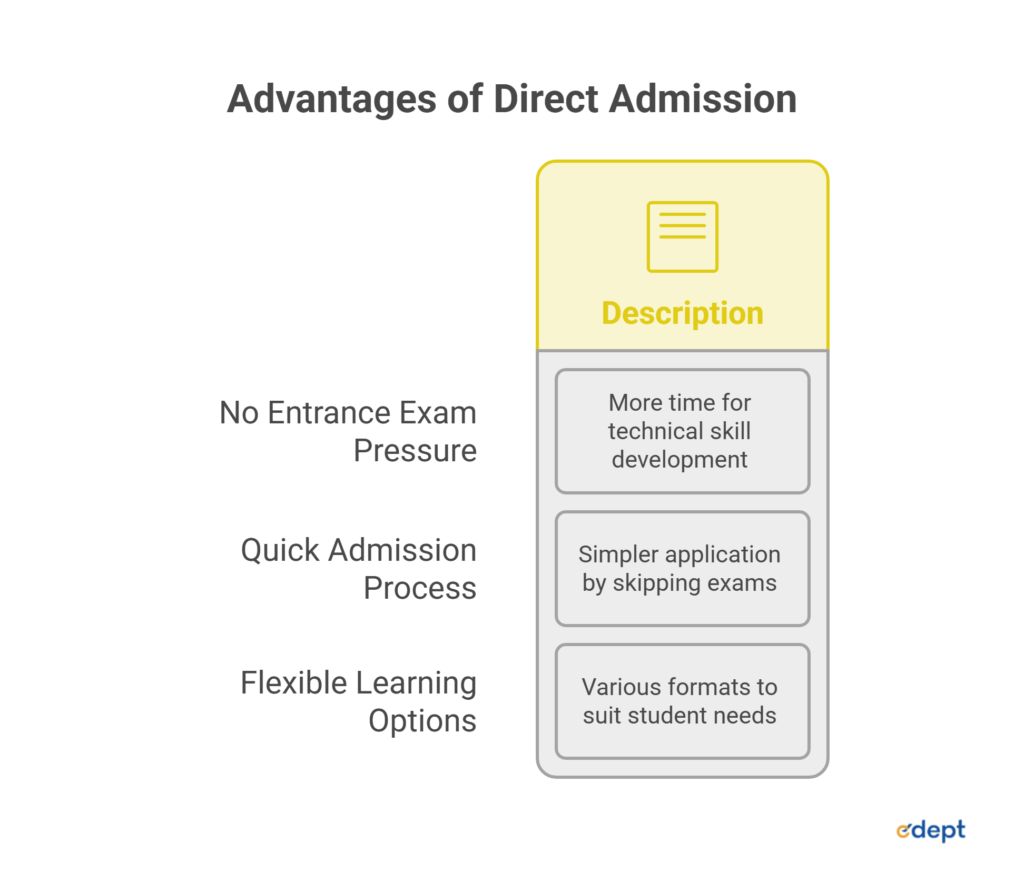
No Entrance Exam Pressure
The most important benefit of direct admission to data science classes is that one can invest more effort in developing one’s technical abilities because one will not need to spend months studying for entrance examinations. This will decrease academic stress significantly and will give one more opportunity to learn to program, analyze data, learn machine learning methods, do projects, get certifications, and more.
Quick Admission Process
As far as the speed of the admissions process for data science programs is concerned, this issue can be solved by skipping entrance examinations, since applying to such programs can become a much simpler procedure.
Flexible Learning Options
Many institutions offer direct data science admission with flexible learning formats to accommodate different students’ needs. The options include:
- Full-time degree programs
- Online certification courses
- Hybrid learning models
- Part-time programs for working professionals
- Self-paced learning pathways
This flexibility has made data science without an entrance exam program accessible to students globally seeking to build industry-relevant skills to thrive in the data science domain.
Apply for B.Sc in Data Science by Shree LR Tiwari Degree College powered by edept!
Disadvantages You Must Consider
While direct admission in data science courses offers convenience and faster enrollment, it is important to evaluate potential drawbacks before making a decision. Not all programs provide the same level of academic quality, industry exposure, or career support. Students should carefully assess institutions before completing the data science admission process.
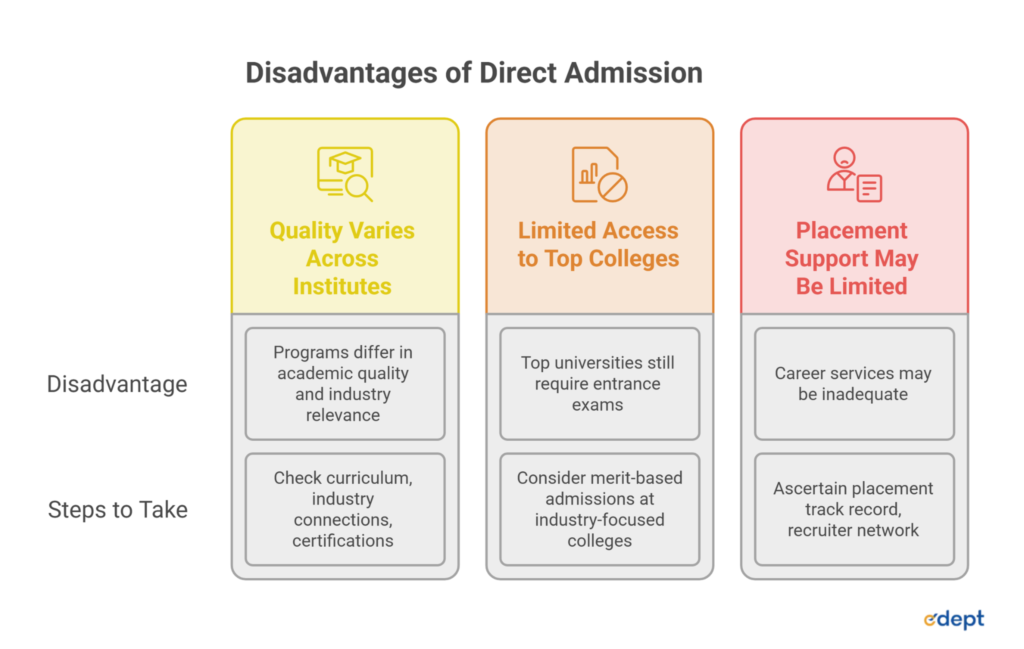
Quality Varies Across Institutes
The issue that poses a challenge for direct admissions into data science programs is the difference in the quality of the programs. While some educational institutions provide courses and internships aligned to the current industry needs, others only teach theoretical information. Before applying to the course, check the program curriculum, industry connections, certifications, practical training, etc., in order to make sure it is in demand.
Limited Access to Top Colleges
Despite the changes that many educational institutions are undergoing, some highly selective institutions still require candidates to pass entrance examinations. Hence, students who want to apply to data science programs at top universities will be unable to do so if they do not have such entry test results. However, some industry-focused colleges provide merit-based admissions nowadays.
Placement Support May Be Limited
Not every institution offering direct data science admission provides structured career services. Some courses may lack internship opportunities, poor industry links, or inadequate placement help. Students need to ascertain the placement track record, the network of recruiters, internships, and career assistance before joining any course. An ideal Data Science course must incorporate industry projects, career counseling, resume building, and employer contacts.
Direct Admission vs Entrance-Based Admission
Many students compare direct admission in data science courses with entrance-based admissions before making a decision. While the admission process differs significantly, the quality of education and career outcomes often depend more on the institution, curriculum, practical exposure, and industry connections than the admission route itself. Understanding these differences can help students make a more informed data science admission decision.
Admission Process Comparison
The key difference between the two approaches is in the admission method. In direct admission, merit-based admission to data science classes enables students to join the program without having to undertake any entrance exams. The entrance approach entails passing through competitive exams before admission.
| Factor | Direct Admission | Entrance-Based Admission |
| Admission Process | Merit-based or institute-level selection | Competetive entrance exams |
| Application Timeline | Faster | Longer |
| Admission Difficulty | Moderate | High |
| Accessibility | More flexible | More competitive |
Curriculum & Learning Quality
Entrance-based courses do not necessarily guarantee superior education. Indeed, educational excellence depends on other elements, including curriculum planning, teaching competence, hands-on projects, certification, and internship, among others. It is crucial to consider the aforementioned factors rather than being obsessed with the admissions process into the field of data science.
Career Success
Employers generally prioritize technical skills, project experience, certifications, internships, and problem-solving abilities over the admission route. Whether a student chooses data science without entrance exam pathways or entrance-based programs, long-term career success is usually determined by practical skills, portfolio strength, and industry readiness.
Cost vs ROI Analysis
While considering the benefits associated with direct admission in data science courses, it is necessary to move beyond the consideration of cost and evaluate the total return on investment that can be gained from such an educational program. There is no doubt that the combination of exposure to the industry, certificates, internships, and placements will bring much more success in one’s career than lower-cost alternatives.
Course Fees
The price for data science courses in India can depend on different factors, including the type of the course. For instance, certification courses tend to be cheaper and shorter than undergrad courses, which entail higher costs but offer more technical knowledge as well as internships and industry projects, along with other perks. It is vital to compare the course curriculum, certificates, and other benefits alongside their prices.
Job Opportunities
A graduate of a Data Science program may apply for some jobs that include positions of Data Analyst, Business Intelligence Analyst, Data Engineer, Machine Learning Engineer, and Junior Data Scientist. The salary for entry-level positions in Data Science ranges from ₹3.5-11 LPA.
ROI Factors
The return on your investment from direct admission in data science courses directly depends on several factors that lie beyond just academics. Some key considerations include:
- Industry-recognized certifications
- Hands-on projects and capstone work
- Internship opportunities
- Placement support and recruiter network
- Practical exposure to real-world datasets
A program that provides an equal combination of these key elements provides the best chances of employability and better long-term career growth than traditional programs focused solely on classroom learning.
Also read: Data Science courses for beginners
Who Should Consider Direct Admission?
Direct admission in data science courses is not just for students looking to avoid entrance exams. A very useful route for individuals seeking to gain practical skills fast and prepare themselves for career paths in Data Science, AI, analytics, and other similar areas. The appropriate route for you is determined by a variety of factors, such as career aspirations and personal circumstances.
Students Desiring Early Employment Opportunities
Students who want to begin their Data Science journey without spending months preparing for entrance examinations may benefit from direct admission in data science courses. They allow students to start gaining technical expertise earlier.
Working Professionals
Working professionals interested in upskilling themselves or changing careers and venturing into the Data Science realm are usually attracted to programs offering more flexible data science admission requirements.
Career Switchers
Data scientists from other professions, such as those working in non-technical, business, commercial, and any other area, can equally enjoy the advantages of data science without having to undertake entrance examination programs. Most current Data Science classes are built in a way that enables students with little experience to learn skills in programming, analytics, machine learning, and data visualization slowly but steadily.
Key Factors to Evaluate Before Applying
Choosing the right program is more important than simply securing direct admission in data science courses. A good program possesses some great benefits like good curriculum quality, practical exposure, and career support that influence students to join them instead of a traditional theory-based teaching program. Before you start the process of data science admission, carefully evaluate everything the program will offer, like curriculum, teaching staff, industry exposure, and placement support.
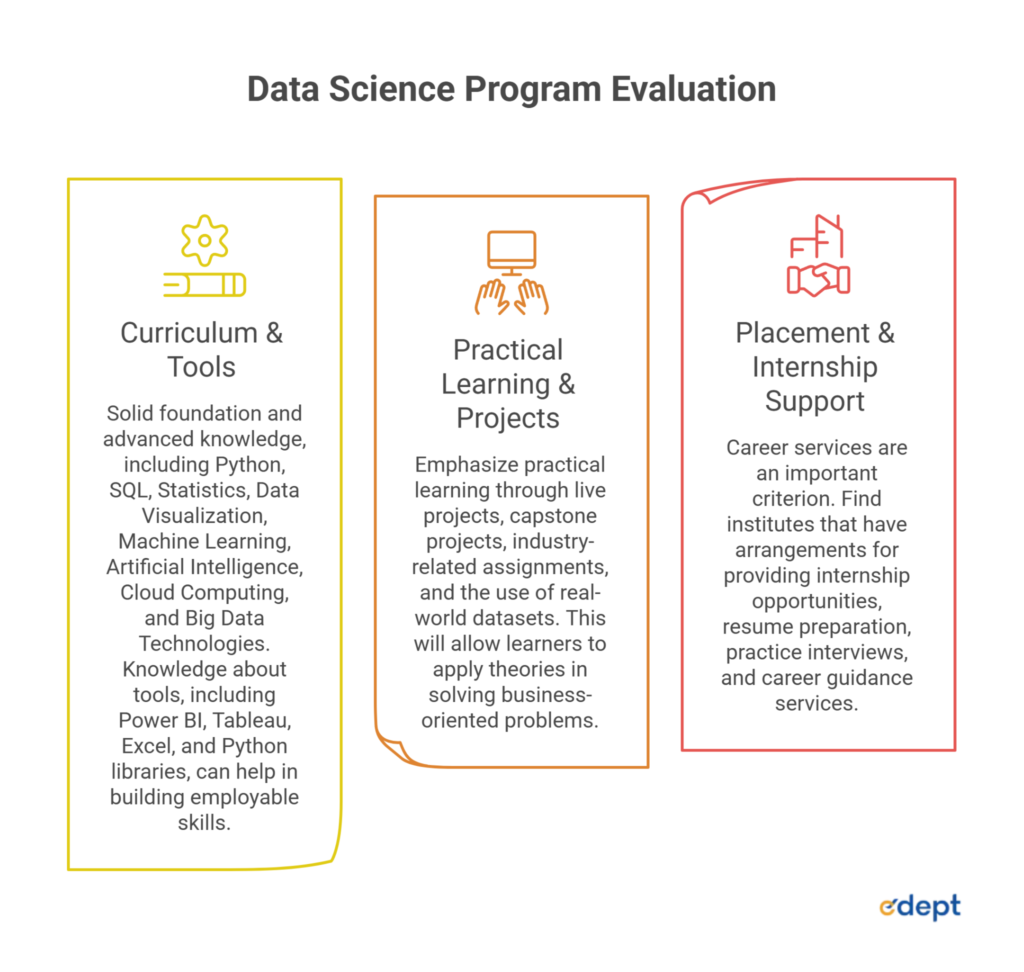
Curriculum & Tools Covered
The Data Science program must have a solid foundation as well as advanced knowledge. Therefore, one should consider programs that include topics like Python, SQL, Statistics, Data Visualization, Machine Learning, Artificial Intelligence, Cloud Computing, and Big Data Technologies. Knowledge about tools, including Power BI, Tableau, Excel, and Python libraries, can help in building employable skills.
Practical Learning & Projects
It is not sufficient to focus on the theoretical aspect only to become successful in the Data Science field. Students need to look for programs that emphasize practical learning through live projects, capstone projects, industry-related assignments, and the use of real-world datasets. This will allow learners to apply theories in solving business-oriented problems.
Placement & Internship Support
Career services are an important criterion in choosing direct admission in data science courses. One must find institutes that have arrangements for providing internship opportunities, resume preparation, practice interviews, and career guidance services. Programs that provide certification by industry, global projects, and internships will surely increase employability among data science aspirants.
Common Mistakes to Avoid
While direct admission in data science courses may sound the best path into the data science field, one wrong step and all your preparation and effort will go to vain. A wrong choice can affect your learning experience and career outcomes. Before you complete the overall data science admission process, avoid these some common mistakes.
Choosing Low-Quality Institutes
Not all institutions offering direct admission in data science courses provide the same educational value. You must not rely on marketing gimmicks while making a choice among several available programs. Instead, take a look at the curriculum, teaching faculty, industry certifications, practical experience, and industry associations.
Ignoring Placement Records
Most candidates consider only the admission process and ignore the results of placements. Always check whether there are any internship facilities, recruitment channels, statistics of placements, alumni testimonials, and other career development facilities. Quality placement services may be crucial in ensuring your future employment.
Focusing Only on Low Fees
It may be quite costly to go for an expensive course. In some cases, investing in a better program that provides industry-based projects, certifications, internships, and placements can be worth the money.
Final Verdict: Is It Worth It?
Yes, direct admission in data science courses can be worthwhile, depending on whether the course is oriented toward practical training, exposure to the industry, and employability. It is because many organizations no longer care about how a student was admitted to the institution, but instead focus on what the candidate can do technically and practically. However, not all programs that offer direct data science admission are worth it and deliver the same value. Many courses offer outdated curricula and weak placement support, which leads to bad career outcomes. This is the exact reason you should always check every aspect of a data science program before you opt for direct admissions. Ultimately, what matters is the skillset and not how one is admitted. Whether it is a data science course with no entrance exam track or one based on the entrance exam process, success will ultimately rely on the skills that are developed during the course of study. Related Links:
| Job-Focused Data Science Programs | Data Science Courses for Beginners |
| Is Data Analytics good career in India? | Will AI replace Data Analyst? |