Remote work has transformed the global IT industry, making technical skills far more important than physical location. Today, companies hire talented software developers, cloud engineers, cybersecurity professionals, AI engineers, and data analysts from different parts of the world to collaborate on digital products and business solutions.
According to the World Economic Forum’s Future of Jobs Report 2025, technology-related roles, including software development, AI, cybersecurity, and data specialists, are among the fastest-growing professions globally, driven by rapid digital transformation across industries.
This guide explores the best remote jobs after MCA, the skills and certifications required, expected salary ranges, industries hiring remote professionals, and a practical roadmap to help you build a successful global IT career from anywhere.
Why Remote Work is Growing in the IT Industry
Working remotely has moved from being a temporary solution to a permanent plan for many tech companies. According to the Future of Jobs Report 2025 by the World Economic Forum, technological innovations and digital transformation have changed employment globally, creating a huge need for tech specialists around the world.
Digital Transformation Across Businesses
Unlike other industries that require employees to be on-site, the majority of IT jobs, including software development and cloud computing, can be done safely from any location. That is why the field of IT stands out as one of the most flexible industries.
Rise of Remote-First Companies
Technology firms now work in a remote-first or distributed manner. They do not source their workforce from one place but consider their skills and experience without taking any geographic constraints into account. Tools like Microsoft Teams, Slack, GitHub, Jira, Zoom, and Notion have made it easy for these organizations to collaborate, manage projects, and deliver software through communication and project management.
Global Demand for Skilled Tech Professionals
The shortage of skilled technology workers continues to exceed demand in many nations. As per the World Economic Forum Future of Jobs Report 2025, jobs in software development, artificial intelligence, big data, cybersecurity, and networking continue to be some of the top rising occupations in the world. Individuals who have expertise in programming, project work, cloud, and communications will have ample opportunities for remote jobs after MCA.
Increased Adoption of Cloud Technologies
Cloud computing technology has formed the foundation of modern IT architecture. Many firms today depend on technologies like AWS, Azure, and Google Cloud for hosting apps, storing information, deploying artificial intelligence, and managing enterprise-level systems. Due to the fact that the cloud infrastructure exists online, engineers have the ability to monitor servers, deploy apps, automate operations, and troubleshoot from any location.
Why MCA Graduates Are Well-Suited for Remote Careers
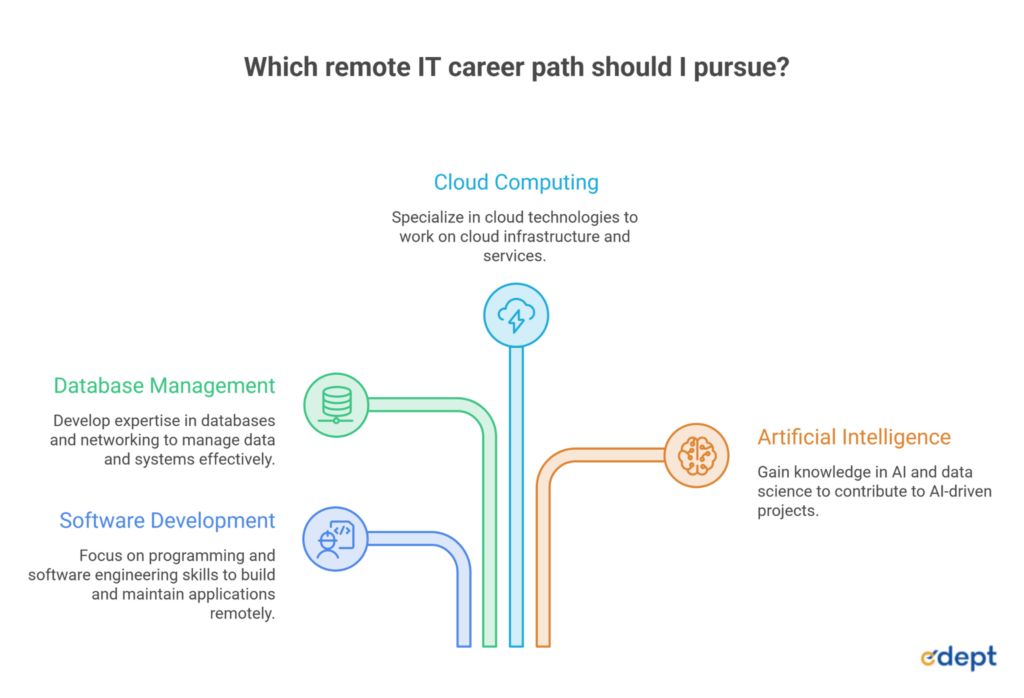
An MCA degree provides students with technical expertise that matches perfectly with the demands of modern-age remote IT jobs. From software development and database management to cloud computing and AI, the course prepares individuals with the skills which an employer looks for when hiring remote workers.
Strong Programming Foundation
Programming is the backbone of most remote IT roles. MCA students build proficiency in Python, Java, data structures, algorithms, and practical programming, enabling them to develop, test, and maintain software applications remotely.
Knowledge of Software Development
Remote software teams rely on professionals who understand the complete software development lifecycle. MCA coursework covers Software Engineering, Web Technologies, project work, and software architecture, preparing graduates to contribute effectively to distributed development teams.
Experience with Databases and Networking
Database management and networking are essential for roles such as backend developer, cloud engineer, and system administrator. The MCA curriculum includes Database Management Systems, Computer Networks, Operating Systems, and Linux Administration, providing the technical foundation needed for many remote jobs after MCA.
Ability to Work Across Multiple Technology Domains
Modern remote employers value professionals with versatile technical skills. The MCA programme offers specialised tracks in AI & Data Science, Cyber Security & Cloud Computing, and Web & Cloud, allowing students to build expertise in high-demand technology domains through projects and internships.
Best Remote Jobs After MCA
The demand for remote jobs after MCA has grown rapidly as organisations adopt cloud technologies, distributed engineering teams, and digital-first business models. According to the World Economic Forum, the number of global digital jobs that can be performed remotely is projected to reach around 92 million by 2030.
Software Developer
Software Developer remains one of the most common and accessible remote jobs after MCA. Companies hire remote developers to build web applications, enterprise software, desktop applications, APIs, and internal business tools. Daily Responsibilities:
- Designing and developing software applications
- Write clean, scalable, and reusable code
- Fix bugs and optimize application performance
- Collaborate through Git, GitHub, Jira, and Agile sprints
- Participate in code reviews and technical discussions
Skills required:
- Java, Python, C#, or JavaScript
- Data Structures & Algorithms
- Git and GitHub
- SQL
- Object-Oriented Programming
- REST APIs
Industries hiring:
- SaaS
- FinTech
- Healthcare
- EdTech
- E-commerce
- Enterprise software
Salary range:
| Entry-Level | ₹5–10 LPA |
| Mid-Level | ₹12–22 LPA |
| Global remote | US$80,000–140,000 |
Career progression: Software Developer → Senior Developer → Tech Lead → Software Architect → Engineering Manager Excellent for Remote work suitability.
Full Stack Developer
Full Stack Developers are among the most sought-after professionals in the remote hiring market because they can build both frontend and backend systems. Many startups specifically recruit full-stack engineers to reduce development costs while accelerating product delivery. Daily responsibilities:
- Build responsive frontend interfaces
- Develop backend services and APIs
- Integrate databases and third-party services
- Deploy applications
Skills required:
- HTML, CSS, JavaScript
- React or Angular
- Node.js, Java, Spring Boot, or Python
- SQL & NoSQL databases
- REST APIs
- Git
Industries hiring:
- SaaS
- Product companies
- Startups
- E-commerce
- Digital agencies
Salary range:
| Entry-Level | ₹6–12 LPA |
| Mid-Level | ₹15–28 LPA |
| Global remote | US$90,000–150,000 |
Career Progression: Junior Full Stack Developer → Full Stack Developer → Senior Developer → Technical Architect Excellent Remote work suitability.
Cloud Engineer
With the migration of applications from companies to AWS, Microsoft Azure and Google Cloud, Cloud Engineers have now emerged as an important member of remote engineering teams. This is because cloud infrastructure can be managed using online platforms; hence, it is one of the fastest-growing remote jobs after MCA.
Daily responsibilities
- Deploy cloud infrastructure
- Configure virtual servers
- Monitor cloud resources
- Improve cloud security
- Optimise cloud costs
Skills required
- AWS, Azure, or Google Cloud
- Linux
- Docker
- Kubernetes
- Terraform
- Networking fundamentals
Industries hiring
- Cloud service providers
- Banking
- Telecom
- Healthcare
- Enterprise IT
Salary range
| Entry-level | ₹8–15 LPA |
| Mid-level | ₹18–30 LPA |
| Global remote | US$90,000–160,000 |
Career progression
Cloud Engineer → Senior Cloud Engineer → Cloud Architect → Cloud Solutions Manager Excellent remote work suitability.
DevOps Engineer
DevOps combines software development with IT operations to automate software delivery. Organisations increasingly depend on remote DevOps teams to maintain cloud infrastructure, deployment pipelines, and application reliability.
Daily responsibilities
- Build CI/CD pipelines
- Automate deployments
- Manage Docker containers
- Configure Kubernetes clusters
- Monitor production systems
- Improve application reliability
Skills required
- Docker
- Kubernetes
- Jenkins
- GitHub Actions
- Terraform
- Linux
- AWS or Azure
- Bash or Python scripting
Industries hiring
- SaaS
- Cloud companies
- FinTech
- Enterprise software
- Gaming
- E-commerce
Salary range
| Entry-level | ₹8–16 LPA |
| Mid-level | ₹20–35 LPA |
| Global remote | US$100,000–170,000 |
Career progression
DevOps Engineer → Senior DevOps Engineer → Site Reliability Engineer (SRE) → Platform Architect Excellent remote work suitability.
Data Analyst
Every business generates massive volumes of data, making Data Analysts critical for turning information into actionable insights. Since dashboards, reports, and datasets are shared digitally, this is one of the most practical remote jobs after MCA, especially for graduates interested in analytics.
Daily responsibilities
- Analyse business data
- Clean and organise datasets
- Create dashboards
- Generate reports
- Present insights to stakeholders
Skills required
- SQL
- Python
- Excel
- Power BI
- Tableau
- Statistics
Industries hiring
- Banking
- Retail
- Healthcare
- Logistics
- Marketing
- Consulting
Salary range
| Entry-level | ₹5–10 LPA |
| Mid-level | ₹12–20 LPA |
| Global remote | US$75,000–130,000 |
Career progression
Data Analyst → Senior Data Analyst → Business Intelligence Analyst → Analytics Manager Very High remote work suitability.
Data Scientist
Data Scientists help organisations extract meaningful insights from large datasets and build predictive models that support strategic decision-making. As businesses increasingly rely on AI and data-driven operations, Data Science has become one of the fastest-growing remote jobs after MCA.
Daily responsibilities
- Build predictive and statistical models
- Analyse structured and unstructured datasets
- Perform feature engineering and data preprocessing
- Develop machine learning solutions
- Present insights to business stakeholders
Skills required
- Python or R
- SQL
- Machine Learning
- Statistics
- Pandas, NumPy, Scikit-learn
- Data visualisation (Power BI/Tableau)
Industries hiring
- Banking & Finance
- Healthcare
- Retail
- E-commerce
- Consulting
- Technology companies
Salary range
| Entry-level | ₹7–14 LPA |
| Mid-level | ₹18–35 LPA |
| Global remote | US$95,000–170,000 |
Career progression
Data Scientist → Senior Data Scientist → Lead Data Scientist → Head of Data Science Excellent remote work suitability.
AI Engineer
Artificial Intelligence is transforming industries through intelligent automation, recommendation systems, generative AI, and computer vision. As organisations continue integrating AI into products and services, AI Engineers are among the most sought-after professionals for remote jobs after MCA.
Daily responsibilities
- Design and develop AI applications
- Train and optimise machine learning models
- Deploy AI solutions into production
- Work with large datasets
- Collaborate with software development teams
Skills required
- Python
- TensorFlow or PyTorch
- Machine Learning
- Deep Learning
- Natural Language Processing
- MLOps fundamentals
Industries hiring
- AI startups
- SaaS companies
- Healthcare
- FinTech
- Manufacturing
- Research organisations
Salary range
Entry-level: ₹8–15 LPA Mid-level: ₹20–40 LPA Global remote: US$110,000–180,000
Career progression
AI Engineer → Senior AI Engineer → Machine Learning Architect → AI Solutions Architect Excellent remote work suitability.
Cybersecurity Analyst
With the trend in organizations moving their workloads into cloud infrastructure, cybersecurity professionals work remotely with cloud security tools and SOCs. Due to this, Cybersecurity Analyst has become one of the most steady remote jobs after MCA.
Daily responsibilities
- Monitor security threats and alerts
- Conduct vulnerability assessments
- Investigate security incidents
- Implement security controls
- Prepare security reports
Skills required
- Networking
- Linux
- SIEM tools
- Ethical hacking basics
- Cloud security
- Incident response
Industries hiring
- Banking
- Government
- Healthcare
- Telecom
- Cloud providers
- Consulting firms
Salary range
| Entry-level | ₹6–12 LPA |
| Mid-level | ₹15–30 LPA |
| Global remote | US$90,000–160,000 |
Career progression
Cybersecurity Analyst → Security Engineer → SOC Lead → Security Architect Excellent remote work suitability.
QA Automation Engineer
The software firms of today depend on automation testing in order to ensure the quality of applications developed by them in a short span of time. Since the testing tool, source code, and the deployment environment are based in the cloud, this job is one of the easiest to do remotely after MCA.
Daily responsibilities
- Develop automated test scripts
- Execute regression and functional testing
- Report and track software defects
- Collaborate with developers
- Improve software quality throughout the development lifecycle
Skills required
- Selenium
- Java or Python
- TestNG or JUnit
- API Testing
- SQL
- Git
Industries hiring
- SaaS
- Product companies
- FinTech
- Healthcare
- Gaming
- E-commerce
Salary range
| Entry-level | ₹5–10 LPA |
| Mid-level | ₹12–22 LPA |
| Global remote | US$75,000–130,000 |
Career progression
QA Engineer → QA Automation Engineer → Senior QA Engineer → QA Manager Excellent remote work suitability.
Technical Support Engineer (Cloud/Saas)
Technical Support Engineers help customers troubleshoot cloud applications, enterprise software, and SaaS platforms. Many global software companies provide customer support remotely, making this one of the best entry-level remote jobs after MCA.
Daily responsibilities
- Resolve technical issues raised by customers
- Troubleshoot cloud applications and software platforms
- Guide users through technical solutions
- Escalate complex issues to engineering teams
- Maintain support documentation
Skills required
- Operating Systems
- Networking basics
- Cloud fundamentals
- SQL
- Customer support tools
- Communication skills
Industries hiring
- SaaS companies
- Cloud providers
- IT services
- Enterprise software
- EdTech
- CRM providers
Salary range
| Entry-level | ₹5–10 LPA |
| Mid-level | ₹12–22 LPA |
| Global remote | US$75,000–130,000 |
Career progression
Technical Support Engineer → Product Support Specialist → Customer Success Engineer → Solutions Engineer Very High remote work suitability.
Also read: Career Scope after MCA
Skills Required for Remote MCA Jobs
Technical skills are essential for any kind of remote career as an IT professional. Though MCA gives you an understanding of basic concepts of computer science, companies prefer candidates who can implement these concepts through the latest tools and collaboration platforms. Being skilled in more than one technology helps you secure remote jobs after MCA.
Programming (Python, Java, JavaScript)
Programming remains the most essential skill for almost every remote technology role. Python is widely used in AI, data science, automation, and backend development, while Java powers enterprise applications and JavaScript is the backbone of modern web development.
SQL and Database Management
Most software applications rely on databases to store and manage information. Knowledge of SQL, database design, indexing, and query optimisation enables professionals to build efficient applications, analyse business data, and support cloud-based systems.
Cloud Platforms (AWS, Azure, Google Cloud)
Using the cloud is now an essential criterion for all job positions in the IT sector. Companies are increasingly seeking professionals capable of using the cloud for application deployment, configuration of cloud infrastructure and virtual machines, and cloud-based services.
Git and GitHub
Remote development teams collaborate through version control systems, making Git and GitHub indispensable tools. These platforms help developers manage code changes, review contributions, resolve conflicts, and maintain project history.
APIs and Microservices
Modern software applications communicate through Application Programming Interfaces (APIs), while many enterprise systems are built using microservices architecture. Understanding REST APIs, API integration, authentication, and microservices enables developers to build scalable applications and collaborate effectively across distributed engineering teams.
Linux Basics
Linux powers a large percentage of cloud servers and enterprise systems. Basic knowledge of Linux commands, shell scripting, file permissions, process management, and server administration is valuable for software developers, cloud engineers, DevOps professionals, and cybersecurity analysts.
DevOps Fundamentals
Employers increasingly expect developers to understand the software deployment process. Knowledge of Docker, Kubernetes, CI/CD pipelines, Jenkins, GitHub Actions, and Infrastructure as Code helps professionals automate software delivery and collaborate more efficiently with operations teams.
AI and Data Analytics (Optional Specialization)
Specialising in Artificial Intelligence or Data Analytics can open doors to some of the fastest-growing remote careers. Skills in machine learning, data visualisation, predictive analytics, and AI frameworks are highly valued across industries. The MCA programme offers dedicated specialisation tracks in AI & Data Science, enabling students to develop expertise in these emerging technologies.
Essential Soft Skills for Remote Professionals
While technical knowledge may be an important criterion for getting remote jobs after MCA, soft skills may actually play a more important role in your performance and development in a remote work environment. Due to the fact that virtual teams depend on virtual communication, companies tend to hire employees with good communication, management and independent working skills.
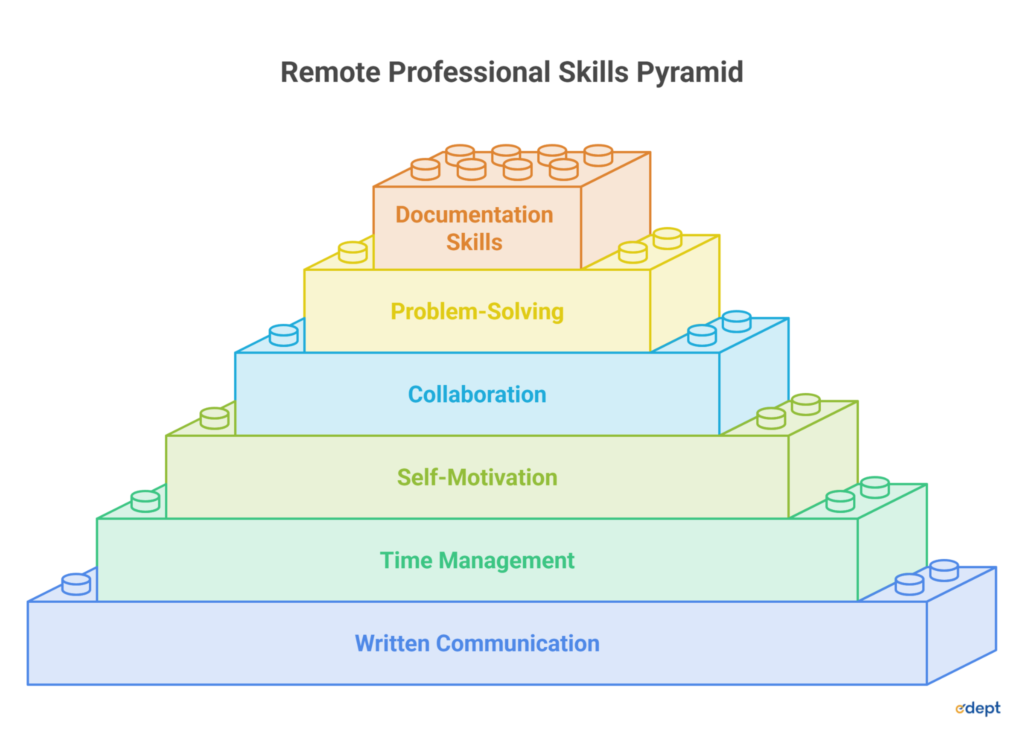
Written Communication
Remote teams communicate primarily through emails, chat platforms, project management tools, and documentation. Writing clear, concise, and professional messages helps avoid misunderstandings and keeps projects on track.
Time Management
Remote professionals must prioritise tasks, meet deadlines, and balance multiple responsibilities without direct supervision. Effective time management improves productivity and builds trust with managers and clients.
Self-Motivation
Working remotely requires discipline and accountability. Professionals who stay focused, take initiative, and consistently deliver quality work are more likely to succeed in long-term remote roles.
Collaboration Across Time Zones
Many remote teams operate across different countries and time zones. Flexibility, respect for varying schedules, and effective virtual collaboration ensure seamless teamwork on global projects.
Problem-Solving
Employers value individuals who can analyse challenges, identify solutions, and make informed decisions independently. Strong problem-solving skills are especially important when immediate assistance may not be available.
Documentation Skills
Maintaining clear documentation for code, processes, and technical solutions enables remote teams to collaborate efficiently and reduces dependency on verbal communication.
Best Certifications for Remote Careers
Professional certifications help prove your technical competency and your willingness to learn continuously. While having certificates alone is not going to fetch you remote jobs after MCA, they do make your resume more appealing when combined with project work.
AWS Certified Cloud Practitioner / Solutions Architect
The AWS Certified Cloud Practitioner is ideal for beginners looking to understand cloud fundamentals, while the AWS Certified Solutions Architect – Associate is better suited for professionals with cloud deployment experience. These certifications are highly valued for cloud and DevOps roles.
Microsoft Azure Certifications
Microsoft offers beginner-friendly certifications such as Azure Fundamentals (AZ-900) and advanced credentials like Azure Administrator and Azure Solutions Architect Expert. They are well-recognised by enterprises using Microsoft cloud services.
Google Cloud Certifications
Google Cloud certifications, including Cloud Digital Leader and Associate Cloud Engineer, are suitable for professionals pursuing careers in cloud infrastructure, application deployment, and data engineering.
Certified Kubernetes Administrator (CKA)
The CKA certification is recommended for experienced cloud and DevOps professionals who work with container orchestration and Kubernetes clusters in production environments.
Microsoft Power BI
The Microsoft Power BI Data Analyst Associate certification is an excellent choice for beginners and aspiring data analysts who want to build expertise in business intelligence, reporting, and dashboard development.
AI and Machine Learning Certifications
Certifications from platforms such as Microsoft, Google Cloud, AWS, IBM, and DeepLearning.AI help learners build practical knowledge in machine learning, generative AI, and artificial intelligence, making them valuable for AI-focused remote jobs after MCA.
Cybersecurity Certifications
Beginners can start with CompTIA Security+, while experienced professionals may pursue Certified Ethical Hacker (CEH), CompTIA CySA+, or CISSP as they progress in their cybersecurity careers. Choose certifications based on your career goals rather than collecting multiple credentials.
Salary Comparison for Remote MCA Jobs
One of the biggest advantages of pursuing remote jobs after MCA is the opportunity to earn competitive salaries while working for companies across India and internationally. Compensation depends on several factors, including technical expertise, years of experience, industry, company size, project portfolio, certifications, and the country where the employer is based.
| Remote Role | Entry-Level (India) | Mid-Level (India) | Global Remote Salary |
| Software Developer | ₹5–10 LPA | ₹12–22 LPA | $80,000–$140,000 |
| Full Stack Developer | ₹6–12 LPA | ₹15–28 LPA | $90,000–$150,000 |
| Cloud Engineer | ₹8–15 LPA | ₹18–30 LPA | $90,000–$160,000 |
| DevOps Engineer | ₹8–16 LPA | ₹20–35 LPA | $100,000–$170,000 |
| Data Scientist | ₹7–14 LPA | ₹18–35 LPA | $95,000–$170,000 |
| AI Engineer | ₹8–15 LPA | ₹20–40 LPA | $110,000–$180,000 |
| Cybersecurity Analyst | ₹6–12 LPA | ₹15–30 LPA | $90,000–$160,000 |
Best Countries Hiring Remote IT Professionals
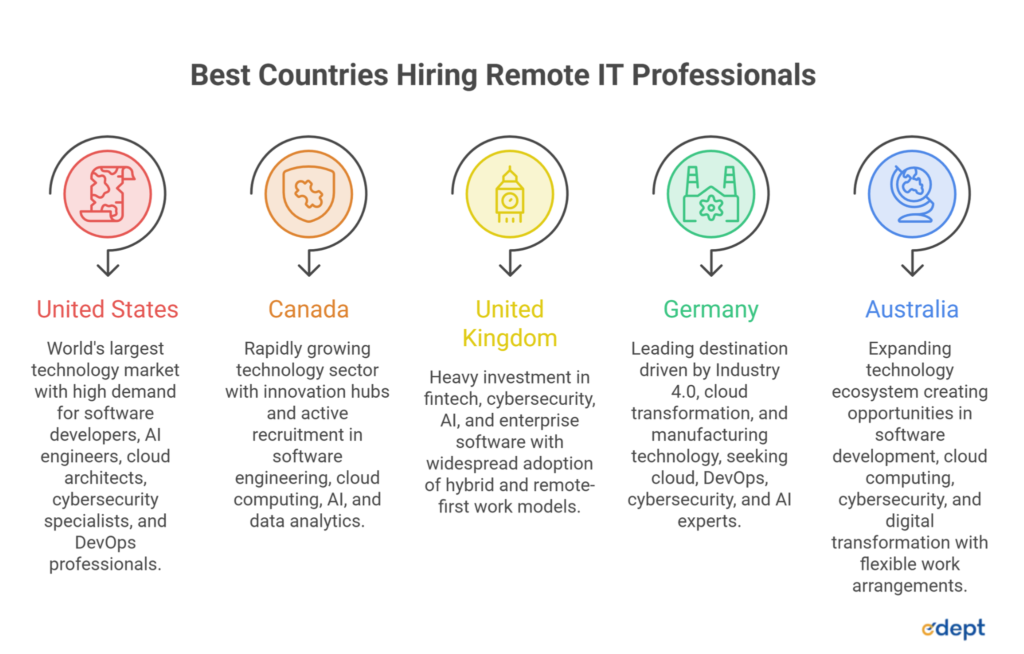
Remote recruitment has allowed talented IT professionals to get jobs in global firms without having to move. Those countries that have developed technology infrastructure, made substantial investments in cloud computing, artificial intelligence, and cybersecurity, and that have many remote-first businesses provide ample career options for remote workers post MCA.
Why the United States Leads in Remote Tech Hiring
The United States remains the world’s largest technology market, home to leading companies such as Google, Microsoft, Amazon, Meta, and thousands of SaaS startups. Demand remains consistently high for software developers, AI engineers, cloud architects, cybersecurity specialists, and DevOps professionals.
Remote Opportunities in Canada
Canada has a rapidly growing technology sector supported by innovation hubs in Toronto, Vancouver, Montreal, and Waterloo. Canadian employers actively recruit professionals in software engineering, cloud computing, AI, and data analytics. Flexible work policies and increasing adoption of remote work have created attractive opportunities for graduates pursuing remote jobs after MCA.
Growing Demand in the United Kingdom
The UK continues to invest heavily in fintech, cybersecurity, artificial intelligence, and enterprise software. London remains one of Europe’s largest technology hubs, while many organisations across the country have adopted hybrid and remote-first work models.
Tech Careers in Germany
Germany has emerged as one of Europe’s leading destinations for technology professionals, driven by Industry 4.0, cloud transformation, manufacturing technology, and enterprise software. Companies increasingly seek cloud engineers, DevOps professionals, cybersecurity experts, and AI specialists for both onsite and remote roles, particularly within multinational organisations.
Remote Work Growth in Australia
Australia’s expanding technology ecosystem continues to create opportunities across software development, cloud computing, cybersecurity, and digital transformation. Businesses are increasingly embracing flexible work arrangements, allowing skilled professionals to collaborate with distributed engineering teams across different regions.
Global Opportunities Through Remote-First Companies
Beyond specific countries, many remote-first companies now recruit talent globally rather than limiting hiring to a single location. Organisations in SaaS, fintech, healthtech, e-commerce, and cloud services evaluate candidates based on technical skills, project experience, communication abilities, and portfolio quality instead of geographical location.
Common Challenges in Remote Careers
While remote jobs after MCA offer flexibility and global career opportunities, they also present unique challenges. Understanding these obstacles and adopting the right strategies can help professionals succeed in distributed work environments.
Managing Different Time Zones
Working with global teams often requires coordinating across multiple time zones, which can delay communication and meetings. Maintaining a shared calendar, scheduling overlap hours, and planning tasks help ensure smooth collaboration.
Communication Barriers
Without face-to-face interactions, misunderstandings can occur more easily. Writing clear emails, documenting decisions, participating actively in virtual meetings, and using collaboration tools like Slack, Microsoft Teams, and Jira can improve communication.
Maintaining Productivity
Remote work demands discipline and effective time management. Creating a dedicated workspace, following a daily schedule, setting priorities, and minimising distractions can significantly improve productivity and work-life balance.
Continuous Skills Upgradation
Technology evolves rapidly, making continuous learning essential for long-term career growth. Regularly upgrading skills through online courses, certifications, technical blogs, and hands-on projects helps professionals remain competitive in remote jobs after MCA.
Building Visibility in Distributed Teams
Remote employees may have fewer opportunities for informal interactions with managers and colleagues. Sharing progress regularly, contributing during meetings, documenting achievements, volunteering for projects, and maintaining an active GitHub and LinkedIn profile can improve professional visibility.
Common Mistakes MCA Graduates Make
Many graduates have the technical knowledge required for remote jobs after MCA but struggle to secure opportunities because of avoidable mistakes. Avoiding these common pitfalls can significantly improve your employability and career growth.
Applying Without a Portfolio
A resume alone rarely demonstrates your technical abilities. Build a portfolio showcasing personal projects, internships, freelance work, or real-world applications. A strong portfolio helps recruiters evaluate your practical skills beyond academic qualifications.
Ignoring GitHub Projects
Many recruiters review GitHub profiles before scheduling interviews. Regularly upload well-documented projects, maintain clean code repositories, and contribute to open-source projects whenever possible. An active GitHub profile reflects consistency, coding ability, and collaboration skills.
Weak Communication Skills
Technical expertise is important, but remote employers also value professionals who can communicate effectively. Improve your written and verbal communication, participate confidently in virtual meetings, and practise explaining technical concepts clearly to both technical and non-technical audiences.
Focusing Only on Certifications
Certifications strengthen your profile, but they cannot replace practical experience. Instead of collecting multiple certificates, focus on applying your knowledge through hands-on projects, coding challenges, internships, hackathons, and portfolio development. Employers prioritise candidates who can demonstrate real-world problem-solving abilities.
Not Learning Cloud Technologies
Cloud computing has now become an essential requirement in all software development, DevOps, cybersecurity, and data engineering positions. Learning about cloud computing platforms like AWS, Microsoft Azure, or Google Cloud, combined with knowledge of DevOps basics and containerization techniques, will greatly help you secure remote job opportunities post-MCA.
Why Choose edept for a Remote Tech Career
A thriving career in a remote capacity cannot be built merely through an MCA course; it calls for technical know-how, industry knowledge, and expertise with the latest technologies. The industry-centric MCA course at edept aims to equip students for jobs across the globe by integrating learning with training and professional development.
Industry-Aligned Curriculum
edept offers a curriculum that blends core computer science subjects with emerging technologies, ensuring students develop skills that match current industry requirements. The programme covers programming, databases, software engineering, operating systems, networking, AI, cloud technologies, cybersecurity, and web development.
Practical Projects and Case Studies
Students gain real-world experience through live projects, case studies, portfolio development, and internships. These practical learning opportunities help strengthen problem-solving abilities while building a portfolio that showcases technical capabilities to employers.
Training in AI, Cloud Computing, Cybersecurity, and Data Analytics
edept provides specialised learning tracks in AI & Data Science, Cyber Security & Cloud, and Web & Cloud, allowing students to develop expertise in some of the fastest-growing technology domains that drive today’s remote IT jobs
Placement-Focused Skill Development
Apart from technical learning, edept emphasises preparing students for the industry with career counselling, global projects, certification, and placement. Partnerships with companies like IBM, Deloitte Learning Academy, and Practera, and recruitment from more than 300 partners, help in equipping students to join competitive technology jobs.
Step-by-Step Roadmap to Get a Remote Job After MCA
Securing remote jobs after MCA requires a combination of technical expertise, practical experience, and professional branding. Follow this roadmap to improve your chances of landing a remote role with leading technology companies.
Master Programming Fundamentals
Build a strong foundation in Python, Java, JavaScript, data structures, algorithms, object-oriented programming, databases, and operating systems. These concepts form the basis of most technical interviews.
Choose a High-Demand Specialisation
Select a career path aligned with market demand, such as software development, cloud computing, DevOps, AI, data science, or cybersecurity, and deepen your expertise in that domain.
Build Real-World Projects
Develop practical applications that solve real problems. Host your projects online, write proper documentation, and demonstrate your technical skills through a professional portfolio.
Learn Cloud and DevOps
Gain hands-on experience with AWS, Microsoft Azure, or Google Cloud, along with Docker, Kubernetes, Git, CI/CD pipelines, and Linux fundamentals to stay competitive in remote IT roles.
Earn Industry Certifications
Pursue recognised certifications that match your chosen specialisation to validate your skills and strengthen your resume.
Build a Strong GitHub and LinkedIn Profile
Maintain an active GitHub repository with well-documented projects and optimise your LinkedIn profile by showcasing certifications, achievements, technical skills, and project experience.
Prepare for Virtual Technical Interviews
Practise coding challenges, system design basics, behavioural interview questions, and mock virtual interviews to improve confidence and communication.
Apply to Global Remote Companies
Use platforms like LinkedIn, Wellfound, Remote OK, We Work Remotely, and company career pages to apply consistently. Tailor your resume for each role, highlight relevant projects, and continue improving your skills based on recruiter feedback. By following this structured roadmap, you can significantly increase your chances of securing remote jobs after MCA with top companies worldwide.
Future Outlook: Remote Careers After MCA Beyond 2030
The future of remote jobs after MCA looks highly promising as businesses continue investing in digital transformation, artificial intelligence, cloud infrastructure, and cybersecurity. Beyond 2030, remote work is expected to become an integral part of the global technology industry, creating new opportunities for professionals with specialised and adaptable skill sets.
Remote Engineering Teams Will Continue to Expand
Companies are increasingly building globally distributed engineering teams to access skilled talent regardless of location. This trend is expected to accelerate, giving MCA graduates access to a wider range of international career opportunities.
AI Will Change Software Development
AI will automate all the boring programming jobs such as coding, testing, debugging, and documentation. AI won’t replace programmers but rather help them concentrate on designing systems, solving problems, and creating new software.
Cloud-Native Development Will Dominate
Modern systems are developed in a cloud-native approach, microservices, containerization, and serverless architectures. Experts skilled in cloud computing, DevOps, and Kubernetes will always be in high demand in remote tech teams.
Cybersecurity Talent Will Remain in High Demand
With the increasing use of cloud-based systems and remote working, digital protection is going to be an important need for all organizations and businesses. The above-mentioned roles of cybersecurity will keep on flourishing in demand.
Hybrid Skill Sets Will Command Premium Salaries
Future employers will prioritise professionals who combine software development with expertise in AI, cloud computing, cybersecurity, data analytics, or DevOps. Alongside technical knowledge, communication, collaboration, and business understanding will become equally valuable for leadership roles.
Conclusion
Remote working has brought many new opportunities in different areas like software development, cloud computing, artificial intelligence, cybersecurity, DevOps, and data analytics for MCA graduates globally. Nowadays, companies prefer hiring candidates based on their practical skills, relevant project experience, certifications, communication skills, and problem-solving skills rather than their locations.
By acquiring in-demand skills and technologies, creating an outstanding GitHub profile, obtaining relevant certifications, and improving themselves regularly, they will be able to secure lucrative remote jobs with top firms globally. If you’re looking to build a successful remote tech career, choosing the right learning path is equally important. edept’s industry-focused MCA programme equips students with practical knowledge, emerging technology expertise, real-world projects, and career-ready skills that align with the evolving demands of the global IT industry.
With the right preparation, dedication, and continuous learning, securing rewarding remote jobs after MCA is an achievable goal and a strong foundation for long-term career success.
Related Links:
| Career Scope After MCA | Top Programming Languages |
| High-Paying Jobs after MCA | Top MCA Programming Languages |