Most students underestimate how much an internship abroad can shift their career trajectory. Three months of genuine international experience often does more than an entire year spent in lectures. Global employers are actively looking for it, and more opportunities exist in 2026 than ever before. This blog walks you through exactly how to find, apply for, and land international internships.
International internships have quietly become one of the most sought-after items on a student’s career checklist, and the numbers coming out of 2026 show just how seriously both sides of the hiring table are treating them. According to NACE’s 2026 Internship and Co-op Report, employers expect to take on 3.9% more interns in 2025 to 2026 than the year before, with 81% of participating employers planning to hold steady or increase their intern intake. And it is not just overall internship demand that is climbing. Searches for an internship abroad specifically have surged, with business and finance roles seeing a 50 to 77% jump in views and tourism and hospitality positions growing by 68% when comparing the first quarters of 2024 and 2025.
Getting an internship abroad in 2026 comes down to three things: knowing where opportunities actually live, understanding how to position yourself for a global employer, and giving yourself enough runway in the application process to compete properly.
This blog covers the full picture, from what international internships are and why they carry real career weight, to the step-by-step process, the platforms worth using, the documents you will need, and why paid internships abroad are one of the shrewdest moves a student can make at this stage of their career.
What Are International Internships?
Most students have a rough sense that international internships are worth pursuing. Fewer have a precise enough definition to search for them effectively or apply to the right ones.
At their core, international internships are structured work placements where a student or recent graduate joins an organisation in a country other than their own for a set period, typically anywhere from six weeks to twelve months. An internship abroad can be paid or unpaid, on-site or remote, and opportunities span virtually every industry and job function you could name. What sets them apart from any other work experience is the cross-border element. Working in a different cultural, regulatory, and professional environment from your own is exactly the thing that gives international internships their lasting career value, and why employers notice them on a CV in a way they do not always notice domestic placements.
Why Choose an Internship Abroad in 2026?
The argument for doing an internship abroad in 2026 is not built on wanderlust. It is built on a genuine shift in what employers are prioritising when they assess early-career candidates.
In 2026, employers will not just evaluate what you studied or what grades you earned. They want concrete signs that you can work outside familiar surroundings, hold your own across cultural differences, and bring a perspective that has been shaped by more than one environment. The World Bank’s latest data shows a 35% increase in the number of companies offering structured internship programmes for international students compared to 2023. A well-chosen internship abroad puts exactly that kind of evidence in front of hiring managers, in a format they already know how to read and value.
Types of International Internships You Can Apply For
International internships do not all look alike, and understanding the different formats helps you match what is available to your situation, your finances, and where you are trying to go professionally. The type you go for also shapes your application strategy.
Paid Internships Abroad
Paid internships abroad offer a stipend or salary alongside the professional experience, which makes them the most competitive category going. The financial element matters because living costs in a foreign country add up quickly, and paid internships abroad are what make the full experience sustainable for most students. Technology, finance, consulting, and multinational corporations are where the bulk of these opportunities sit. Getting one typically means applying earlier and bringing a stronger profile, but the extra effort is worth directing deliberately towards these roles.
Unpaid Internships Abroad
Unpaid internships abroad swap a salary for experience, mentorship, and access to professional networks you would not easily build from home. Creative industries, NGOs, arts organisations, and research institutions are where these tend to cluster. For students who can cover their living costs independently, an unpaid internship abroad at a reputable organisation can still open meaningful doors, particularly when it results in strong references or substantive project work that can be pointed to.
Remote International Internships
Remote international internships took off during the pandemic and have not gone away. They let students work with a foreign organisation without having to relocate, which removes the visa and logistics barriers entirely. Technology, marketing, writing, and data roles are where remote internships abroad are most available. The international working culture exposure is still real, even without the physical move, and for students who want to build global employer relationships before committing to a full relocation, these are a sensible starting point.
Government and NGO Internships Abroad
Government and NGO international internships, offered by bodies such as the United Nations, World Health Organisation, and European Union institutions, sit at the more prestigious end of the spectrum. They are competitive, often unpaid, and the application windows open six to twelve months in advance. What they offer in return is a level of professional credibility and sector-specific experience that is genuinely hard to match through other routes.
Top Countries Offering International Internship Opportunities
Where you choose to do an internship abroad has real consequences for your professional experience, your visa pathway, and the practical logistics involved. These five countries offer the most developed and accessible international internship ecosystems heading into 2026.
USA
The United States has the largest and most varied pool of paid internships abroad for international students, with technology, finance, consulting, and entertainment leading the way. The J-1 Exchange Visitor Visa is the standard route in, and many programmes bundle housing and allowances into the package. Competition is fierce, and timelines stretch long, so early applications are not optional for international internships in the US.
UK
The UK holds its place as one of the most accessible English-language internship abroad destinations, particularly through university partnerships and structured graduate programmes at large employers. Post-Brexit visa requirements have added a layer of complexity, but the Graduate Visa and Skilled Worker Visa both provide workable routes for international interns who move into employment after their placement ends.
Germany
Germany does not shout about its internship opportunities the way some countries do, but the demand is very much there. Its industrial, engineering, and technology sectors run deep, and that creates a steady and genuine need for international internships across a wide range of disciplines. The Fachpraktikum visa exists precisely for international students coming in on practical training placements, which removes one of the bigger logistical headaches from the process. German language ability is still expected at many companies, particularly outside the major cities, though that picture is shifting. Berlin’s tech startup scene has grown into something quite substantial, and a good portion of it runs entirely in English, with hiring teams that actively look beyond German borders for talent.
Canada
Canada has built a reputation as one of the genuinely welcoming destinations for international internships, and that reputation is well-earned. The open work permit structure and the country’s broader immigration-friendly stance give international students a level of flexibility that is harder to find elsewhere. Technology, natural resources, financial services, and healthcare are consistently the strongest sectors for placement opportunities. What makes Canada particularly distinctive, though, is the co-op programme culture embedded in its universities. Internships are not treated as optional extras here; they are built directly into many degree pathways as a structural component. That makes the overall ecosystem for international internships considerably more developed than in countries where work placements feel like an afterthought.
Australia
Australia draws a strong and consistent flow of internship abroad applicants through its Working Holiday Visa and university-linked programmes. Healthcare, engineering, agriculture, and technology are the sectors with the most paid internships abroad available. Students from the Asia-Pacific region find the time zone alignment particularly practical when managing remote or hybrid arrangements.
Step-by-Step Process to Get an Internship Abroad
The process of landing international internships is considerably more systematic than most students give it credit for. Getting the sequence right and starting with enough time is genuinely what separates students who secure opportunities from those who apply too late or miss the window altogether.
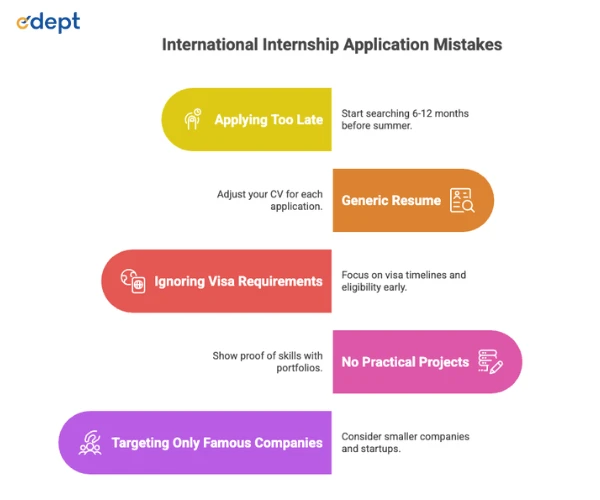
McKinsey Global Institute research makes this point clearly: students who begin searching nine to twelve months ahead are three times more likely to land their preferred position. Starting early is not a minor advantage. It is the largest single factor in the outcome.
Step 1: Identify Your Career Goals
Before you search for a single international internship, get specific about what you are actually trying to achieve. Industry, function, country, and role type all need a clear answer before the rest of the process becomes efficient. Without that specificity, applications scatter and cover letters turn generic, which is exactly what global employers notice.
Step 2: Search for International Internships
Do not rely on a single source. The students who build the strongest target lists pull from several directions at once: dedicated platforms, university career services, LinkedIn, professional associations, and company career pages all tend to surface different opportunities. When you are searching, be specific about your target sector rather than browsing broadly, and look for paid internships abroad within that space rather than casting too wide a net. Timelines matter more than most people expect here. The strongest international internship opportunities tend to open their application windows six to nine months before the actual placement starts, which catches a lot of students off guard the first time around.
Step 3: Prepare a Global-Standard Resume and Cover Letter
A CV that works well for domestic applications does not automatically translate to an international one. International employers come to the process with different expectations, and a resume built for an internship abroad needs to reflect that. Keep it to one or two pages, lead with achievements rather than a list of duties, and take the time to adjust the format and conventions to suit the specific country you are targeting. Cover letters carry similar weight. What does not work is a letter that expresses vague excitement about working internationally. What does work is demonstrating that you have actually looked into the company, understand the market it operates in, and have a clear and considered reason for wanting that particular role.
Step 4: Apply Strategically
Targeting only the most prestigious international internships is a common mistake and one that tends to result in no offers at all. A more sensible approach is to spread applications across a genuine mix of stretch opportunities, realistic targets, and safer options where your profile is a strong fit. Whatever you apply to, tailor each application properly. Across competitive internship abroad programmes, a well-constructed and specific application to a smaller number of roles will almost always outperform a generic one fired off to as many listings as possible.
Step 5: Crack the Interview
International internship interviews vary quite a bit by sector and company, but competency-based questions, case studies, and technical assessments all appear regularly. Solid preparation means thorough research into the company, structured answers that follow the STAR method, and a genuine awareness of the cultural context you would be stepping into. One thing that comes across clearly in interviews is whether a candidate has a real and informed reason for wanting that specific role, or whether they are simply enthusiastic about the idea of working abroad in general. The former holds up under questioning. The latter rarely does.
Step 6: Apply for Visa and Documentation
The moment an offer is confirmed, visa applications should begin. Processing times vary by country and by individual circumstance, and delays at this stage are one of the most common reasons students end up missing their internship abroad start date. J-1 visas for the US, Fachpraktikum visas for Germany, and Working Holiday Visas for Australia all carry specific documentation requirements and their own processing timelines.
Best Platforms to Find International Internships
Finding the right platform matters just as much as knowing how to apply. These are the sources that reliably bring up genuine international internship opportunities with employers you can verify and processes that are straightforward to follow.
- LinkedIn is where most people should start. It covers paid internships abroad across more industries and geographies than any other single platform, and the search filters make it reasonably easy to narrow things down to what is actually relevant to you.
- Glassdoor, Indeed, and Handshake are all worth checking alongside LinkedIn, as they each surface international listings that do not always appear elsewhere. AIESEC is worth knowing about, specifically if you are a student, since it focuses entirely on international internships and has a presence in more than 100 countries.
- GoAbroad, Intern Abroad HQ, and The Intern Group take a more curated approach to internship abroad programmes, with different levels of structured support depending on what you need. For anyone looking at government or NGO international internships specifically, the UN careers portal, the EU careers page, and individual agency websites are where those listings live, and they are worth bookmarking early, given how far in advance those application windows tend to open.
Eligibility Criteria for Internship Abroad Programs
Knowing what international internship programmes typically require before applications open helps you identify gaps and close them in time.
Most require current enrolment in a bachelor’s or master’s programme, or recent graduation within the past twelve months. English proficiency is expected for English-speaking destinations, with IELTS or TOEFL scores often requested. Some paid internships abroad in Germany or Japan additionally require at least a working knowledge of the local language. Competitive programmes at major employers generally expect a GPA equivalent of 3.0 or above. Work authorisation eligibility through the relevant visa programme is a baseline requirement for any in-person internship abroad.
Documents Required for International Internship Applications
Getting your paperwork in order before application windows open is one of the simplest ways to give yourself an edge. Competitive international internship opportunities move quickly, and having everything ready means you can act immediately rather than losing days pulling documents together. Here is what you will typically need at each stage:
Before You Apply
- An updated CV formatted to the conventions of your target country, not just a generic version of your existing one
- A tailored cover letter written specifically for each role you are applying to
- Academic transcripts from your current institution showing your full record to date
- A valid passport with enough remaining validity to cover the full duration of the internship abroad and any travel around it
- Reference letters from faculty members or previous employers who can speak directly to your capabilities
- Proof of current enrolment or graduation, depending on where you are in your degree
After You Receive an Offer
- Bank statements showing you have sufficient funds to support yourself during the placement
- Health insurance documentation valid for the country you will be working in
- A formal internship offer letter from the organisation, which most visa applications require as a core document
- Confirmation of accommodation for the duration of your stay
Role-Specific Additions
- Some paid internships abroad will ask for a portfolio of relevant work, particularly in creative, technical, or data-focused roles
- Writing samples may be requested for communications, journalism, or content-related international internships
- Language proficiency certificates, such as IELTS, TOEFL, or DELF, depending on the country and employer requirements
Benefits of International Internships for Your Career
The advantages of completing an internship abroad go well beyond a line on a CV. They change how you think, how you present yourself professionally, and how employers read your profile for years afterwards.
78% of employers use internships as their primary recruiting tool, which means an international internship is frequently the most direct route to a full-time offer at a global organisation. Cross-cultural communication, professional adaptability, language exposure, and a global network are all things that domestic internships struggle to replicate. Employers across sectors consistently identify international experience as a differentiating factor for roles involving global clients, cross-border work, or international markets. For students with any ambition towards a career with an international dimension, the return on a well-chosen internship abroad is difficult to match through any other single experience during a degree.
Why Choose edept for International Career Preparation
Getting an international internship is not just about finding the right listing. It is about walking into the process genuinely prepared for what global employers are assessing. Here is how edept builds that readiness:
- Industry-aligned programmes: edept’s curriculum is built around the skills that international employers in data analytics, digital marketing, business analytics, and technology roles are actively looking for in internship and entry-level candidates.
- Global career positioning: edept helps students understand how to present themselves to international employers, what a global-standard CV looks like, and how to position skills developed in India for opportunities in the US, UK, Germany, Canada, and Australia.
- Hands-on project work: edept builds portfolio-worthy projects into every programme so students have documented, applied capability to show international employers rather than academic credentials alone.
- Placement and application support: CV coaching, interview preparation, and direct guidance on approaching internship abroad applications are woven into edept’s career support rather than bolted on as extras.
- Practical tool proficiency: The tools covered in edept’s programmes, including SQL, Power BI, Python, Tableau, and Google Analytics, are the same tools that appear consistently in paid internships abroad job descriptions across every major market.
- Mentorship from practitioners: edept connects students directly with professionals who have actually worked across international environments, people who understand how global organisations think when they are assessing early-career candidates and can give you guidance that reflects that reality rather than just theory.
If you are serious about turning international internship opportunities into something tangible, explore the programmes edept offers. We are built for students who are ready to do the work, not just think about it.
Conclusion
International internships are one of the highest-return investments a student can make early in their career, and the opportunity in 2026 is genuinely there for students who prepare early and apply with intention. Cross-cultural experience, global professional networks, and the signal to employers that you can operate across borders are things that are very hard to replicate through any other single experience.
Start researching now. Build your skills and portfolio over the coming months. Apply to paid internships abroad early and across multiple opportunities at the same time. The students who land international internships are almost always the ones who got started before it felt urgent.
FAQ’s About International Internship Opportunities
How much does it cost to do an internship abroad?
Costs vary considerably depending on destination and programme type. Paid internships abroad often cover living expenses through stipends. International internships without any pay would mean that you must pay for your lodging, transportation, and even basic expenses yourself, and this can cost anything between $1,000 and $3,000 per month, based on the location. This needs to be kept in mind from the very beginning when considering a placement there. Programme-based internships through providers like AIESEC or The Intern Group carry additional programme fees on top of personal living costs.
Can I do an international internship remotely?
Yes, and it is increasingly common. Remote international internships are particularly prevalent in technology, marketing, writing, and data roles. They remove the visa and relocation barriers whilst still delivering genuine international professional exposure. A remote internship abroad is a practical first step for students who want to build relationships with global employers before committing to an in-person placement later in their career.
Is a visa required for an internship abroad?
For most in-person international internships, yes. The specific visa depends on the destination. The J-1 covers the US, the Fachpraktikum covers Germany, and Working Holiday Visas apply to Australia and New Zealand, among others. Remote international internships generally do not require a visa since the work is carried out in the student’s home country.
Can I get a job after completing an international internship?
Yes, and the pattern is hard to ignore. Global employers tend to favour candidates they have already watched perform in international settings, which means finishing an internship abroad puts you in a considerably stronger position than most other applicants. Paid internships abroad at well-regarded organisations regularly lead to return offers, and even when they do not, the referrals that come out of them have a way of opening doors that would otherwise stay firmly shut.
How early should I apply for international internships?
Nine to twelve months before your intended start date is the window that gives you the best chance at competitive international internships. Major paid internships abroad at technology and finance companies open applications in September and October for the following summer. Government and NGO international internships often have even earlier deadlines. Starting early is the single most effective thing you can do to improve your chances of landing an internship abroad at an organisation worth being at.