Canada and the United Kingdom are widely considered the top destinations for studying data analytics abroad in 2026, with Canada offering the most favourable immigration pathways and the UK providing faster, one-year master’s programs.
Today’s world is driven by data, with students and professionals shifting towards job roles involving working with data. This change in trend has made data analytics one of the most in-demand career paths throughout the world. Different organizations, ranging from tech startups to healthcare and finance, are relying heavily on data professionals to gain insights into business strategies. These global trends make it essential for aspirants to have a good idea about the best countries to study data analytics abroad in 2026.
According to industry projections, the global data analytics market is expected to grow from $74 billion to $256 billion by 2029. This trend highlights the massive career opportunities for students pursuing a career in this field.
For students who are planning to study abroad, Canada, United Kingdom, and Australia come at the top due to their strong education system and work culture with good job opportunities. However, choosing the right country entirely depends on some key factors like cost, salary, post-study work options, and long-term ROI.
Through this guide, we will compare countries Canada, UK, and Australia to help you decide which is the perfect destination for your data analytics career in 2026.
Why Data Analytics is One of the Most In-Demand Courses Globally
Demand for data-based jobs, specifically data analytics, is showing bloom across multiple industries and sectors, making it one of the most future-proof careers.
Rapid Growth of the Data Analytics Industry
There is a rapid growth in the data analytics industry at a fast rate. Businesses are generating a massive amount of raw data, which can be used to generate further insights. Now businesses can use these insights to take their next steps to make more profit. This increase in data quantity is one of the main reasons behind the demand for data analysts.
High Global Demand for Skilled Professionals
There is a huge demand for professionals skilled in working on data-based tools across industries like:
- Technology
- E-Commerce
- Healthcare
- Banking and Finance
To improve their decision-making, companies from these sectors are actively hiring data analysts.
Global Career Opportunities After Graduation
Data analytics provides a global career opportunity to students and professionals, opening doors to global companies. Many countries offer post-study work visas, allowing students to gain experience and move forward into full-time roles.
Key Factors to Compare Before Choosing a Country
The decision on which country is best to study data analytics is not only based on rankings; other key factors like ROI, career opportunities, and long-term goals also play a key role here. Below is a list of some key factors you have to take into account when deciding your target country.
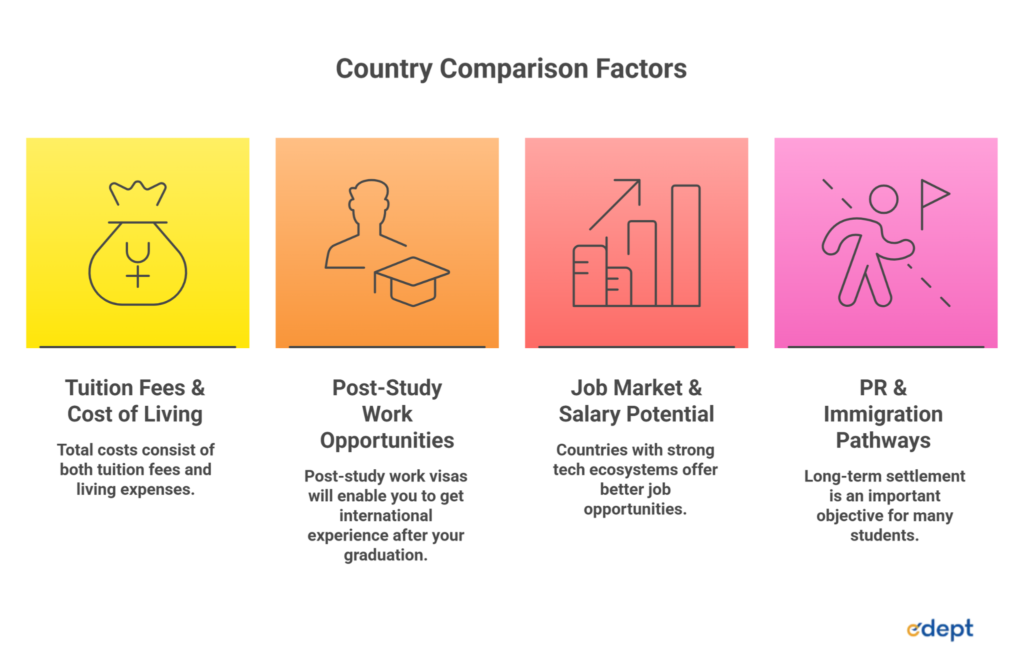
Tuition Fees & Cost of Living
Total costs consist of both tuition fees and living expenses.
- The average tuition fees are moderate in Canada and UK.
- Australia is more costly than most other countries.
- The cost of living is dependent on the city (London and Sydney are costly)
Insight: Implement strategies that reduce costs and improve job outcomes to deliver better return on investment (ROI).
Post-Study Work Opportunities
Post-study work visas will enable you to get international experience after your graduation.
- Canada: Up to 3 years (PGWP)
- EU: 5 years for a PhD; 3 years for a Master’s degree
- The course is offered in Australia for 2-3 years.
Insight: Longer visas for work lead to increased job opportunities.
Job Market & Salary Potential
Countries with strong tech ecosystems offer better job opportunities.
- Canada: Growing analytical demand
- UK: Strong fintech & consulting roles
- Australia: Expanding AI and analytics market
Insight: Strong job market leads to better career growth
PR & Immigration Pathways
Long-term settlement is an important objective for many students.
- Canada is the easiest pathway to get PR, in this case, it’s through Express Entry.
- Australia: Points-based system for PR.Australia: PR based on points.
- UK: PR is relatively challenging.
Insight: The long-term ROI is greater in countries that are more inclined towards PR.
Study Data Analytics in Canada (2026)
Canada is among the top countries when we talk about affordable education for international students. It provides strong markets and easy PR pathways, making it easy for students to enter the data analytics industry. It also offers excellent ROI for students planning long-term careers.
Tuition Fees & Living Costs
Data analytics tuition fees in Canada range from CAD 20,000 to CAD 40,000 per year on average. Cost of living is estimated at CAD 10,000 to 15,000 per year.
Canada’s education system is considered to be reasonably priced and highly regarded in comparison to other countries.
Insights: Moderate investment with good returns.
Post-Study Work Visa
Students can acquire more work experience after completing their studies with a Canada Post-Graduation Work Permit (PGWP) of up to 3 years.
Insight: Work visas are extended for longer, providing more job opportunities
Job Opportunities
The need for data professionals in areas such as technology, finance, healthcare, and e-commerce is increasing in Canada. Vancouver, Toronto, and Montreal are great cities for tech.
Roles include:
- Data Analyst
- Business Analyst
- BI Analyst
Industry: Good demand for jobs
PR Pathways
Canada is the best country when it comes to providing good benefits to immigrants. Students can apply for permanent residency through programs such as Express Entry after acquiring some work experience.
Insight: It is one of the most transparent countries to work in for PR.
Why Choose Canada
- Equal cost + salary + PR opportunities!
- Stable job market in analytics.
- Enjoying a high quality of life.
Recommended for investors who want to hold their assets for the long term and achieve a strong return on investment.
Study Data Analytics in United Kingdom
United Kingdom is a top destination for students who want to have a fast-track career with quicker ROI. UK also provides world-class universities and a strong job market in analytics, offering excellent opportunities in a shorter time frame.
Tuition Fees and Living Costs
The tuition fees for data analytics courses in the UK range between £15,000 and £35,500 per year. Living expenses, particularly in urban areas such as London, may be more costly and can range from around £10,000 to £15,000 per year.
Time-saving: Moderate to high cost will be offset by the shorter duration and a lower overall cost.
Course Duration Advantage
There are many benefits of studying in UK, particularly the 1-year Master’s degree.
This will enable students to:
- Get to work sooner.
- Reduce expenses on bills and other day-to-day costs.
- Achieve quicker ROI
Insight: Shorter course = quicker return on investment
Post-Study Work Visa
UK has a Graduate Route visa for students to remain and work following graduation for 2 years.
Insight: Enough time to gain work experience
Job Opportunities
There is a high demand for data analytics professionals in UK, particularly in sectors like:
- Fintech
- Consulting firms
- SaaS companies
London is a world leader in both roles related to analytics and financial technology.
Insight: strong demand across finance and consulting.
Why Choose the UK
- Fast-track degree with quick ROI
- Strong job market in analytics and fintech
- Global exposure and networking opportunities
Best for: Students who want to enter the workforce quickly and get a return on investment.
Study Data Analytics in Australia
Australia is a good option for students who want a mix of a good education, career opportunities, and lifestyle. Australia is a country with robust job opportunities in the data analytics and AI sectors, as well as a high quality of life.
Tuition Fees & Living Costs
The tuition costs for the Data Analytics course in Australia are between AUD 28,000 and AUD 50,000 per year. The cost of living is approximately AUD 18,000 to 25,000 per year, depending on the city. The amount of investment in comparison to Canada and UK is higher.
Post-Study Work Visa
Australia provides up to 2-3 years of a PSW visa based on the course level and duration.
Aim for a minimum of one year to get some experience. The best advice is to have at least 1 year of work experience.
Job Opportunities
The analytics job market is expanding in Australia, particularly within these areas:
- IT & technology
- Banking & finance
- Healthcare & government
There are good prospects in cities such as Sydney, Melbourne, and Brisbane. The tech ecosystem is expanding, making for more opportunities to grow demand.
PR Opportunities
Australia adopts a points-based visa system, and skills, education, and work experience are important factors for PR eligibility. PR can be done, but not easily as it is very competetive.
Why Choose Australia
- Industry exposure and world-class education standards.
- Good work-life balance
- Expanding analytics and AI job prospects
- Cost: $350 per month, or $3,000 per year.
- Pre-requisites: At least two years of college English instruction, with a good command of reading skills.
Canada vs UK vs Australia: Quick Comparison Table
Here’s a quick comparison to help you evaluate the best country to study data analytics abroad in 2026 based on key decision factors like cost, duration, work opportunities, and ROI.
| Factor | Canada | UK | Australia |
| Tuition Fees | Medium | Medium | High |
| Course Duration | 1-2 years | 1 year | 1-2 years |
| Post-Study Work | Up to 3 years | 2 years | 2-3 years |
| PR Pathway | Easy | Difficult | Moderate |
| Job Market | Strong | Strong | Growing |
| ROI | High | Fast ROI | Balanced |
Job Opportunities After Data Analytics Abroad
With the growing importance of data-driven decision-making in various sectors, data analytics is a promising career path with opportunities globally. Once you have finished your studies abroad, you have the opportunity to explore several jobs that are in demand with competitive salaries and career growth.
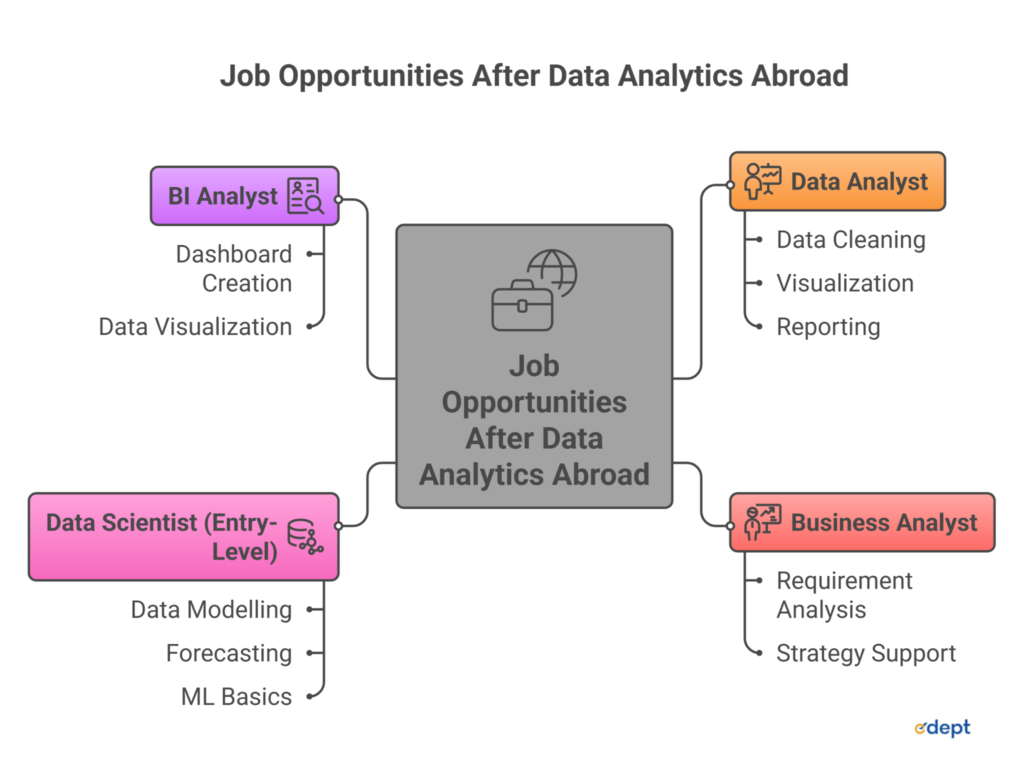
Data Analyst
The daily work of data analysts includes gathering, manipulating, and evaluating data in order to enable enterprises to make decisions.
Responsibilities: Data cleaning, visualization, reporting
Tools used: Excel, SQL, Power BI
Business Analyst
Business Analysts work to connect business needs with technical solutions by analyzing data and making recommendations.
Responsibilities: Requirement analysis, reporting, and strategy support
Industries: Finance, consulting, IT
Data Scientist (Entry-Level)
Entry-level Data Scientists analyze and use data models, machine learning algorithms, and predictive analytics to tackle complex challenges.
Responsibilities: Data modelling, forecasting, ML basics
Requirements: Python, statistics, machine learning
BI(Business Intelligence) Analyst
BI Analysts are responsible for developing dashboards and reports for organizations to track performance and make data-driven decisions.
Responsibilities: Dashboard creation, data visualization
Tools: Power BI, Tableau
Salary Comparison After Graduation
Salary plays a key role when deciding which country pays the most to data analysts. While all three countries offer strong earning potential, actual value entirely depends on your experience, skills, and cost of living.
According to insights from platforms like Glassdoor and Payscale, data analytics professionals are among the most in-demand and well-paid roles globally.
Canada Salary Range
Data analysts in Canada make a range of CAD 60,000 to CAD 90,000 a year for entry-level positions.
Experience will add up to CAD 100,000+ and more in major cities such as Toronto and Vancouver.
UK Salary Range
Data Analysts in the UK earn £30,000 to £60,000 per year at the entry-to-mid-level.
In London, there are job opportunities for higher salaries, especially in the fintech sector and consulting.
Australia Salary Range
The average salary for data analytics professionals in Australia ranges from AUD 70,000 to AUD 110,000 per annum.
Experts in AI and advanced analytics earn higher, especially those specialized in AI and advanced analytics.
Salary Comparison Table
| Country | Average Salary | Monthly Equivalent | Key Advantage |
| Canada | CAD 60K – 90K | CAD 5K – 7.5K | PR + stable growth |
| UK | £30K – £ 60K | £2.5K – 5K | Fast ROI |
| Australia | AUD 70K – 110K | AUD 5.8K – 9K | Balanced lifestyle |
Which Country is Best for You?
When choosing your desired country to start your data analytics career, many key factors like career goals, budget, and long-term plans play a key role. Here’s a simple decision framework to help you pick the best option.
Choose Canada If
- If you want permanent residency after graduation
- You are looking for a long-term settlement with career stability
- You prefer a balance between cost, job opportunities, and quality of life
Choose UK If
- You want a degree faster (1-year Master’s)
- Quick ROI and early entry into the job market
- You are targeting careers in fintech, consulting, or SaaS
Choose Australia If
- You are looking for a balanced lifestyle and better career opportunities
- You are open to a points-based PR system
- You prefer strong exposure to the AI and analytics industries
Remember, no country is the best country, considering that some offer benefits that others don’t. The right choice depends entirely on your goals.
Why Skill-Based Learning Matters More Than Just a Degree
In today’s age, organization are not just interested in what you know theoretically, they expect you to have hands-on experience with key tools and skills and can work on them since day one. Data analytics, practical skills and experience are very important when getting a job.
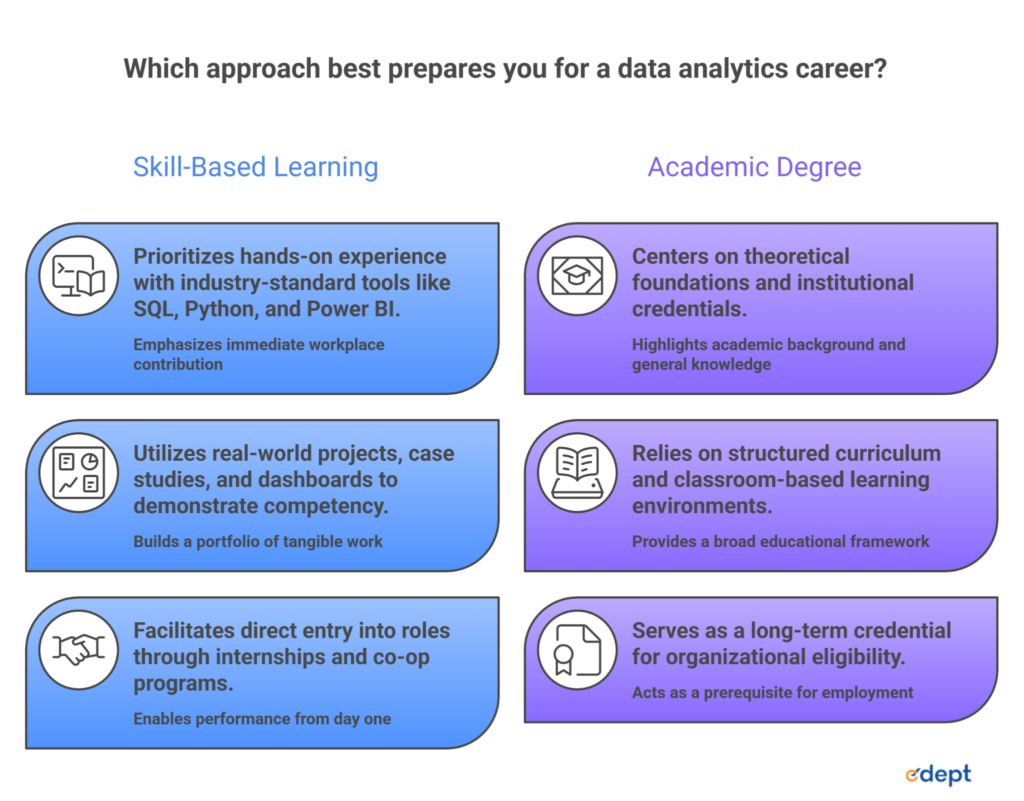
Industry Tools (SQL, Python, Power BI)
Recruiters look for skills in the following tools:
- SQL for querying data
- Python for analysis and automation
- Power BI / Tableau For Visualization.
Internships & Co-op Programs
Gain practical experience by participating in a co-op program or internship to get a sense of actual business challenges and boost confidence.
Real-World Projects
Projects like dashboards, data analysis reports, and case studies help you showcase your skills to employers.
Why Choose edept for Data Analytics Career Preparation
Choosing the right training partner can make a significant difference in your career outcomes. Edept focuses on building job-ready data analytics professionals by combining practical skills, industry exposure, and career support.
Industry-Aligned Curriculum
Edept’s programs are designed based on current industry demands, ensuring you learn the most relevant tools and technologies required for data analytics roles. Focus on job-ready skills that match real-world requirements.
Practical Learning Approach
The learning model emphasizes hands-on projects, case studies, and mastering real-world tools like SQL, Python, and Power BI. Gain practical experience, not just theoretical knowledge.
Placement Support
Edept provides dedicated support for resume building, interview preparation, and job readiness, helping you confidently enter the job market. It also provides strong guidance to improve your chances of getting hired.
Programs for Global Careers
Courses are designed to integrate analytics, business understanding, and technology, preparing you for opportunities in global job markets. Instructors help you build skills that are relevant across industries and countries.
Step-by-Step Plan to Study Data Analytics Abroad
The right planning to study abroad can save time, money, and effort. Follow this structured guide to move forward confidently.
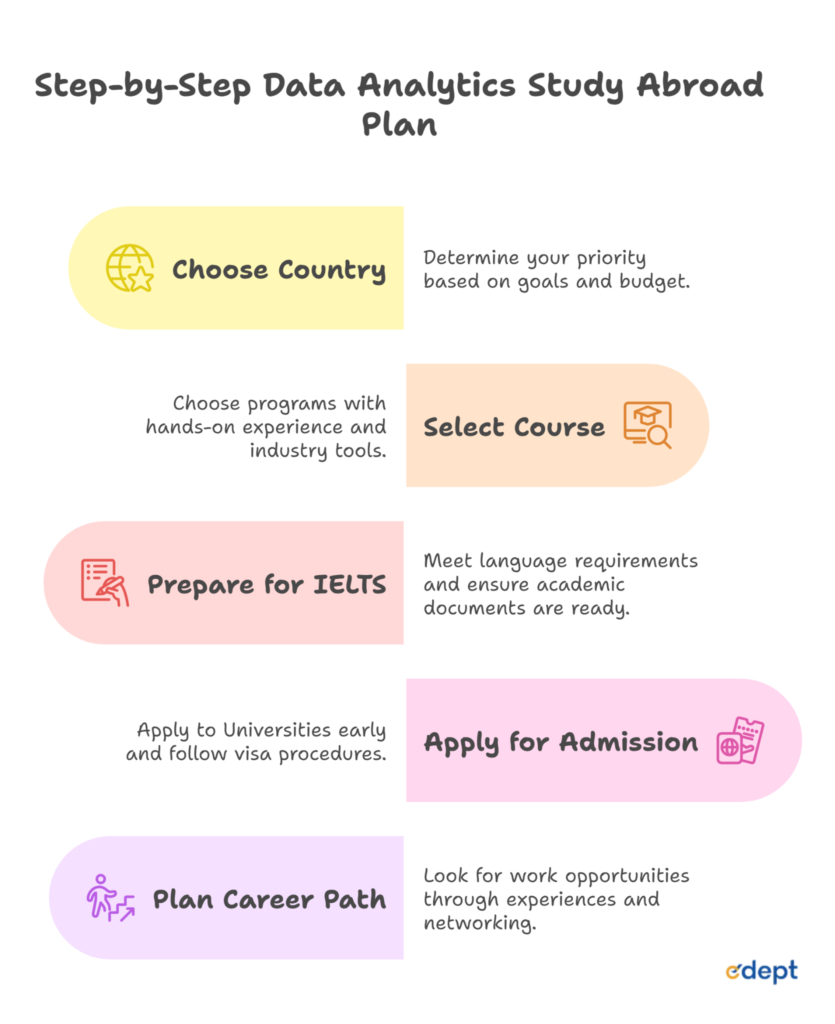
Step 1: Choose Country Based on Goals
Determine your priority (Canada, fast ROI (UK), or lifestyle balance (Australia). Fit this into your long-term plans and budget.
Step 2: Select the right course & University
Choose programs that feature hands-on experience, internships and industry tools. Don’t take courses that are theoretical only.
Step 3: Prepare for IELTS/Requirements
Meet language requirements (IELTS/PTE) and ensure your academic documents are ready.
Step 4: Apply for Admission & Visa
Apply to Universities early and follow visa procedures with proper documentation.
Step 5: Plan Career Path Post-Graduation
Begin to look for work opportunities through work experiences, networking and skill development throughout your course.
Future Scope of Data Analytics Careers
Trends show data analytics will continue to grow as one of the most in-demand careers globally. With businesses relying on raw data to gather insights and implement those in their decision-making, it makes professionals who can work with data in demand among employers.
Growth in AI & Big Data
AI, machine learning, and big data are closely related to Analytics, offering cutting-edge career possibilities.
Increasing Demand Across Industries
Every field is moving towards being data-driven, making a growing need for skilled individuals. Every sector, be it healthcare or finance, needs candidates proficient in data handling, which is increasingly making data analytics a job for the future.
Global Job Mobility
Analytics skills are transferable worldwide, allowing professionals to work across countries and industries. Being proficient in key data analytics skills with good hands-on experience is key.
Conclusion
Choosing the top country for data analytics abroad in 2026 will depend on your career goals and preferences. While students who are looking to make a permanent residency in the country and make a long-term investment in it are better suited to Canada, those who are looking to make a quick return on their investment (ROI) and are looking to enjoy a shortcut career path due to the shorter course duration are better suited for UK.
Australia offers a better balance of life, with outstanding education and job prospects and a great quality of life. Consider key factors like ROI, budget and career length when choosing your goals and strategy to get the best return on investment and opportunities on the global stage.
Related Links:
| Direct Admissions in Data Analytics | Data Analytics admission in India |
| Why is data analytics the best career? | Complete guide to the data analytics course fee |
FAQs
Which country is best for data analytics in 2026?
Canada is termed the best due to its strong job market and PR opportunities. Though UK and Australia are also excellent, depending entirely on your career goals.
Is Canada better than UK for data analytics?
Canada is better for long-term settlement and permanent residency. On the other hand, UK is perfect for faster course completion and better ROI.
What is the cost of studying data analytics abroad?
The cost to study data analytics abroad varies from country to country. Canada costs around CAD 20,000 – 40,000 per year, in UK it takes £15,000–£35,500 per year, while in Australia it is between AUD 28,000 – 50,000 per year.
Which country has highest salary for data analytics?
Canada and Australia have the most competitive salaries, but Canada often provides better long-term earning potential in comparison to Australia.
Is PR possible after studying data analytics?
Yes, PR is possible after studying data analytics, with Canada being the best country if you are looking for PR facilities.
Can fresher get jobs abroad after analytics courses?
Yes, freshers are eligible for data analytics jobs abroad with strong skills, certifications, and internships.
Is UK good for data analytics jobs?
Yes, UK provides one of the best data analytics hubs in different sectors like fintech, consulting, and SaaS.
How long does it take to complete the course?
Typically, to complete the course, it takes around 1 to 2 years, with the UK providing 1 year masters program.
Which country is the best for ROI?
If you are looking for faster ROI, then UK is perfect for you, but if you want higher long-term ROI with PR benefits, then Canada might be the one for you.