There are a high number of Indian nurses in Canada currently employed by qualifying necessary entrance exams and getting the required licenses. When we talk about the healthcare sector globally, Canada’s healthcare system is counted among the best, making it the preferred destination for Indian nursing professionals seeking international career opportunities. According to reports from the Canadian Institute for Health Information (CIHI), Canada is experiencing strong workforce pressure across its healthcare systems, which is leading to an increase in recruitment for international nurses. For nurses who are residing in India, Canada offers a good combination of competitive salaries and strong employee benefits, which is beneficial for permanent residency. Demand for nursing professionals extends beyond hospitals to other sectors like elderly care, community health, rehabilitation centres, mental health facilities, and specialized healthcare units. This creates diverse career opportunities for both fresh graduates and experienced nursing professionals. To be qualified enough to work in Canada in the healthcare sector, Indian nurses require careful planning and structured learning to excel in the selection process. A candidate must meet eligibility requirements, complete credential assessments, obtain a Canadian nursing license for Indian nurses, clear licensing exams like NCLEX-RN, and follow the appropriate immigration process. In this guide, we will cover everything an aspiring nurse should know about Indian nurses in Canada, including eligibility criteria, licensing procedures, and nurse salaries in Canada, to successfully migrate as a nurse in 2026.
Why Canada Is a Top Destination for Indian Nurses
Canada remains one of the most favorable countries for Indian nurses who dream of starting their nursing careers abroad. With its great demand for healthcare providers, competitive pay, high quality of life, and transparent immigration policies, Canada is an optimal choice for foreign-educated nurses. Given the growth of healthcare facilities and aging populations, nursing opportunities for Indians in Canada will stay favorable across Canadian provinces.
High Demand for International Nurses
Trends show a shortage of nursing professionals across Canadian provinces, among which Ontario, British Columbia, Alberta, and Nova Scotia come at the top. The Job Bank of the Government of Canada forecasts that there will be considerable nursing labour shortages in the upcoming years because of retirements, growing health care demands, and a lack of sufficient labour force. Therefore, to overcome this shortage, Canadian health organizations are working on recruiting nurses from countries such as India.
Attractive Salary and Benefits
One of the key reasons that Indian nurses opt to work in Canada is the lucrative pay structure offered. The typical salary for Canadian nurses stands between CAD 70,000 and CAD 110,000 per year, depending on various factors such as experience, province, and specialization. Aside from the good pay, nurses are also able to earn bonuses, have medical coverage, retirement packages, and paid vacations.
Permanent Residency Opportunities
Canada also provides excellent chances for settling in Canada for healthcare practitioners through permanent residency program. Nurses are often among the most favored groups in immigration processes like Express Entry, Provincial Nominee Program, and specialized healthcare immigration categories. Hence, the qualified applicants can not only work but also apply for permanent residency in Canada and eventually settle down there in the long run making it the perfect spot for the Indian nurses in Canada.
Eligibility Requirements for Indian Nurses to Work in Canada
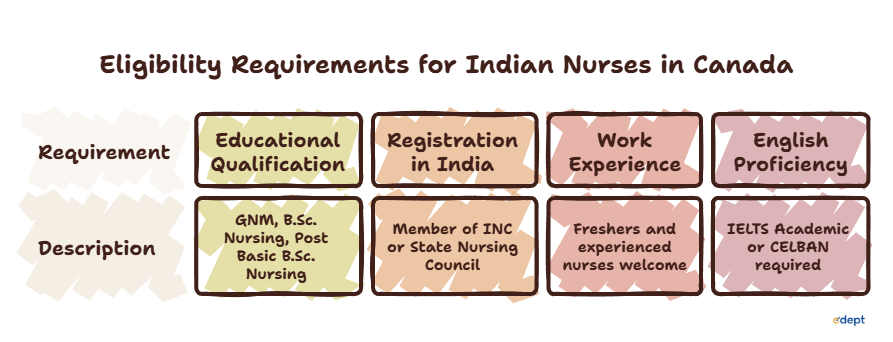
Indian candidates, before applying for nursing jobs in Canada, need to fulfill some specific educational and professional criteria. The required criteria tend to differ slightly between provinces or according to the nature of the nursing job. Generally, internationally trained nurses need to show that they meet the Canadian standard.
Educational Qualification
Nursing registration in Canada is open to Indian nurses who have nursing qualifications like the General Nursing and Midwifery (GNM), Bachelor of Science in Nursing (B.Sc Nursing), or Post Basic Bachelor of Science in Nursing (Post Basic B.Sc Nursing). Applicants should provide educational transcripts and nursing education credentials during the credential evaluation process. A four-year B.Sc Nursing degree is often preferred because it closely aligns with Canadian nursing education standards, although GNM graduates may also be eligible depending on provincial requirements and assessment outcomes.
Registration as a Nurse in India
Applicants have to be members of a recognized nursing regulatory body within India, either the Indian Nursing Council (INC) or the State Nursing Council. Registration of the applicant is mandatory as proof of their eligibility for a nursing license review in Canada.
Work Experience
Both freshers and experienced nurses can explore opportunities in Canada, but candidates with clinical experience often have a stronger profile during licensing and job applications. Some companies tend to look out for nurses with about one or two years of practical experience in hospitals, critical care nursing, med-surg, ER nursing, or even in community care. Yet, some provinces and companies have alternative methods for hiring newly graduated nurses.
English Language Proficiency
English language proficiency is a necessity for nurses to communicate well with patients. The IELTS Academic test and the Canadian English Language Benchmark Assessment for Nurses (CELBAN) are two of the most widely recognized language tests in Canada. Minimum score requirements could be different according to province and the nurse regulatory body.
Also read: Best Nursing Courses After 12th
Step-by-Step Process for Indian Nurses to Work in Canada
Having a good understanding of how Indian nurses work in Canada makes it easier for candidates to break down the process into smaller, clear steps. While licensing requirements may actually vary based on provinces, most internationally educated nurses follow a similar pathway involving credential assessment, registration, licensing examinations, and immigration procedures.
Step 1: Credential Assessment
The very first step is to verify your nursing education, registration status, and professional credentials. Canadian authorities assess whether your nursing qualifications are actually comparable to Canadian standards. Candidates should gather documents like academic transcripts, nursing certificates, registration proofs, identity documents, and employment records.
Step 2: Apply Through NNAS
Most internationally educated nurses begin their licensing journey through the National Nursing Assessment Service (NNAS). NNAS acts as a centralized assessment body that reviews nursing education, registration, and work experience documents before forwarding the assessment report to the provincial nursing regulator. The NNAS application process generally includes:
- Creating an NNAS account
- Selecting the nursing category
- Submitting identity documents
- Sending educational transcripts directly from the institution
- Providing employment verification records
After assessment, NNAS issues an Advisory Report that is used during provincial registration.
Step 3: Provincial Nursing Registration
After getting your NNAS report, candidates must apply to the nursing regulatory authority of the province where they wish to work. Each province has its own nursing regulator and registration requirements. Some major regulators include:
- Ontario – College of Nurses of Ontario
- British Columbia – British Columbia College of Nurses and Midwives
- Alberta – College of Registered Nurses of Alberta
The regulator evaluates your qualifications, competency requirements, and language proficiency, and licensing eligibility before granting registration approval.
Step 4: Clear Licensing Exam
Candidates applying as Registered Nurses are required to pass the NCLEX-RN exam, which is the primary licensing examination used across most Canadian provinces. Depending on the province and individual assessment outcome, some candidates may also need to complete bridging programs, competency assessments, or additional coursework before becoming fully licensed.
Step 5: Apply for Jobs and Immigration
Once licensing requirements are completed or substantially progressed, candidates can actually begin applying for nursing jobs in Canada for Indians through hospitals, healthcare networks, and long-term care facilities. After securing a job offer, candidates may qualify through pathways such as:
- Employer-sponsored work permits
- Express Entry
- Provincial Nominee Programs
- Healthcare-focused immigration streams
Best Nursing Roles Indian Nurses Can Apply for in Canada
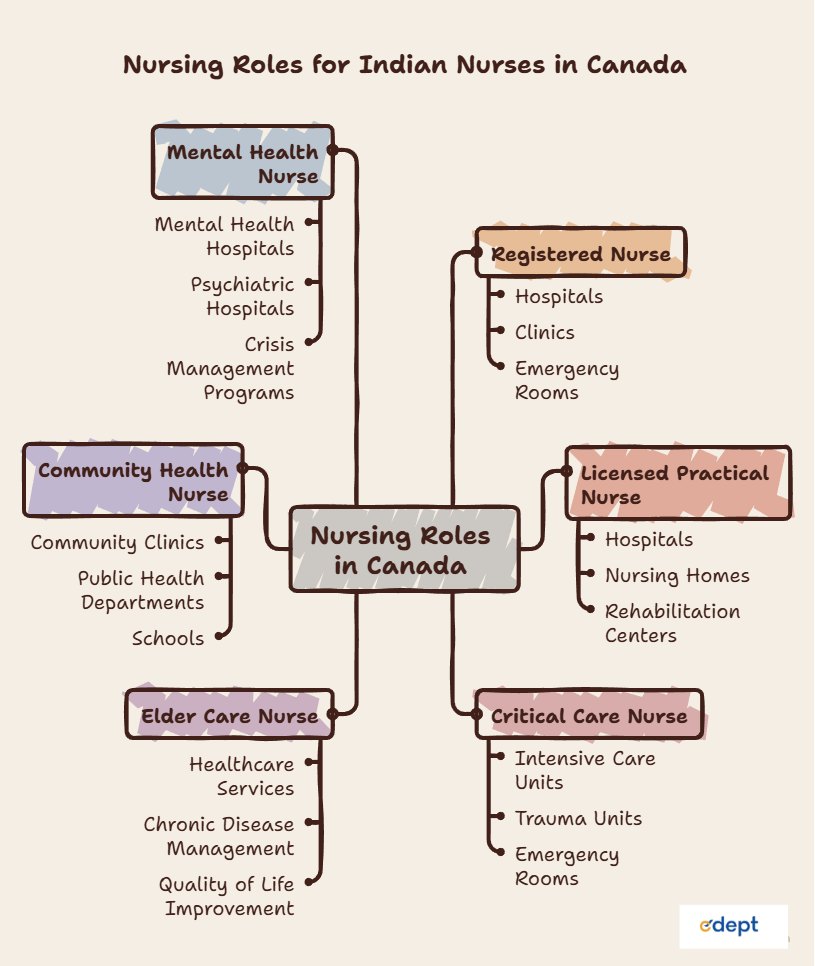
A variety of career options exist in Canada for Indian nurses in hospitals, community care, rehabilitation centers, and extended care centers. Based on their qualification, experience, and registration, nurses can pursue careers in different areas of medicine that have high demand in Canada.
Registered Nurse (RN)
Registered Nurses are amongst the most sought-after healthcare professionals in Canada. They give direct patient care, deliver medications, coordinate the process of treatment, and assist the healthcare teams. Most Registered Nurses operate from hospitals, clinics, emergency rooms, and other specialized healthcare settings.
Licensed Practical Nurse (LPN)
LPNs or Licensed Practical Nurses work for patient care under the direction of RNs and doctors. The job role involves monitoring patients, providing assistance with treatment, and giving regular nursing care. LPNs can be found working in hospitals, nursing homes, rehabilitation centers, and long-term care centers.
Critical Care Nurse
Critical Care Nurses attend to patients with critical or life-threatening illnesses. The nurses operate in intensive care units, trauma units, emergency rooms, and specialized hospital units. Given the increasing demands for healthcare services in Canada, critical care nursing continues to be an invaluable field of study.
Elder Care Nurse
With Canada having an aging population, there is an increasing demand for Elder Care Nurses across the country. Elder Care Nurses take care of elderly individuals in terms of healthcare services, managing their chronic diseases, and improving their quality of life.
Community Health Nurse
Community Health Nurses concentrate their efforts on the prevention of diseases, patient education, public health programs, and home health care. They work in community clinics, public health departments, schools, and outreach health care programs.
Mental Health Nurse
Mental Health Nurses assist individuals suffering from psychiatric disorders, emotional disturbances, and psychological problems. They operate in mental health hospitals, psychiatric hospitals, rehabilitation centers, healthcare institutions, and crisis management programs. With increasing attention towards mental health issues, there is a high demand for Mental Health Nurses in Canada.
Also read: Career Opportunities In The United States After Clearing the NCLEX-RN
Salary of Nurses in Canada
The most common reason why many Indian nurses migrate to Canada to develop their nursing careers is because of the lucrative pay package offered in Canada. The salary for nurses in Canada changes depending on experience, specialization, province, and type of health care facility. In addition to the basic pay that nurses earn in Canada, there are other forms of pay, such as bonuses and overtime pay.
Entry-Level Salary
- Average annual salary: CAD 65,000 – CAD 80,000
- Suitable for fresh graduates and newly licensed nurses
- Common work settings include hospitals, community healthcare centers, rehabilitation facilities, and long-term care homes
- Salary may vary based on province, employer, and shift allowances
Mid-Level Salary
- Average annual salary: CAD 80,000 – CAD 100,000
- Typically requires 3-7 years of clinical experience
- Professionals often take on additional patient care responsibilties and team coordinaion duties
- Opportunities increase in specialized departments and larger healthcare organizations
Specialized Nursing Salaries
- Average annual salary: CAD 95,000 – CAD 130,000+
- High-paying specializations include Critical Care Nursing, Emergency Nursing, Mental Health Nursing, and Nurse Practicioner roles
- Specialized nurses are in strong demand due to growing healthcare workforce shortages
- Additional certifications and advanced clinical expertise can further increase earning potential
Province-Wise Average Nurse Salary in Canada
| Province | Average Annual Salary |
| Ontario | CAD 75,000 – 105,000 |
| British Columbia | CAD 80,000 – 110,000 |
| Alberta | CAD 85,000 – 115,000 |
Among these provinces, Alberta and British Columbia often offer some of the highest nursing salaries, while Ontario provides the largest number of healthcare employment opportunities.
Provinces in Canada with High Nursing Demand
Demand for nurses is increasing in many parts of Canada due to the expansion of the healthcare sector, aging population, and shortage of workforce. There are various provinces that recruit internationally trained nurses and provide immigration-friendly channels to meet the healthcare requirements.
Ontario
Ontario has one of the biggest healthcare systems in Canada and always recruits nurses for hospitals, long-term care centers, community health centers, and other specialized units of the healthcare sector. There are several employment opportunities available in Ontario cause of its high population and rapid growth in the healthcare sector.
British Columbia
Growing demand for nurses is common in British Columbia due to increased healthcare services in urban and rural areas of the province. Recruitment opportunities in this province favor internationally trained nurses and provide employment options at hospitals, mental health, and community healthcare centers.
Alberta
Alberta has some of the best salaries for nurses in Canada, and the province keeps recruiting nurses for hospitals, emergency care centers, and rural hospitals. Investment in healthcare facilities is also rising in Alberta.
Saskatchewan
Nursing shortages are common in Saskatchewan, especially in small cities and rural areas. The province has a reputation for being welcoming to immigrants and makes use of provincial nominee programs (PNP) to bring in health workers.
Nova Scotia
Nova Scotia has become an attractive destination for internationally trained nurses because of the aging population in the province and the need for more healthcare workers. There are healthcare-based immigration programs that help to recruit nurses in the region.
Exams Required for Indian Nurses
To be eligible for nursing registration in Canada, nurses from India have to prove not only their language proficiency but also their professional qualification before being able to practice nursing in Canada. There may be slight variations in the requirements set by particular provinces or types of nursing; generally, all internationally trained nurses are obliged to pass language tests and licensing exams to be registered.
English Language Tests
To demonstrate English proficiency, Indian nurses may be required to clear one of the following language assessments:
- IELTS Academic (International English Language Testing System) – Widely accepted by Canadian nursing regulators.
- CELBAN (Canadian English Language Benchmark Assessment for Nurses) – A healthcare-focused English proficiency test specifically designed for nursing professionals.
- Minimum score requirements vary depending on the province and nursing regulator.
Licensing Exam
For candidates applying as Registered Nurses (RNs), clearing the NCLEX-RN (National Council Licensure Examination for Registered Nurses) is typically mandatory. The exam evaluates:
- Clinical nursing knowledge
- Patient care and safety practices
- Critical thinking and decision-making abilities
- Professional nursing competency
Passing the NCLEX-RN is a key step toward obtaining nursing registration and applying for Registered Nurse positions in Canada.
Additional Bridging Programs
Depending on the province and assessment outcome, some internationally educated nurses may be required to complete bridging or adaptation programs. These programs help candidates:
- Understand Canadian healthcare standards
- Learn clinical documentation practices
- Adapt to patient care protocols
- Meet province-specific competency requirements
Immigration Pathways for Indian Nurses to Canada
Various immigration programs in Canada make it relatively easier for eligible healthcare professionals to settle and establish themselves permanently in the country. Due to being recognized as a priority profession, there are several immigration programs that have healthcare workers as their key selection criterion. For Indian nurses, these immigration options offer the prospect of getting employment and permanent settlement in Canada along with their families.
Express Entry
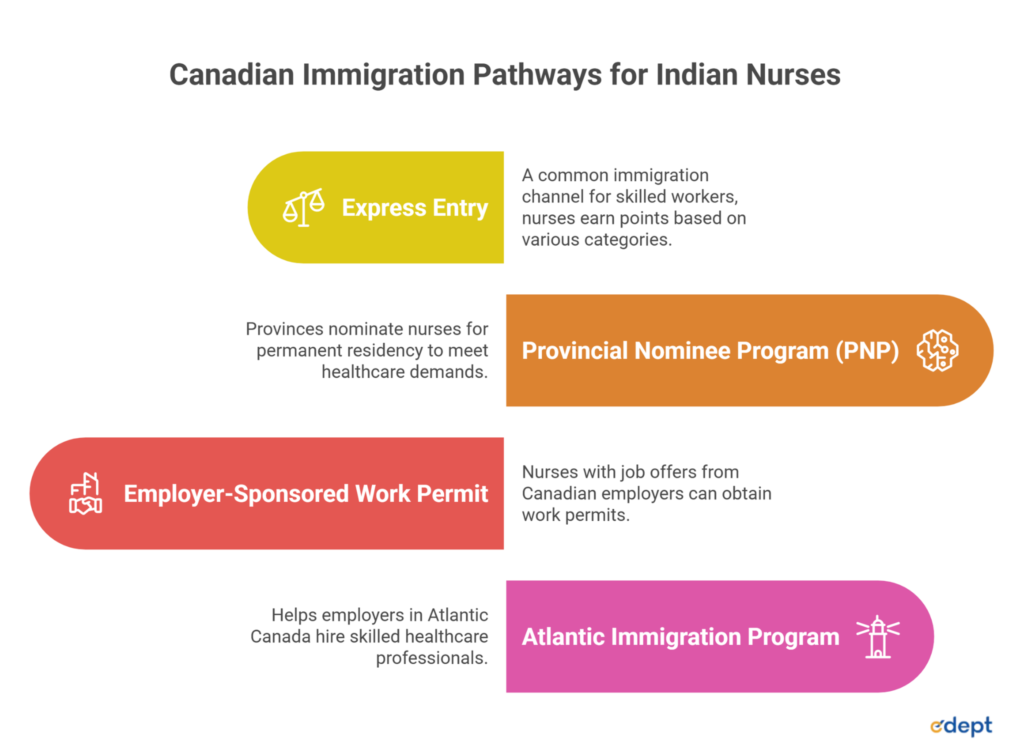
Express Entry is one of the most common immigration channels for skilled workers. Nurses who are eligible under this program can earn points under various categories such as age, education, work experience, and language. These professionals tend to get extra points from healthcare-related draws or selections based on occupation.
Provincial Nominee Program (PNP)
Some provinces in Canada run PNP programs for the purpose of fulfilling their demand for healthcare professionals. There are several provinces, such as Ontario, British Columbia, Alberta, Saskatchewan, and Nova Scotia, that nominate nurses for permanent residency.
Employer-Sponsored Work Permit
Indian nurses who get job offers from Canadian health care employers will be eligible to obtain work permits under the employer sponsorship program. This enables Indian nurses to begin working in Canada and gain Canadian work experience that will eventually help in making their applications for permanent residency easier.
Atlantic Immigration Program
The Atlantic Immigration Program (AIP) helps employers in Atlantic Canada, including Nova Scotia, New Brunswick, Prince Edward Island, and Newfoundland and Labrador, hire skilled health care professionals. Indian nurses hired under such employers may find it easier to apply for immigrant status or permanent residency in Canada.
Challenges Indian Nurses May Face
Though Canada provides great employment opportunities for nursing professionals, there are a few hurdles that Indian nurses might encounter while obtaining their license and migrating. Getting to know about those hurdles in advance could assist Indian nursing aspirants in tackling them easily.
Credential Recognition
The initial hurdle that comes with obtaining a nursing license in Canada is evaluating the nursing qualification as per Canadian standards. The education qualifications, clinical experience, and practical expertise of nursing aspirants have to be assessed properly prior to proceeding with registration.
License Delays
Obtaining a Canadian nursing license by Indian nurses takes time owing to the procedure involved in verifying their credentials and language proficiency, along with other examinations conducted in Canada.
Costs of Migration
It is recommended that candidates plan for costs associated with credential evaluation, language testing, licensing examinations, immigration processes, and costs associated with moving costs. Effective financial planning may help avoid stress during the process.
Adapting to the Healthcare System
The Canadian healthcare system, workplace culture, documentation policies, and standard of care for patients can be very different from those in India. Often, nurses have to go through a period of adaptation and acclimatization to the new system of work.
Why Skill-Based Nursing Education Matters for Global Careers
Healthcare employers across countries like Canada, the UK, Australia, and Germany increasingly prioritize practical skills alongside academic qualifications. Nurses who can confidently handle real-world clinical situations, communicate effectively, and adapt to healthcare environments often have better employment prospects. Key reasons skill-based nursing education is important:
- Practical Clinical Exposure: Employers prefer candidates with hands-on experience in patient care, clinical procedures, and healthcare operations.
- Simulation-Based Learning: Simulation labs help students practice emergency response, patient handling, and clinical decision-making in a controlled environment.
- Hospital Training & Internships: Clinical postings provide exposure to healthcare technologies, documentation standards, and multidisciplinary care teams.
- Soft Skills Development: Communication, empathy, teamwork, cultural awareness, and patient interaction skills are essential for delivering quality healthcare.
- Global Career Readiness: Practical training helps nurses adapt more easily to international healthcare standards and workplace expectations.
How edept Supports Students
At edept, nursing education focuses on practical learning through simulation-based training, hospital exposure, clinical skill development, and industry-oriented learning. This approach helps students build the competencies required for successful nursing careers in India and international healthcare destinations such as Canada, the UK, Australia, Germany, and the USA.
Why Choose edept for Global Nursing Career Preparation
A successful international career in nursing involves a lot more than just being academically qualified. In today’s world, healthcare employers seek applicants with high clinical knowledge, practical exposure, communication skills, and the capacity to cope with global healthcare systems. The edept nursing program offers career-specific education and relevant skill development to students.
Industry-Focused Learning
The nursing program at edept is geared towards meeting the current demands of the healthcare system, as well as the emerging expectations of the industry. As part of the program, nursing students get exposure to the latest nursing trends, standards of patient care, new technology in healthcare, and competencies required in the industry.
Practical Training Support
Clinical training is an important element for nurses seeking to launch their careers. Practical experience through clinical exposure, simulations, laboratories, and healthcare scenarios is emphasized during the nursing program.
Career Guidance for International Opportunities
In case you plan to pursue an international career as a nurse, then knowledge regarding the process, including licensing, documentation, examination, and other issues related to global healthcare systems, becomes important.
Skill Development for Global Healthcare Jobs
Apart from nursing skills, edept also emphasizes communication skills, teamwork, working with patients, problem-solving, and professional ethics. All these qualities are highly regarded in any healthcare system around the world and prepare students well to take up their nursing profession in countries like Canada, Australia, UK, among others.
Shape the Global Healthcare Sphere with edept. Click Here!
Step-by-Step Career Roadmap for Indian Nursing Students
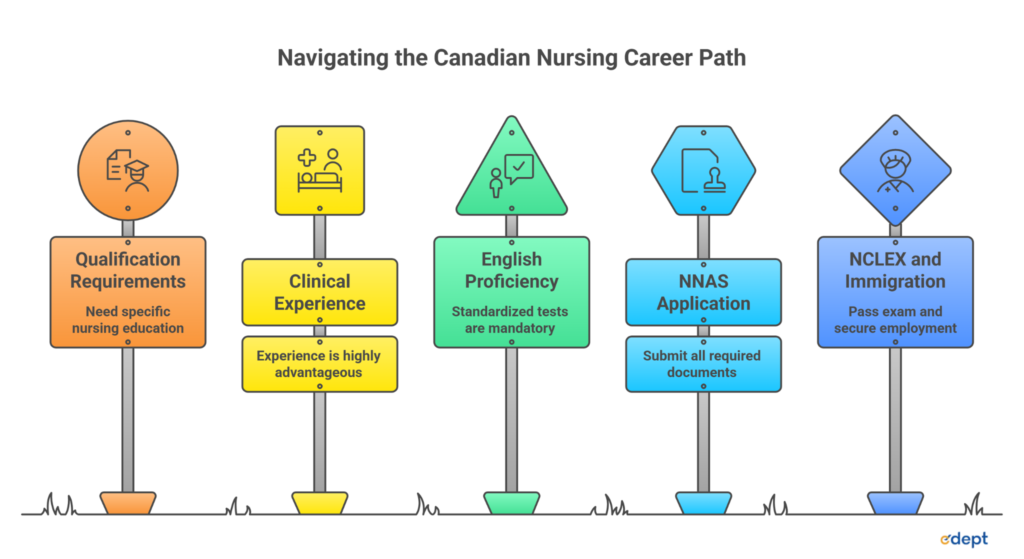
Becoming a nurse in Canada necessitates a step-by-step procedure to ensure success. By following the appropriate procedure, one can make their way into the nursing profession within the Canadian healthcare sector.
Step 1. Complete Nursing Qualification
First and foremost, one must complete an education in nursing either through GNM, B.Sc Nursing, or Post Basic B.Sc Nursing to become eligible. Good grades and clinical skills are essential in order to be successful in credential assessment.
Step 2. Gain Clinical Experience
While it is possible to pursue the appropriate pathway as a fresher, having 1-2 years of experience within a hospital or in a clinical setting can be beneficial for Indian nurses. Medical-surgical nursing, intensive care, emergency care, or community health care can all be valuable experiences in your portfolio.
Step 3. Prepare for the English Test
Gain excellent communication abilities and be ready for standardized language testing such as IELTS Academic or CELBAN. Achieving the required language proficiency standards is key to obtaining nursing registration as well as immigrating to Canada.
Step 4. Apply for NNAS
Present all necessary documentation through the National Nursing Assessment Service (NNAS). Educational qualifications, nursing license, ID proofs, and references should be presented to have a solid basis for your licensing process in Canada.
Step 5. Clear NCLEX and Move to Canada
Apply for provincial nursing registration, fulfill bridging programs if needed, and take the NCLEX-RN test. Upon receiving a license, begin looking for employment in the nursing field in Canada through Express Entry, PNPs, or work permits.
Future Scope for Indian Nurses in Canada
Career prospects for nurses are particularly promising in Canada because of its growing demand for healthcare professionals. In addition, many Indian nurses aspire to pursue their careers abroad as a way to grow their experience and enhance their professional development.
Aging Population Growth
As more and more people in Canada enter their senior years, there is an increased need for healthcare professionals to work in hospitals and rehabilitation facilities. Consequently, Indian nurses who specialize in geriatrics can enjoy good employment opportunities and develop their skills and experience.
Long-Term Care Demand
Along with other sectors, long-term care institutions are experiencing substantial growth in demand for healthcare professionals. Many nurses who specialize in caring for the elderly, managing chronic diseases, and helping patients with rehabilitation processes have found their niche in this field.
Immigration-Friendly Healthcare Careers
Careers in the field of medicine are highly valued by Canadian immigration officials, they are actively promoted as a means of immigration. Nurses can successfully participate in Express Entry, PNPs, and other healthcare-specific immigration streams.
Summary: How Canada is the Perfect Country for your Nursing Dreams
Canada still appears to be one of the most exciting locations where Indian nurses can develop their careers in an international setting, earn high wages, and enjoy the possibility of permanent residency. There is significant interest among various hospitals, care facilities, clinics, and nursing specialties, which allows skilled nursing specialists to enjoy many interesting career opportunities. Though certifications and immigration involve different steps, such as credential evaluation, NNAS registration, language proficiency tests, and NCLEX-RN test passing, with proper preparations, this process may become quite smooth. Above all, practical training, communication skills, and working experience will be essential in building a career in international nursing. Proper preparation and relevant competencies will help Indian nurses to succeed and secure excellent career prospects. Related Links:
| Global Healthcare Analytics Jobs | Nursing as a Career in India |
| Nursing Entrance Exams | Key Skills for a Successful Nurse |