Cloud computing skills are critical for securing high-paying, in-demand IT roles as organizations transition from on-premise systems to scalable cloud infrastructure. Professionals with expertise in platforms like AWS, Azure, and Google Cloud can access lucrative positions such as Cloud Architect, DevOps Engineer, and Cloud Security Specialist, which are consistently ranked among the most sought-after careers.
Cloud computing is now the foundation of the current IT infrastructure, driving applications, data storage, and digital services in industries. From startups to global enterprises, organizations are rapidly shifting toward cloud-based systems to improve scalability and efficiency. According to International Data Corporation, over 90 percent of businesses will pursue a cloud-first strategy, which will result in cloud skills becoming a key demand in IT recruiting.
Although with such demand, there is a significant challenge, many graduates lack job-ready cloud skills for IT placements, which reduces their chances of getting selected during campus recruitment. Firms are not just seeking theoretical knowledge anymore; they would rather hire individuals who can operate with actual cloud environments and tools.
In this blog, we will explore everything that you need to know to grow as a cloud specialist and boost your placement drive to have a strong IT career.
What Are Cloud Computing Skills
Cloud computing skills refer to the ability to design, deploy, manage, and scale applications to cloud platforms. These are key skills needed to develop modern IT systems that operate on remote servers rather than on the local infrastructure.
Definition of Cloud Skills
Cloud skills involve working with clouds to handle computing resources, storage, networking, and applications. These skills are utilized by professionals to implement services, track performance, and provide security. These features are vital in managing scalable applications in today’s software development and IT processes.
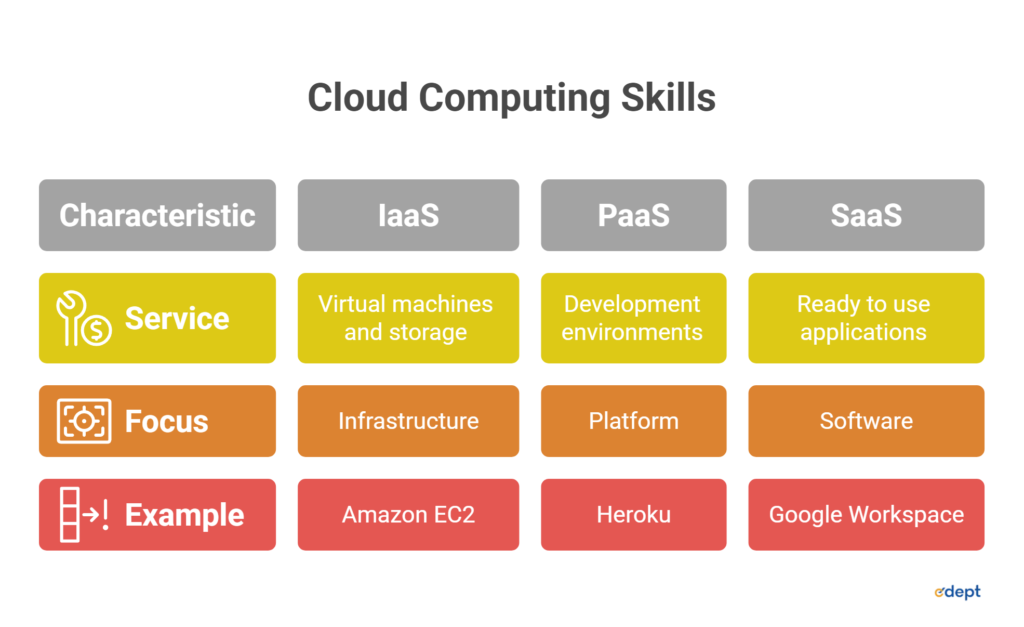
Types of Cloud Services
Cloud computing is built on three maintenance models:
- IaaS (Infrastructure as a Service): Service includes virtual machines and storage
- PaaS (Product as a Service): The service consists of development environments
- SaaS (Software as a Service): Delivery of ready to use applications
These are the main models that organizations use to increase their flexibility.
Popular Cloud Platforms
There are many well-known cloud platforms, but these three stand out ahead of them:
- Amazon Web Services (AWS)
- Microsoft Azure
- Google Cloud Platform (GCP)
According to reports from Statista, AWS leads in the global cloud market, followed by the other two. This makes it essential to master them for cloud computing careers.
Why Cloud Skills Are in High Demand
Cloud professionals are in high demand as organizations are going for cloud-first strategies. Companies are spending massively on cloud services, which are demanding experienced personnel.
Shift to Cloud-Based Infrastructure
Firms are shifting away from on-site infrastructure to cloud-based infrastructure to achieve greater scalability, cost-effectiveness, and performance. Cloud computing enables companies to roll out applications more quickly and dynamically manage resources. This change has made cloud expertise a core requirement in IT jobs, particularly software development and infrastructure management.
Growth of Digital Transformation
The digital transformation is pushing the use of clouds in various industries such as finance, health, and e-commerce. According to reports by Gartner, the worldwide expenditures on public cloud services are expected to rise dramatically, powered by AI, big data, and automation. Cloud helps companies to develop more quickly and expand operations on a global scale, which requires experienced employees.
Talent Shortage in the Cloud Domain
Despite the high demand, there is a shortage of professionals who have hands-on cloud skills. Numerous candidates have no practical experience, which poses a mismatch of talent to industry needs. This shortage creates more opportunities for those with cloud expertise, making cloud skills in IT placements very important in the job market.
How Cloud Skills Improve Placement Opportunities
Cloud skills have a direct influence on your chances of being hired in the IT positions, as it prepares you to be an employee aligned with the latest industry requirements. Recruiters are now more interested in people who are able to work with actual cloud systems and not just on paper.
Increased Employability
Candidates with cloud skills for IT placements are considered job-ready since they are capable of deploying applications, managing infrastructure, and troubleshooting systems in real-life situations. Recruiters prefer such profiles as they reduce onboarding time. Based on the LinkedIn insights, cloud computing has been one of the most sought-after skills in the world, so a candidate who has cloud computing as one of their skills will be more competitive during campus placements and job interviews.
Access to High-Demand Job Roles
Having proficiency in key skills to work with cloud systems opens the opportunity to work in roles like cloud engineer, DevOps engineer, solutions architect, and site reliability engineer. Such positions are important in startups, MNCs, and SaaS firms. These jobs are rising as organizations go cloud-first, and offer great career opportunities to both freshers and seasoned professionals.
Higher Salary Packages
Cloud professionals have higher pay than traditional IT professionals. Cloud positions are high-paying positions based on industry salary sites because of skill scarcity and demand. Entry-level positions in the clouds are already competitive, and the salary of experienced specialists can be much greater, particularly when it comes to DevOps and cloud architecture jobs.
Read more: Ultimate Guide to Cloud Platforms
Key Cloud Skills That Boost Placements
Placement knowledge requires more than simple knowledge to be noticeable, as you must have practical cloud skills under your belt to stay ahead in IT placement. Firms seek individuals who are capable of working with tools, automating workflow, and ensuring system reliability.
Cloud Platform Expertise
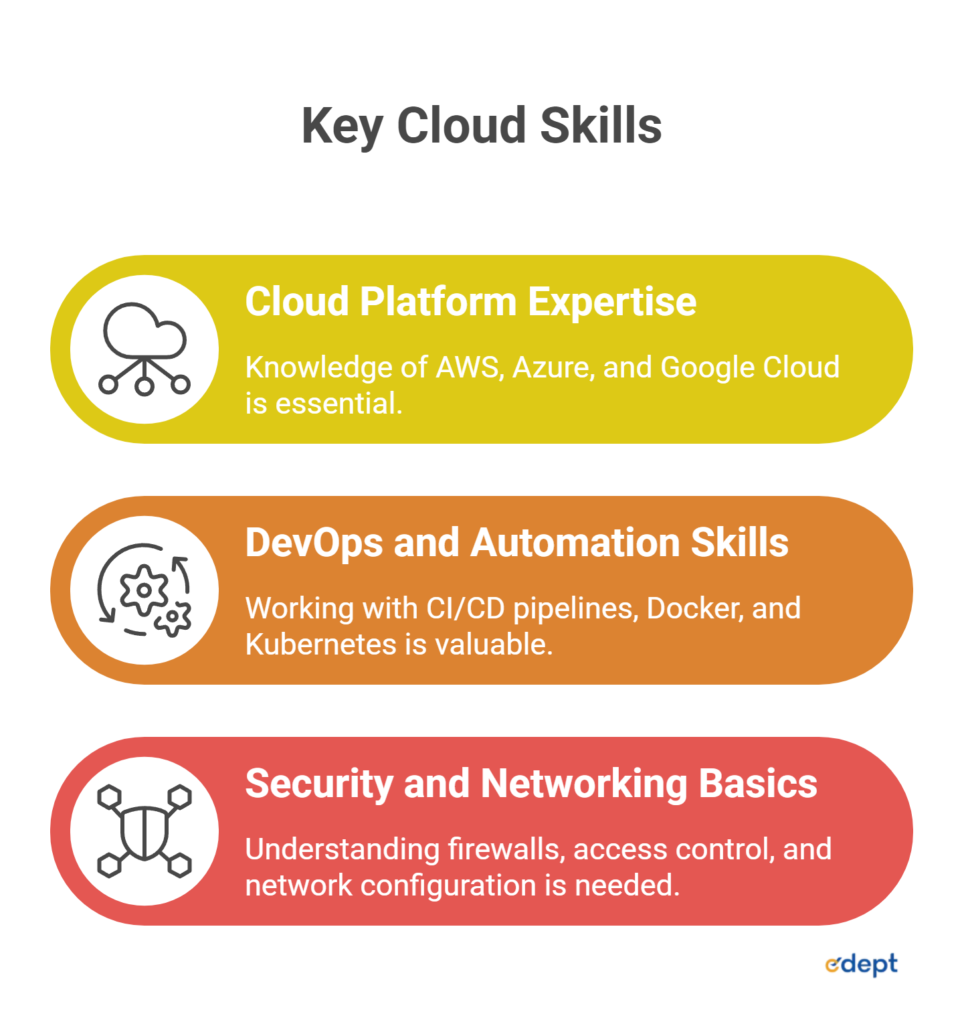
It is important to know about key cloud platforms such as AWS, Azure, and Google Cloud. You are expected to know how to deploy applications, operate virtual machines, storage, and services. Statista notes that these platforms are the dominant ones in the market, and they are essential in establishing a good career in cloud computing.
DevOps and Automation Skills
DevOps skills are highly valuable in cloud roles. These involve working with CI/CD pipelines, Docker, Kubernetes, and automation tools. These abilities help in quicker deployment, system surveillance, and effective development cycles. Organizations would want to hire individuals capable of automating the systems and operating scalable systems, with current DevOps practices.
Security and Networking basics
Cloud security and networking are needed to ensure safe and reliable systems. You need to know about such concepts as firewalls, access control, encryption, and network configuration. With the growth of cyber threats, companies are looking for professionals who can protect the cloud environments and allow them to adhere to the industry standards.
Top Cloud Certifications For Better Placements
Cloud certifications help you show off your skills and make your profile shine in placements. Certifications are commonly looked at by recruiters to check your technical knowledge and hands-on understanding. The right certification will do a great job in enhancing your chances of acquiring cloud-related jobs.
Beginner Certifications
If you are starting your journey in cloud computing, beginner certifications help you build a strong foundation. Some of the famous options include:
- AWS Certified Cloud Practitioner
- Microsoft Azure Fundamentals
- Google Cloud Digital Leader
These certifications cover basic cloud concepts, services, and use cases, making them ideal for freshers aiming for entry-level IT placements.
Intermediate Certifications
Once you have basic knowledge, you can push for intermediate certifications that will help you move into practical roles:
- Azure Administrator Associate
- AWS SysOps Administrator
- Google Associate Cloud Engineer
The main focus of these certifications is to demonstrate expertise in designing scalable and secure cloud systems, making candidates highly valuable in the job market.
Advanced Certifications
Advanced certifications are mainly for specialized and high-paying roles:
- AWS Solutions Architect – Professional/Associate
- Google Professional Cloud Architect
- Azure Solutions Architect Expert
These certificates will show employers that the students are capable enough to work on real-time tasks from day one.
Cloud Career Opportunities in IT
Cloud computing has created numerous career possibilities at various levels of experience. Due to the growing use of cloud computing technologies by companies, the number of jobs requiring professionals with cloud computing skills is growing more rapidly.
Entry-Level Roles
Freshers may begin positions like Cloud Support Associate, Junior Cloud Engineer, or IT Support Engineer. These roles are dedicated to monitoring systems, troubleshooting, and helping with cloud deployments. They assist in developing the basic understanding of cloud services and platforms, making them suitable for those who are new to the IT sector.
Mid-Level Roles
Experienced professionals get hired for roles such as Cloud Engineer, DevOps Engineer, or Systems Engineer. These positions include application deployment, infrastructure management, automation of processes, and system performance. It is necessary to have practical knowledge of cloud services and DevOps tools with the experience you bring.
Advanced Roles
Advanced positions such as Cloud Architect, Solutions Architect, or Site Reliability Engineer (SRE) are expected to be filled with advanced professionals with specializations in cloud computing. Main operations involve the design of scalable systems, performance optimization and security at scale. These positions are well-paid and require technical knowledge and intelligence.
Also read: Cloud vs DevOps
Salary Trends for Cloud Professionals
A cloud computing position is one of the most well-paid jobs in IT because of the high demand and the shortage of skilled labor. Depending on the experience, position, and mastery of such platforms as AWS, Azure, and Google Cloud, salaries are different.
Entry-Level Salary
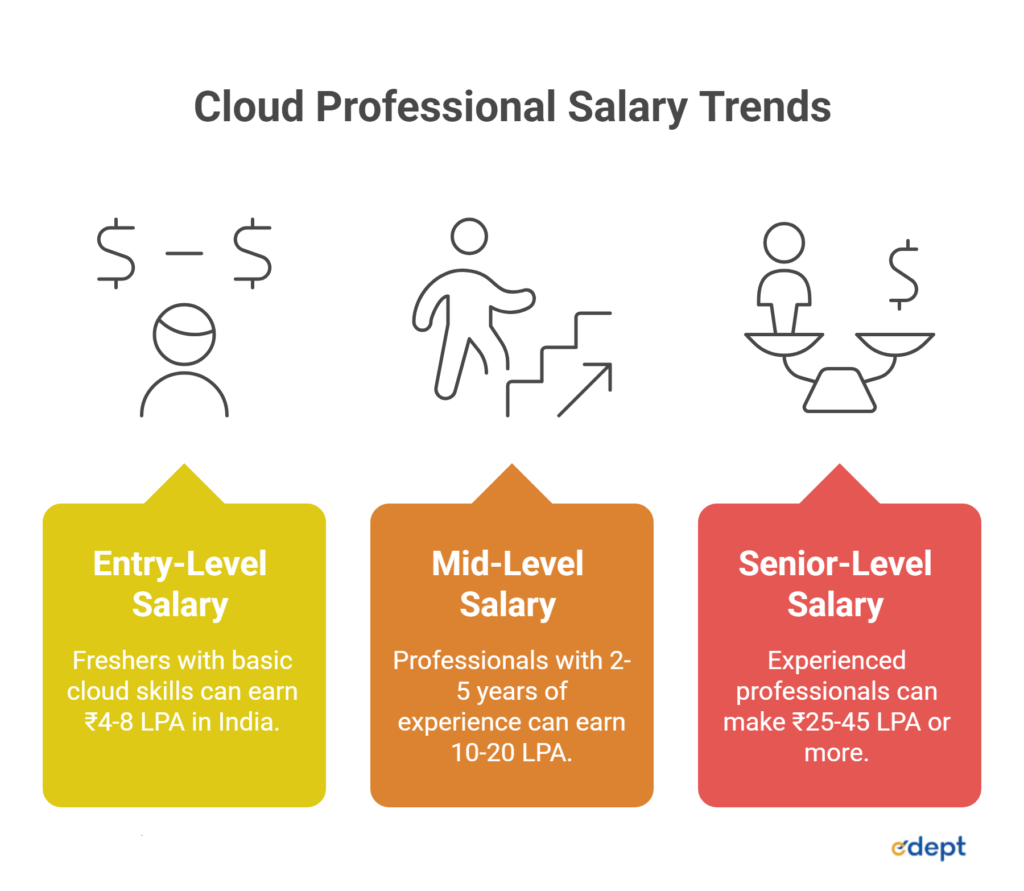
Freshers with basic cloud skills can earn ₹4-8 LPA in India. Roles such as cloud support associate or junior cloud engineer have competitive starting packages compared to traditional IT occupations, particularly when the applicants are certified and experienced in projects.
Mid-Level Salary
Professionals who have 2-5 years of experience can work in roles like cloud engineer or DevOps engineer and earn 10-20 LPA. Naukri.com and AmbitionBox state that the demand for cloud professionals remains high, and it has led to an increase in salaries in mid-level jobs.
Senior-Level Salary
Experienced professionals like cloud architects or solutions architects may make ₹25-45 LPA or more, based on experience and company. In these positions, they design systems on a large scale and will need to be very familiar with cloud architecture, security, and performance optimization.
How to Learn Cloud Skills for Placements
An effective way to learn cloud skills is through a systematic process that will integrate theory and experience. To increase your odds of getting IT placements, you must target real-world skills as opposed to knowledge.
Choose the Right Course
Begin with a course that includes the basics of either AWS, Azure, or Google Cloud, and practical training. Find programs that have real-world projects, labs, and industry-related tools. An organized course can assist you in creating a solid background and comprehending the application of cloud systems in actual IT setups.
Practice Hands-On Projects
Experience is very important in cloud computing. Projects such as deploying a website, creating a cloud storage solution, or a scalable application. Practical experience will open your eyes to the real-world applications and enhance your ability to solve problems, which is necessary when attending technical interviews and placements.
Build a Portfolio
It is more likely that you will be shortlisted by creating a powerful portfolio, showcasing your cloud projects. Present your work on platforms like GitHub, and provide information about the tools and technologies. A healthy portfolio is a good illustration of your applied knowledge, making your profile recognisable by the recruiters.
Common Mistakes to Avoid
Most students commit some errors when studying cloud computing when we talk about placements. These will greatly help you in ensuring that you are placed in your desired organization.
Learning Theory Without Practice
Using videos and notes alone without practical experience will not help you understand core cloud skills. Recruiters are looking for applicants to use applications and solve real problems, rather than talk about concepts, from day one.
Ignoring Certifications
Missing certifications may decrease your likelihood of being shortlisted. Certifications are proof of what you know and demonstrate an interest in learning. Although they are optional, they contribute immensely towards credibility, particularly among freshers.
Not Building Projects
Your profile is not attractive to recruiters without any projects. An actual experience in the creation of cloud projects will prove that you have acquired knowledge and will make your resume shine on the job market.
Also read: Everything about Cloud Security
Future Scope of Cloud Computing Careers
Cloud computing remains among the most rapidly developing fields in IT, and has a high career outlook. With the advancement of technology, the need for qualified cloud professionals will only grow in the upcoming years.
Increasing Industry Adoption
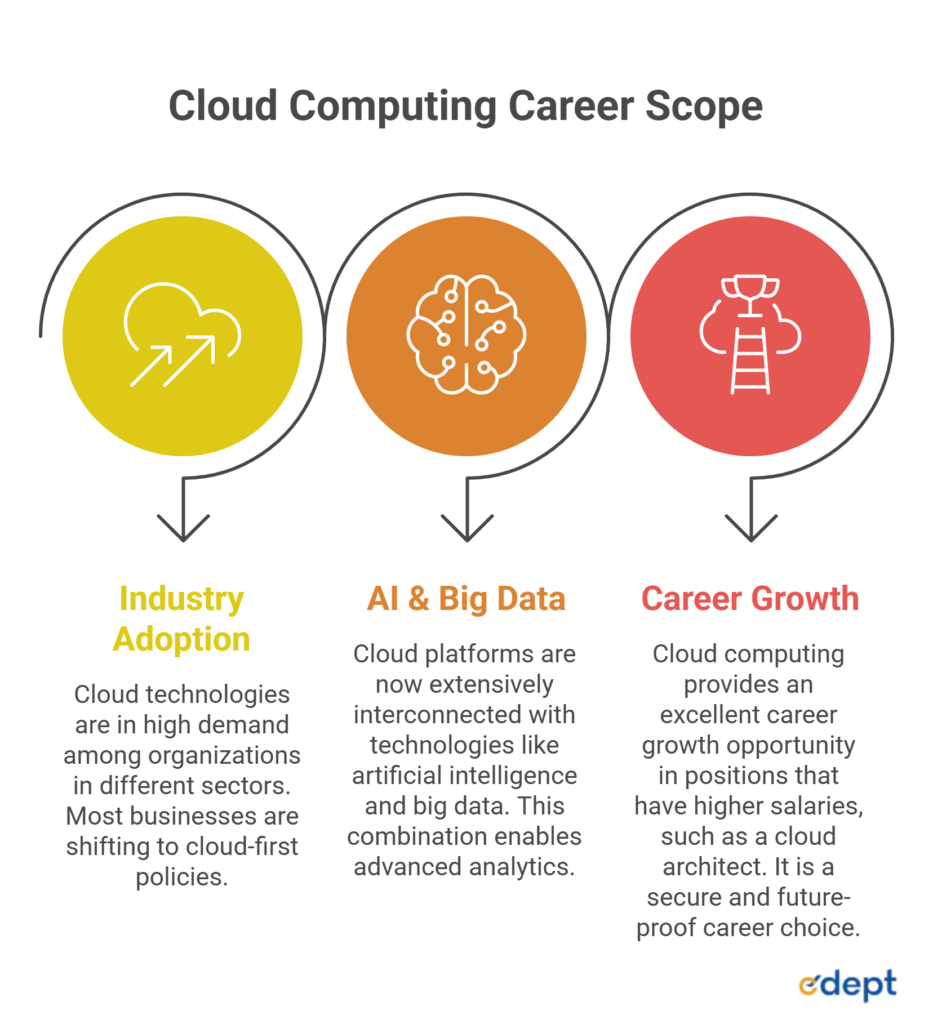
Cloud technologies are in high demand among organizations in different sectors. The most recent report by International Data Corporation indicates that most businesses are shifting to cloud-first policies, and cloud expertise will be crucial in future IT positions.
Integration with AI & Big Data
Cloud platforms are now extensively interconnected with technologies like artificial intelligence and big data. This combination enables advanced analytics, automation, and scalable applications, creating new career opportunities for professionals with cloud computing skills.
Long-Term Career Growth
Cloud computing provides an excellent career growth opportunity in positions that have higher salaries, such as a cloud architect. It is a secure and future-proof career choice in the field of IT due to constant demand and changing technologies.
Final Verdict: How Mastering Cloud Skills can Benefit in You Placements
Cloud skills have emerged as a significant aspect of enhancing placement prospects in IT professions. As the use of cloud technologies in the industries gains momentum, employers are seeking applicants who are proficient in working with actual cloud systems and tools.
The advantages of learning cloud computing are immense, with higher employability, improved job positions, and attractive remuneration. As a student or a working professional, learning cloud skills to secure IT placements can act as a huge leap for you in the current competitive employment environment.
The trick is to begin at an early age, work on practical skills, and develop a solid portfolio and credentials, and you are all set to thrive in the field of cloud computing.