Ethical training is essential in nursing education to equip future nurses with the skills to navigate complex moral dilemmas, prioritize patient well-being, autonomy, and dignity, and foster trust in the healthcare system, ultimately leading to safer, more compassionate care.
In nursing, there are a lot of critical yet health-related chores every day. So one should be aware of ethics, as in a few cases, the decisions a nurse makes can test their professional and personal virtue. Ethical training in nursing education prepares them to make better decisions in complicated healthcare situations. Ethical training in nursing teaches them how patients are to be respected and how they follow professional standards, as technical skills are not enough. One should also have Ethical training. According to the WHO patient safety reports, nearly 1 in 10 hospitalized patients are harmed due to preventable care errors, many linked to ethical lapses. This makes ethical training no longer optional in modern nursing education.
Healthcare now is dynamic and heavily regulated. Hospitals feature strong compliance regulations, and patients are more conscious of their rights. So global healthcare standards have become more standardized. So it becomes necessary and not an option to get ethical training in nursing. Ethics can guide nurses on how to conduct themselves when the rules are not clear. With the increase in legal incidents and global professional ethics, nurses must also become morally or ethically strong.
Also Read: Nurse Salary in India in 2026
What Is Ethical Training in Nursing Education?
Ethical training in nursing education enlightens on educating ethical values, professional conduct and decision-making strategy which would help caring for patients. It acknowledges what is fair, what is right, yet accountable for caring for patients.
Nursing ethics or morality is based on an ethical substructure which guides actions and wisdom in clinical practice. These substructures help nurses balance patient necessities, medical counselling and legal management.
Some of the key ethical principles taught in nursing are listed below.
Autonomy
A patient can make their own decision without any pressure. Autonomy means free will and is a core medical ethics principle identifying a person’s right to make informed decisions.
Duty to avoid harm
Avoiding any kind of harm, whether intentional or unintentional. It involves a reduced number of patient injuries, pain and suffering; it also helps to ensure that a nurse’s actions benefit the patient.
Holistic Treatment
Accountable nurses do everything in their power to present a holistic care attitude. This includes meeting with other healthcare professionals to serve the community of its health needs.
Confidentiality
Under HIPAA, a nurse is not allowed to reveal any medical data or patient information. As it is personal information about the patient, and is very confidential.
Equal Treatment For All Patients
Valuing each patient equally and educating the nurses in the same way to maintain professional standards and treat everyone with respect.
Why Ethics Is a Core Skill for Modern Nurses
Nursing is a profession where there should be faith and belief as the patient permits nurses to their most vulnerable moments, and trust depends on ethics, behaviourism, and professionalism.
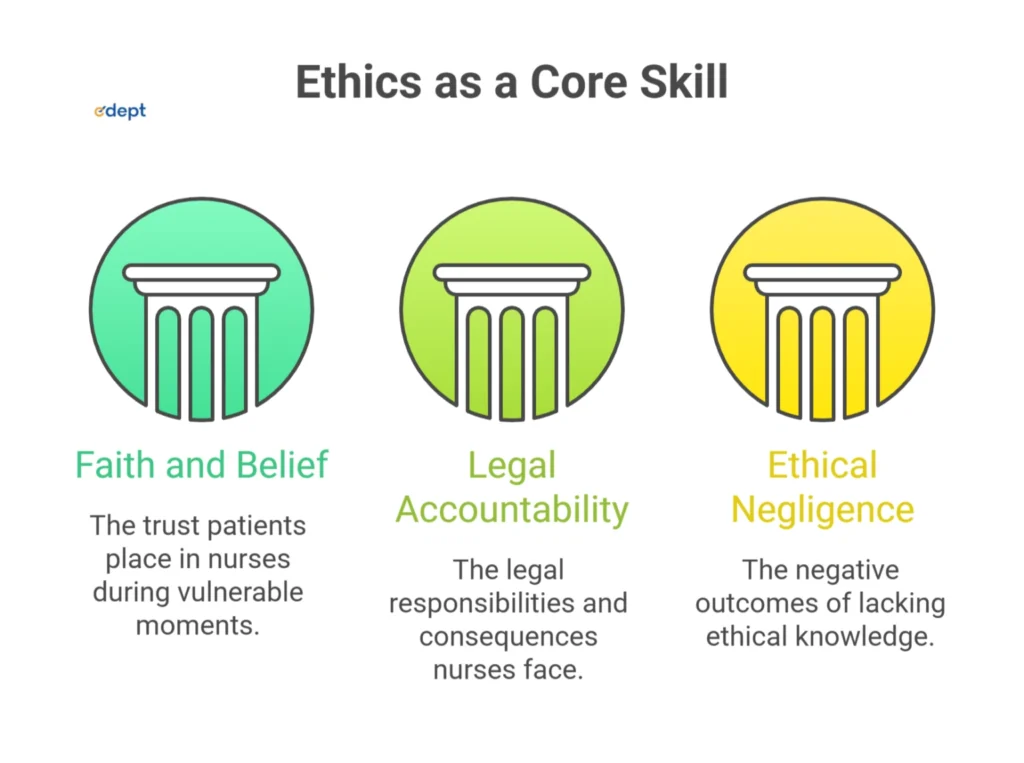
Today, nurses confront legal accountability a lot more than before. Be it errors or negligence, or especially ethical lapses. All can lead to a lawsuit and can even result in the cancellation of their license, which leads to perpetual career harm. That is why ethical knowledge can guide nurses in understanding their legal responsibilities better.
Ethical negligence can lead to harsh consequences, as many hospitals have reported an uptick in dereliction of their duty, such as malpractice claims and patient complaints. Most of these issues come from zero ethical knowledge in nursing and not from a lack of medical knowledge.
Key Areas Where Nurses Face Ethical Dilemmas
Nurses face ethical confrontations regularly. Some are listed below.
- Medication Errors: Medication errors are very common now. To avoid this, you must report mistakes honestly and keep in mind the patient’s safety. You must be transparent to prevent any type of harm to the patient.
- Confidentiality about the patient’s data: nurses see the most vulnerable side of the patients, and they also deal with a lot of confidential data about the patient. As a nurse, you must not disclose them.
- Provide information: nurses play a vital role in making sure that the patients understand everything happening in the treatment. Ensuring that the patient has accurate information about the treatment, including its benefits, risks, and alternatives, is necessary.
- Seeking additional views: Seeking additional views helps nurses make better decisions as they consult other professionals in this field.
- Respecting the patient’s right to informed decisions: respecting a patient’s decision, as they have the right to make decisions about themselves and their own care.
- Distribution of limited medical resources: During emergencies or a shortage, you should be able to make fair choices about the resources.
Importance of Ethical Training in Nursing Education
Ethical training in nursing education is necessary for shaping trusted, compassionate healthcare. It also deals with justice for the patients, ensuring fair treatment.
- Ethical training in nursing education plays a great role in shaping accomplished yet accountable professionals. Builds complex thinking and ethical cognitive skills.
- lessens critical inaccuracy by encouraging accountability and transparency. Trained by ethics, there is a high chance that the nurse reports an issue early.
- enhances the patient’s faith and contentment.
- Ethical nursing enhances communicative skills and teaches nurses to treat patients with respect.
- draws up a nurse for legal defense. Keeping an understanding of laws, consents and professional boundaries reduces risks.
- It builds up professional responsibility. Ethical nurses endorse the nursing law of ethics while maintaining high professional standards.
Global Nursing Standards and Ethical Compliance
Ethical training is identical to global nursing standards. Some international organizations that focus on ethics are listed below.
- The World Health Organization ( WHO ) code of ethics focuses on the safety of patients, along with public trust. It promotes trust, transparency and respect along with integrity, impartiality and commitment.
- The Nursing and Midwifery Council ( UK ) code of ethics prioritizes people, preserves safety and promotes professionalism.
- The Australian Nursing and Midwifery Council ( ANMC ) sees ethics and morality as a compulsory educational quality.
- The Canadian Nurses Association includes ethics in outlining core values, promoting justice and ensuring privacy.
How Ethical Training Improves Career Growth
Ethical training improves decision-making, a strong image, making a nurse more dependable and respected. It equips you with techniques on how to handle challenges that come on a day-to-day basis.
- Ethical training supports longer career growth in nursing.
- It improves job expertise. Hospitals favour nurses who show professionalism and acknowledge ethics.
- It lessens the risk of license suspension as ethically trained nurses make better decisions.
- Ethics support leadership. Ethical decision-making is necessary for administrative positions and senior nursing.
- It guides hospitals to meet accreditation requirements.
- Ethics are observed as a soft skill required by employers along with communication and team spirit.
How Nursing Institutes Should Teach Ethics
Scenario-based learning helps students understand real-time situation-based ethics. Analyzing clinical scenarios teaches ethics with practical duties in nursing. Constant assessment makes sure that ethical understanding is included in the course. Through simulation labs, students can practise decision-making. Ethical training by professional role models guides students better
Future of Ethical Training in Nursing
Healthcare has advanced a lot now, and so have ethical confrontations. Questions of accountability and decision control rose as Artificial intelligence has now come into the picture. Data protection ethics also became critical as there are digital health care records of patients.
Digital patient consent is necessary for ethical transparency and communication. A demand for consistent global ethical standards among various countries is seen in the global healthcare workforce. Ethical training in nursing education should adjust to such changes to stay applicable and effective.
How edept support ethical training for nursing education?
Through various industry-aligned programs, edept helps you build strong ethical foundations in nursing career development. It offers industry-aligned courses and programs aligned with real-world scenario-based learning techniques. Students learn about various things, like ethical decision-making and patient autonomy. The learning process goes beyond theory.
Make a start to your ethical nursing career with Edept and grow your global healthcare career.
Why Ethical Training Is Essential in Nursing Education?
Now it is not optional to know about Ethics. It is rather mandatory. It is a primary requirement for a patient’s safety, any legal accountability and professional reliability. Nurses confront complex decisions each day that require strong moral judgment. Given proper guidance and training, nurses are prepared for real-world challenges and are more confident and accountable.
Ethics also help to build up patient autonomy, trust, lessen risks and support global career shifting. It prepares nurses into more dependable healthcare professionals who also connect to international standards. Similarly, for institutions and students, it is good to invest in a course where there is ethical training in nursing education, as it builds stronger careers and safer healthcare.