Strong Communication Skills Transform Nursing patient safety, reduce errors, build trust, and enhance care quality. This guide explains why communication is essential for modern nurses in 2026 and how it transforms daily practice, teamwork, and career growth.
Nursing has evolved far beyond clinical tasks. In 2026, the ability to communicate clearly, confidently, and compassionately is one of the most powerful skills a nurse can have. Strong communication skills in nursing improve patient trust, reduce medical errors, strengthen documentation, and elevate the overall quality of healthcare delivery. It’s a core competency driving modern nursing practice across India.
Why Communication Skills Matter in Nursing
Communication is the bridge between clinical knowledge and patient-centred care. Nurses interact with doctors, patients, families, technicians, and administrators every single day. Clear communication ensures:
- Zero confusion during critical situations
- Accurate patient assessment
- Smooth coordination across departments
- Higher patient satisfaction
- Stronger care outcomes
When nurses communicate well, healthcare becomes safer, faster, and more effective.
How Strong Communication Skills Transform Nursing Practice in 2026
Strong Communication Skills Transform Nursing patient safety, reduce errors, build trust, and enhance care quality. This guide explains why communication is essential for modern nurses in 2026 and how it transforms daily practice, teamwork, and career growth.
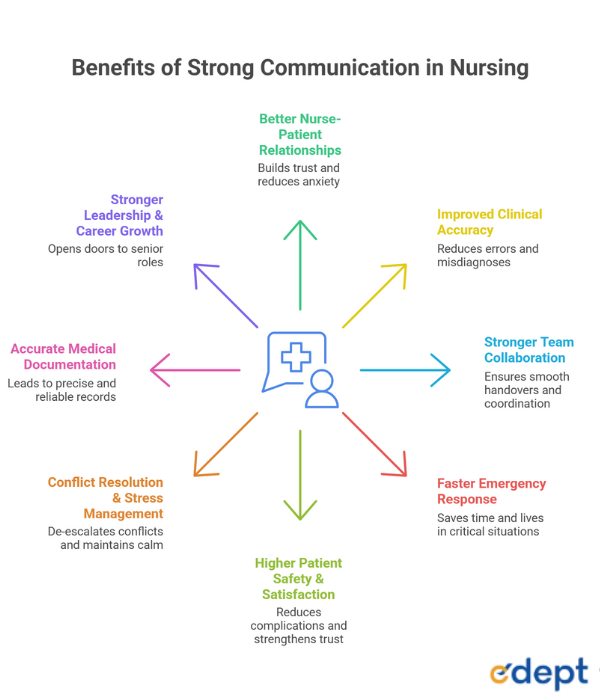
1. Better Nurse–Patient Relationships
Effective communication helps nurses build trust, reduce patient anxiety, explain procedures, and provide emotional support. Patients who understand their treatment cooperate better and show improved recovery outcomes.
2. Improved Clinical Accuracy
Clear questioning, active listening, and detailed documentation reduce the chances of misdiagnosis, medication errors, and missed symptoms.
3. Stronger Team Collaboration
Healthcare is a team effort. Nurses who communicate well ensure smooth handovers, accurate updates to doctors, and efficient coordination with emergency teams.
4. Faster Emergency Response
In critical moments, communication needs to be sharp and quick. Strong communication skills help nurses transmit information accurately, saving time and lives.
5. Higher Patient Safety & Satisfaction
Clarity in explaining medications, precautions, and after-care instructions reduces complications and strengthens patient trust in nursing staff.
6. Conflict Resolution & Stress Management
Nurses often deal with tense situations. Good communication helps de-escalate conflicts with families, handle complaints professionally, and maintain calm under pressure.
7. Accurate Medical Documentation
Documentation errors are a major cause of clinical issues. Strong communication skills lead to precise writing, structured reports, and reliable records.
8. Stronger Leadership & Career Growth
Nurses with strong communication skills become team leaders, coordinators, educators, and nursing managers. It’s a defining skill for senior roles.
Types of Communication Every Nurse Must Master
Discover how strong Communication Skills Transform Nursing patient care, improve teamwork, boost safety, and shape nursing practice in India in 2026. Check the list of communication skills that every nurse should master.
1. Verbal Communication
Speaking clearly, using simple language, and adjusting tone for different patient groups.
2. Non-Verbal Communication
Body language, eye contact, posture, and gestures convey reassurance and empathy.
3. Written Communication
Accurate charting, reports, and digital documentation ensure seamless care.
4. Active Listening
Listening helps nurses identify symptoms that patients struggle to explain directly.
5. Interprofessional Communication
Collaborating with doctors, therapists, and technicians through effective updates.
Communication Barriers in Nursing & How to Overcome Them
1. Patient Anxiety
Use calm tone and simple explanations.
2. Cultural or Language Barriers
Use translation tools or clarify through visual instructions.
3. High-Pressure Environments
Structured communication protocols like SBAR reduce errors.
4. Emotional Exhaustion
Mindful communication practices help maintain clarity even during long shifts.
Communication Skills Needed for Nursing in 2026
- Empathy
- Patience
- Clarity in verbal instructions
- Observation and listening
- Confidence during emergencies
- Accuracy in digital documentation
- Calm conflict-handling skills
- Team coordination habits
These competencies directly improve patient outcomes.
Career Impact of Strong Communication Skills
Nurses with advanced communication skills move into:
- Charge Nurse roles
- Nurse Educator positions
- Nursing Superintendent jobs
- Quality & Safety Coordinator roles
- Patient Relations specialists
- Home Healthcare leadership roles
Communication becomes a competitive advantage in the nursing job market.
How edept Helps You Build Strong Communication Skills in Nursing
edept integrates Strong Communication Skills Transform Nursing training into its nursing programs through:
- Patient interaction modules
- Scenario-based learning
- Practical case discussions
- Documentation and reporting training
- Emergency communication drills
- Behavioural & soft skills development
Learners become confident, patient-ready, and equipped for modern healthcare environments.
FAQs
1. Why are communication skills important in nursing?
They help build trust, improve safety, reduce errors, support teamwork, and enhance overall patient care quality.
2. How do communication skills affect patient safety?
Clear communication prevents medication mistakes, misinterpretations, and incomplete documentation, ensuring safer care.
3. What are the essential communication skills for nurses in 2026?
Empathy, active listening, verbal clarity, written accuracy, and strong interprofessional communication.
4. How can nurses improve communication skills?
Through training, practical exposure, patient interaction, mentorship, and structured communication frameworks like SBAR.
5. Do Strong Communication Skills Transform Nursing?
Yes. Nurses with strong communication skills advance faster into leadership, educator, and administrative roles.