Aged care worker duties include providing personal care, assisting with mobility, supporting daily activities, offering emotional companionship, monitoring wellbeing, ensuring safety, and helping older adults maintain dignity, comfort, and independence in their daily lives.
As the population ages worldwide, the demand for compassionate and skilled aged care workers is increasing rapidly. Aged care workers play a vital role in supporting older people and ensuring their satisfaction, security, and quality of life. They are responsible for providing essential services like personal care, emotional support, and help with daily chores, whether through in-home assistance or residential aged care homes. Through this blog, we will guide you through the aged care worker duties, the skills required, and career responsibilities. We will also explore why working as an aged care worker is both meaningful and rewarding.
Start Your Aged Care Career Today
Get certified with Edept’s comprehensive aged care training and step into a rewarding profession.
Who is an Aged Care Worker?
An aged care worker is a professional who is accountable for helping older people with their daily chores, health needs, and social needs. Like the nurses, aged care workers basically focus on care assisting, promoting independence, and emotional aid rather than any clinical processes. Below are some of the places where an aged care worker works:
- Residential aged care facilities, i.e., aged care homes.
- Hospitals and rehabilitation centres
- Community care assistance, i.e., supporting elders in their own homes.
- Respite care facilities.
Become a Skilled Aged Care Worker
Learn personal care, support techniques, and real-world skills to care for older adults effectively.
Key Aged Care Worker Duties
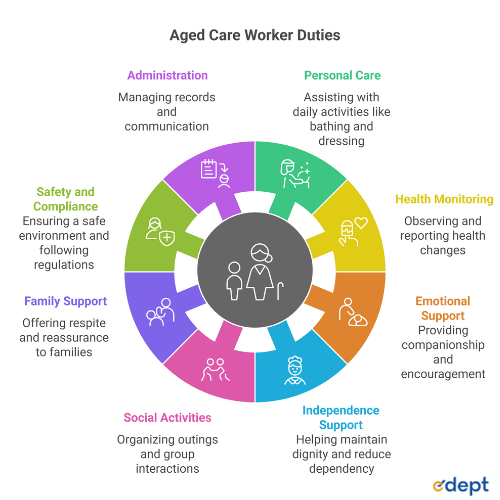
The aged care worker’s duties are diverse, which combine personal care, practical support, and companionship. Check the key duties and responsibilities of an aged care worker.
Providing Personal Care
The main duties of aged care workers are helping older people with daily activities. This type of quality care confirms satisfaction and reassurance for people who may struggle with independence. Check the pointers for detailed information:
- Assisting them with bathing, dressing, and grooming.
- Helping them with toilet and continence management.
- Supporting them to walk, move.
- Helping with feeding and making sure they get adequate nutrition.
Health Monitoring
It is to be noted that the aged workers are not nurses, but they play an essential role in monitoring and informing changes in the patient’s health. Some of the duties are:
- Monitoring mental and physical health.
- To record and report symptoms to the nurse.
- Reminding about timely medicines.
- Regular exercise and wellness programs.
Emotional Support & Companionship
Older people face isolation, loneliness, and emotional challenges with age. The work of an aged care worker helps in mental well-being apart from physical support.
- Regular conversations and active listening
- Engagement in hobbies, social activities, and games.
- Encourage the elderly people when they face any difficulties.
- Creating a sense of belonging among elderly people to support their emotional well-being.
Independence & Daily Living Skills Support
Aged care workers aid old people to maintain dignity and lessen dependency. An important part of working in aged care is encouraging liberation wherever feasible.
- Cooking simple food and helping them in preparation.
- Learning adaptive strategies.
- Organising home chores such as washing and cleaning.
Fostering Social Activities
Social interaction becomes crucial for old people to reduce feelings of isolation. This helps support group ties and enhance emotional wellness. The aged care worker duties may vary from person to person.
- Organise outings, group activities, and games.
- Supporting religious or cultural practices
- Creating possibilities for aged people to interact with their equivalents.
Family Support
The majority of families rely on aged care workers for respite care. Their duties may include mentioned below:
- Offering provisional care to relieve family caregivers.
- Provisioning reassurance about their loved one’s well-being.
- Helping the family members understand the care plans.
Safety and Compliance
Safety is a crucial responsibility in aged care worker duties. They must ensure that they maintain a safe environment, like helping them prevent any falls, hazards. Following infection control and hygiene standards, along with complying with aged care regulations and policies. They are responsible for handling emergencies patiently, calmly, and efficiently.
Administration and Documentation
Assistance by the aged care workers is also administered and often requires documentation duties. They are responsible for updating care plans and improvement messages, maintaining daily records, and providing support whenever required. Communication with healthcare professionals and supervisors.
Build a Meaningful Career in Aged Care
Gain hands-on experience, industry knowledge, and expert guidance through Edept’s training programs.
How to Become an Aged Care Worker?
To become an aged care worker, you must typically be involved in formal training and practical experience. Below is a detailed approach on how you can become a good aged care worker.
- Complete relevant educational qualifications – If you are at the entry level, in many countries, you may be required to have a Certificate III in Individual Support (Ageing).
- For advanced roles and leadership roles, you might be required to have a Certificate IV in Ageing Support.
- Gain practical experience in courses that can give you placement opportunities in aged care homes.
- Training in dementia care, palliative care, and mental health support helps build your profile as an aged care worker, strengthening your career prospects.
- First aid and CPR certification adds a significant advantage to your profile.
At Edept, we provide industry-recognised aged care training courses which is specifically designed for you to prepare to get the right mix of practical experience and knowledge. Aged Care Programs by edept include hands-on placements, expert-led modules, and certifications that can shape you as a confident candidate for the aged care industry.
Start your journey at edept today and build a meaningful career in aged care. Enroll now in edept.
Grow Your Future in the Aged Care Sector
Acquire the essential skills and qualifications needed to work confidently in aged care roles.
Essential Skills and Qualities for an Aged Care Worker
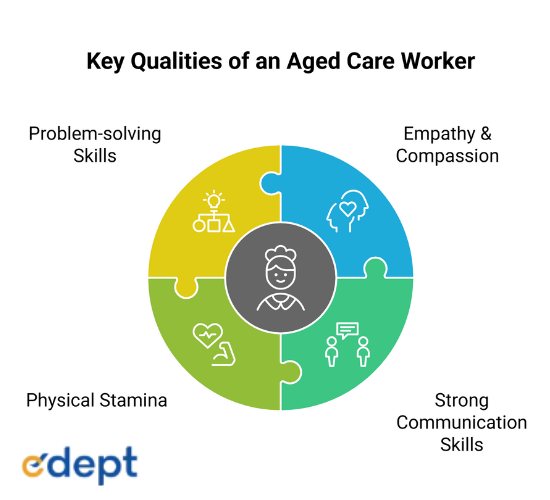
The essential skills and qualities required to become a successful aged care worker include more than just technical skills, but also demand patience and compassion. Some of the key qualities include:
- Empathy and Compassion that treat residents with respect and kindness.
- Strong Communication Skills will be required to interact with residents, their families, and healthcare teams.
- An aged care worker requires physical stamina as the role demands mobility, stability, and long hours.
- Problem-solving skills are another aspect that will be required for dealing with unexpected situations.
Top Reasons to Start Your Aged Care Worker Career
The aged care career is one of the most demanding careers, with significant growth observed throughout the years. Here are some of the reasons why you should consider starting your career as an aged care worker.
- With the growing demand and ageing populations, aged care workers are one of the fastest-growing sectors across the world.
- Aged care as a career is meaningful work that provides care and support to older people, making a real difference in people’s lives.
- There are diverse opportunities in the field of Aged Care Worker Career. You get to work in residential aged care homes, home care, or any type of community programs.
- The career progression is exemplary. You get to work with specialisations in dementia care, disability support, or management.
- There is job security as there is consistent demand for aged care workers, which ensures that you have long-term stability in your career.
Conclusion
Aged care workers are the gut of aged residential care facilities and community support services. The duties of an aged care worker range from emotional support and personal care to documentation and safety. These are important to ensure that older people live with comfort and dignity. If you are passionate about helping others, especially old age people, this career is ideal for you. It offers not only job security but also the reward of making a great difference every single day.
Related Links:
FAQs
- What does an aged care worker do?
Aged Care Worker Duties include helping older people with their daily chores, which can be in personal care, companionship, as well as social engagement by ensuring they have appropriate safety and dignity.
- What are the main duties of an aged care worker?
The core duties of an aged care worker are personal care, monitoring health parameters, companionship, helping with food, and mobility.
- What’s the difference between an aged care worker and a nurse?
An aged care worker focuses on providing daily living assistance to the older person, emotional support, and, most importantly, personal care.
- What qualifications do I need to become an aged care worker?
Certificate III in Individual Support (Ageing), Certificate IV in Ageing Support are some of the important certifications you can go for if you are willing to excel as an aged care worker.
- Can I work in aged care without previous experience?
Yes, you can work in aged care without any previous experience, as many companies provide in job experience.