A BBA degree and a strong skill set are not the same thing, and most students figure that out a little too late. In 2026, what actually gets you hired is practical capability. Data analytics, digital marketing, communication, and business tools are what employers are screening for from the very first round. Get those right and the difference shows up not just in where you land but in what you earn and how quickly things move from there.
Finishing a BBA course in 2026 gets you a formal degree. What happens after that depends on something else entirely. The Mercer-Mettl India Graduate Skill Index 2025 found that only 42.6% of Indian graduates are actually employable, which is a number that should give every student pause. The India Skills Report 2026 by CII, ETS, AICTE, and Taggd highlights three skills employers keep asking for. Communication. Problem solving. Critical thinking. These are still the skills where graduates fall short most often, and that has not changed much despite improvements elsewhere. Just technical knowledge among the workforce is not enough.
So what are the skills BBA students must learn before they graduate? The short answer is a combination of practical business skills, technical tools, and soft skills that make you genuinely useful to an employer from day one, not just academically qualified.
This blog covers every major skill area that matters for BBA placements in 2026, the tools behind them, the mistakes to avoid, and how to build a profile that actually opens doors.
Why Skill Development Is Critical for BBA Students in 2026
A BBA degree opens doors, but it no longer opens them on its own. Employers in 2026 are hiring for what candidates can actually do on day one, and students who build practical skills during their degree consistently find themselves ahead of those who do not.
Gap Between Academic Learning and Industry Needs
Most BBA programs teach theory well. The problem is that employers are not hiring for theory. They are hiring for the ability to do things, analyze data, run a campaign, manage a project, communicate clearly under pressure, and contribute from week one.
The gap between what a BBA covers and what industry actually needs is real and well-documented. Students who coast through their BBA without building anything practical alongside it tend to feel it most during placement season, usually when it is already too late to do much about it.
Rise of Skill-Based Hiring
Something has shifted noticeably in the way how companies hire in 2026. Pure generalists are harder to place, and narrowly focused specialists are not always what businesses need either. What recruiters are increasingly drawn to are candidates who sit somewhere in the middle. People who understand how a business works can make sense of data and actually know how to get things done. That combination is what most employers mean when they talk about a hybrid skill profile, and it is becoming the standard rather than the exception.
This shift is happening across consulting, technology, banking, marketing, and almost every sector that BBA graduates target. Knowing how to use Power BI, run a Google Ads campaign, or build a financial model now carries more weight in many hiring conversations than the grade on your transcript.
Impact on Placements and Salary
Skilled students get better offers. That is not an opinion. It is what the placement data consistently shows. BBA graduates with demonstrable technical skills, a portfolio of real projects, and relevant certifications regularly command higher starting packages than those with identical degrees but no practical capability to show for it.
The in-demand skills for business students that lead to better placements are not mysterious. They are learnable, and they are all within reach during the three years of a BBA program if students make the effort.
Read More: How Business Analytics Can Improve Marketing Strategies
Core Business Skills Every BBA Student Needs
Every BBA program covers business fundamentals, but the students who stand out during placements are the ones who went further. Certain core skills come up in almost every hiring conversation, and knowing which ones to focus on makes the preparation far more targeted.
1. Communication and Presentation Skills
Every employer, across every sector, lists communication as a top requirement. And yet this is consistently one of the weakest areas for fresh graduates.
Communication for BBA students means more than being able to speak confidently. It covers:
- Verbal communication: Speaking clearly in interviews, meetings, and presentations is something most people assume will come naturally. It rarely does without practice. Start by organising your thoughts before you speak and the clarity follows on its own.
- Written communication: Professional emails, reports, and proposals that get to the point. Most employers will judge your capability on how you write before they ever meet you.
- Presentation skills: Slides on PowerPoint or Google Slides that actually communicate something rather than just looking busy. Less is almost always more here.
- Active listening: Understanding what is actually being asked before you respond. It sounds obvious and is genuinely uncommon in most interview rooms.
Where to practise: Toastmasters for speaking, Google Slides and Canva for building presentations worth sitting through.
2. Problem-Solving and Critical Thinking
Every business runs into problems. The people who get hired and promoted are not necessarily the smartest in the room. They are the ones who can identify what the actual problem is, think through it without panicking, and come up with something workable. That is a skill, and it is one that takes deliberate practice to build.
For BBA students, critical thinking in practice looks like:
- Breaking a messy, complicated situation down into parts that are actually manageable
- Leaning on data and logic to make a case rather than just going with a gut feeling
- Looking at more than one possible solution before deciding which one makes the most sense
- Keeping your head when the pressure is on and the deadline is close
Where to practise: Case study competitions, business case analysis, and spending time with company annual reports are genuinely useful here. This is one of those BBA skills for placements that interviewers test directly through situational questions and live case exercises, so practising it in conditions that feel real makes a difference.
3. Leadership and Team Management
Nobody hands you a leadership role on day one. But the employers who eventually will and are already looking for signs that you have handled some level of responsibility before arriving. That evidence usually comes from college group projects, student clubs, internships, places where things could go wrong, and you had to figure it out anyway.
The leadership skills BBA students must learn are less about authority and more about getting things done with other people:
- Figuring out who on your team is good at what and giving work accordingly
- Handling disagreements without letting them quietly kill the project
- Setting clear goals and actually following up on them rather than assuming everything is fine
- Keeping people motivated when momentum starts to slip
Where to practise: Lead a college event from start to finish, step up in a group project instead of waiting to be asked, take on a role in a student committee. Entry-level management hiring consistently looks for candidates who have already been given some responsibility and handled it without falling apart.
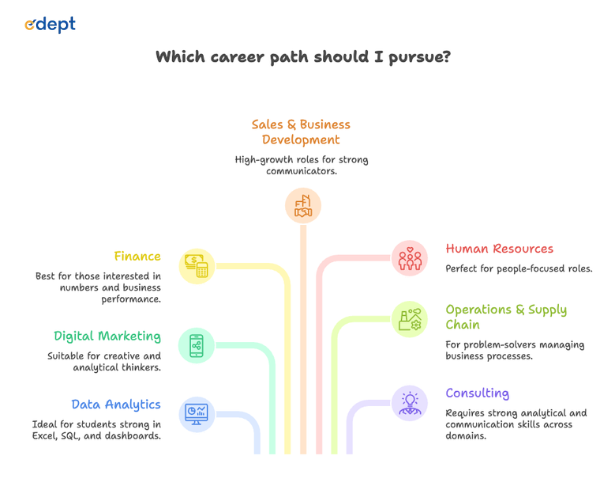
Top Technical Skills for BBA Students (High Demand)
Technical skills have quietly become one of the important skills BBA students must learn for placements. Most students underestimate how much weight recruiters put on them until they are sitting in an interview and realise the person next to them can do things they cannot.
Data Analytics and Excel Skills
Data literacy is no longer optional for business students. Every department from marketing to finance to HR now makes decisions using data, and being able to work with that data is one of the clearest skills BBA students must learn before entering the job market.
Essential data skills include:
- Excel: VLOOKUP, pivot tables, cleaning messy data, and building formulas that actually save time rather than create more work
- SQL basics: Writing queries to pull the data you need without having to ask someone in IT every single time
- Data visualisation: Turning numbers into dashboards that someone in a meeting can look at and immediately understand
- Statistical thinking: Getting comfortable with averages, trends, and correlations so data tells you something useful rather than just sitting there
Tools worth learning: Microsoft Excel, Google Sheets, SQL, Power BI, Tableau
BBA graduates who pick up certifications in data analytics alongside working knowledge of Excel, SQL, or Power BI consistently find doors opening into analytics and tech-adjacent business roles that would otherwise have been out of reach. It genuinely broadens what you can go after.
Digital Marketing Skills
Digital marketing is one of the fastest-growing career domains for BBA graduates. Businesses across every sector are investing heavily in their online presence, and people who can manage that presence are in consistent demand.
In-demand digital marketing skills for business students include:
- SEO: Understanding how search engines rank content and how to improve visibility
- Social media marketing: Managing platforms, creating content strategies, reading analytics
- Performance marketing: Running and optimising paid campaigns on Google and Meta
- Email marketing: Building campaigns, segmentation, analysing open and click rates
- Content marketing: Understanding how to create content that serves a business goal
Tools: Google Analytics, Meta Ads Manager, SEMrush, Mailchimp, HubSpot
This is one of the BBA career skills with the clearest direct path to employment. Agencies, startups, and corporate marketing teams all need people who can execute digital campaigns from day one.
Basic Financial and Business Analysis
Even if you are not targeting a finance role, financial literacy is a core BBA career skill that makes you more useful across every function.
Skills to build include:
- Reading profit and loss statements and balance sheets
- Building basic budgets and forecasts in Excel
- Understanding unit economics, margins, and ROI
- Analysing business performance through financial ratios
Tools: Excel, Tally, QuickBooks basics
Business analysts, marketing managers, and operations professionals all work with financial data regularly. Graduates who arrive able to read the numbers rather than needing someone to explain them always start from a stronger position.
Also Read: Is BBA Enough or Should You Pursue MBA Immediately?
Digital Skills That Boost Employability
Digital fluency is no longer something employers mention as a preference. It shows up as a requirement in a growing number of job descriptions that BBA graduates are directly competing for, and the gap between those who have it and those who do not is widening.
Tools and Software Knowledge
Employers assume that graduates can use technology. The reality is that most can use social media but far fewer can use the tools that businesses actually run on.
Essential software skills for BBA students include:
- CRM tools: Salesforce and HubSpot come up constantly in sales, marketing, and client-facing roles. Knowing your way around at least one of them before you start job hunting is worth the effort.
- Project management tools: Trello, Asana, Notion, and monday.com are how most teams actually track work. Showing up on day one already familiar with these saves everyone time, including you.
- Collaboration tools: Google Workspace, Microsoft 365, Slack, and Zoom are not optional extras. They are how modern workplaces function on a daily basis.
- Documentation tools: Microsoft Word and Google Docs sound basic, but professional formatting, clear structure, and clean presentation matter more than most students assume until they are producing real work for real people.
Business Intelligence Tools
Power BI and Tableau are the two most widely used business intelligence tools in Indian corporate environments. The ability to connect data sources, build dashboards, and present visual insights is one of the most directly valuable in-demand skills for business students.
Even a basic working knowledge of either tool, such as building a sales dashboard or visualising a marketing funnel, demonstrates analytical capability in a way that generic Excel skills do not.
Tool to learn: Power BI (free with a Microsoft account), Tableau Public (free version available)
Basic Tech Understanding
You do not need to code. But you do need to understand how technology affects the businesses you will work in. This includes a working understanding of:
- What AI tools exist and how they are being used in marketing, analytics, and operations
- What automation means for business processes
- How data flows through a business from collection to decision
BBA students who demonstrate technology awareness in interviews consistently stand out from those who treat tech as someone else’s problem.
Soft Skills That Give You a Competitive Edge
Technical skills get you through the screening round. Soft skills are usually what determine whether you actually get the offer. Recruiters notice the difference between candidates who can do the work and candidates who can also communicate, collaborate, and think clearly under pressure.
1. Time Management and Productivity
The ability to manage your own time, meet deadlines without reminders, and maintain output quality under pressure is something employers value and struggle to find. BBA career skills always include this, but few students actively develop it.
Practical habits worth building:
- Block time on a calendar for specific tasks rather than keeping a running to-do list that never quite gets done
- Set your own internal deadlines a day or two before the actual ones, because things always take longer than expected
- Track where your time actually goes for one full week and be honest about what you find
Tools worth trying: Notion, Google Calendar, the Pomodoro technique for focused work sessions
2. Adaptability and Learning Mindset
No curriculum moves as fast as the actual business world does, and 2026 has made that gap more obvious than ever. What you studied in your first year may already look different by the time you graduate. The students who handle this well are not necessarily the most naturally talented ones. They are the ones who stay curious, pick up new tools without making a production of it, and adjust when something stops working rather than waiting for someone to tell them what to do next. That quality shows up clearly in interviews, and employers who have been hiring for a few years know how to spot it.
Adaptability shows in how you talk about challenges in interviews. Employers notice the difference between someone who pivots and someone who freezes.
3. Networking and Relationship Building
Your network is one of the most practical BBA career skills you will ever develop, and it is built entirely through consistent, genuine effort over time.
Start by:
- Connecting meaningfully on LinkedIn with professors, alumni, and industry professionals
- Attending college fests, industry webinars, and professional events
- Following up after conversations rather than letting connections go cold
- Engaging with content shared by people in industries you want to enter
Most entry-level roles are found through referrals and networks rather than cold applications.
Why Skill-Based Learning Is the Key to Better Placements
Degrees get you shortlisted. Skills get you hired. That distinction matters more in 2026 than it ever has before, and students who figure it out early tend to walk into placement season with noticeably more confidence and considerably better options than those who do not.
Importance of Practical Exposure
Reading about marketing strategy is very different from running a real campaign and measuring its results. Practical exposure closes the gap between knowing and doing, which is exactly what placement interviewers are assessing.
Every skill you develop during BBA should ideally have a real application behind it. Not just a certificate, but something you actually built, ran, analysed, or delivered.
Role of Internships and Projects
Internships are where most in-demand skills for business students get genuinely tested for the first time. An internship with a marketing agency teaches you more about SEO and content in two months than a semester-long course can.
Look for internships that give you:
- Ownership of a small project or campaign
- Exposure to real data and real decisions
- Feedback from experienced professionals
If you cannot find a traditional internship, freelance projects, college entrepreneurship cell work, and volunteering for NGO marketing or finance functions all count as real experience.
Certifications That Add Value
Certifications do not replace experience, but they signal commitment to learning and validate specific skills in a way that a BBA degree alone does not.
High-value certifications for BBA students include:
- Google Digital Marketing Certificate (free, widely recognised)
- HubSpot Inbound Marketing Certification (free)
- Microsoft Excel or Power BI certification
- Google Analytics Individual Qualification
- CFA Level 1 (for finance-focused students)
The best certifications are the ones paired with actual practice. A certificate you earned while running a live campaign or building a real dashboard carries far more credibility than one completed without any applied context.
Why Choose Edept to Build Job-Ready Skills
There is no shortage of courses and platforms promising to make you job-ready. What separates edept from most of them is that the programmes are built around what hiring managers are actually looking for, not just what looks good on a course brochure.
1. Industry-Aligned Curriculum
Edept builds its programs around what employers are actually hiring for, not what was relevant five years ago. The curriculum is updated to reflect current industry demand, which means the skills BBA students must learn are exactly what gets covered, from data analytics and digital marketing to business communication and financial analysis.
2. Hands-On Training and Live Projects
Every Edept program includes real projects that give students something concrete to show during placements. This is not simulated work. It is the kind of practical exposure that makes interview conversations more confident and more credible.
3. Placement Assistance and Career Support
edept takes placement support seriously in a way that goes beyond handing you a template and wishing you luck. Resume building is tailored to the specific roles you are going after, mock interviews are designed to reflect what actual hiring rounds look like, and the connections with hiring companies are direct rather than theoretical. BBA skills for placements matter enormously, but knowing how to present them in a way that lands with a recruiter is a different skill in itself, and that is where this support makes a real difference.
4. Programs Focused on High-Demand Careers
edept’s programmes are built around the career paths that actually have momentum right now for BBA graduates. Data analytics, digital marketing, business analytics, and management are not arbitrary choices. They are the areas where hiring is consistent, salaries are competitive, and the growth trajectory over the next few years looks genuinely promising. The programs are structured around those realities rather than around what sounds good in a brochure.
How to Start Learning These Skills Before Graduation
Most students wait until their final year to think seriously about skill development, which leaves very little time to build anything meaningful. Starting earlier than feels necessary is almost always the right call, and the steps involved are more manageable than most people assume.
Choose the Right Courses and Certifications
Start by identifying the career path you are most interested in and working backward to the skills it requires. Then find one structured program or certification that covers those skills with practical components rather than pure theory.
Trying to learn everything at once is how most students end up knowing a little about a lot and not enough about anything. Pick two or three skill areas, stay with them long enough to build something real, and go from there.
Work on Real Projects and Internships
Apply what you are learning as quickly as possible. Offer to help a local business with their social media. Build a dashboard for a college department. Analyse publicly available data and write up your findings. Every real application adds to your portfolio and your confidence.
Build a Portfolio
A portfolio is simply a collection of the work you have done. It does not need to be elaborate. A Google Drive folder with your projects, a LinkedIn profile with case studies written up, or a simple personal website all work.
The point is to have something to share when an interviewer asks what you have actually done, rather than just what you have studied.
Common Mistakes Students Should Avoid
Many BBA students put genuine effort into their degree but still struggle during placements. More often than not, it comes down to a handful of avoidable mistakes that nobody pointed out early enough for them to do anything about it.
1. Focusing Only on Academics
Grades matter, but they are not the full picture. Students who spend three years maximising their GPA while ignoring practical skill development often find themselves less competitive at placement time than peers with slightly lower grades but genuine capabilities to show.
2. Ignoring Practical Skills
Completing courses without applying the learning is one of the most common mistakes BBA students make. A certificate with no underlying experience behind it is easy for an experienced interviewer to spot and difficult to defend under follow-up questions.
3. Not Building a Portfolio
Waiting until final year to start thinking about what to show employers is too late. Every semester should add something to your portfolio. Start early, document everything, and build the habit of capturing what you have done and what you learned from it.
Career Opportunities After Learning These Skills
Building the right skills during your BBA does not just improve your chances of getting placed. It actively changes the kind of roles you can go after, the industries that become available to you, and the salary conversations you are able to have.
Entry-Level Job Roles
BBA graduates with strong in-demand skills for business students are hired for a wide range of entry-level roles:
- Marketing Executive: ₹3.5 to 6 LPA
- Business Analyst: ₹5 to 8 LPA
- Sales Executive: ₹3 to 5 LPA plus incentives
- HR Executive: ₹3.5 to 5 LPA
- Financial Analyst: ₹4 to 7 LPA
High-Growth Career Paths
The BBA career skills that lead to the fastest salary progression include data analytics, digital marketing, and consulting. Business Analysts in IT and consulting earn ₹6 to 10 LPA. Also, digital marketing professionals in startups and agencies earn ₹5 to 9 LPA. Interns and freshers may start earning from 2LPA to 3LPA.
Salary Impact of Skill-Based Learning
The salary difference between a BBA graduate with relevant practical skills and one without them is consistently significant. Graduates who arrive with tool proficiency, a portfolio, and certifications start at noticeably higher bands and progress faster because they contribute from day one rather than spending months catching up.
Checklist: Skills BBA Students Must Learn Before Graduation
Keep this handy before your final semester. Go through it honestly rather than just ticking boxes:
Core Business Skills
☐ Verbal and written communication you would be confident using in a professional setting
☐ Presentation skills across PowerPoint and Google Slides, not just knowing they exist
☐ Problem-solving practised through actual case studies, not just theory
☐ Some real leadership experience picked up through college activities or internships
Technical Skills
☐ Excel you can genuinely use, pivot tables, VLOOKUP, and dashboards included
☐ Data analytics fundamentals covering SQL basics and either Power BI or Tableau
☐ Digital marketing covering SEO, social media, and at least a working knowledge of Google Ads
☐ Basic financial analysis, being able to read a P&L and understand what budgeting involves
Digital Tools
☐ Familiarity with a CRM platform, HubSpot or Salesforce being the most useful starting points
☐ A project management tool you actually use, whether that is Trello, Notion, or Asana
☐ Google Analytics and Meta Business Suite, at least enough to navigate them confidently
Soft Skills
☐ Time management habits that are genuinely working, not just something you plan to sort out later
☐ Adaptability you can point to with a real example, not just claim in an interview
☐ A LinkedIn profile that is active, professional, and actually reflects where you are now
Certifications
☐ At least one recognised certification in digital marketing or data analytics
☐ A Google or HubSpot certificate that hiring managers in your target roles will recognise
Portfolio
☐ At least two real projects documented well enough to walk someone through them
☐ Internship experience with outcomes you can actually put numbers to
☐ LinkedIn updated with your current skills, projects, and anything worth showing
Conclusion
The job market in 2026 is rewarding graduates who bring real, demonstrable capability to the table, not just a certificate. Employers across consulting, technology, and consumer industries are fast-tracking professionals who combine analytical thinking with business understanding and execution capability, making hybrid skill development the clearest path to early career success.
The skills BBA students must learn are not out of reach. They are learnable, available through accessible programs and certifications, and best developed when paired with real projects and internship experience. Start early, build consistently, and treat your three years of BBA as the preparation ground for a career that compounds everything you put into it.
Related Links: