AWS leads the market with the broadest service catalog (31–33% share) and is best for general-purpose workloads, startups, and enterprises needing proven reliability, though its pricing structure can be complex.
Cloud computing is changing the whole tech world sphere, acting as the backbone of modern technology, powering everything from startups to global enterprises. As businesses are transforming in the digital world, the demand for cloud professionals is growing rapidly. According to industry reports, over 85% of organizations are expected to adopt a cloud-first strategy by 2026, making cloud skills one of the most in-demand tech competencies. Thus, being proficient in a strong cloud platform is essential.
When beginners start their cloud computing journey, they face one common issue: AWS vs Azure vs Google Cloud – which one should they learn first? Each platform offers unique advantages, different learning curves, and varying career opportunities.
Amazon Web Services (AWS) is dominating the current global market, Microsoft Azure is deeply integrated into enterprise environments, and Google Cloud Platform is leading innovation in data analytics and AI. Choosing the right platform depends entirely on your short and long-term career goals and industry demands.
In this guide, we will take you on a ride, showing you everything you need to know about AWS and Microsoft Azure, and what to choose when starting your cloud computing journey. We will compare AWS, Azure, and Google Cloud based on features, job demand, salary trends, certifications, and real-world use cases. This will help you make a clear and confident decision for your future career.
What is a Cloud Platform?
Cloud platform services allow businesses and individuals to store data, run applications, and manage computing resources over the internet instead of physical servers. They are scalable, providing on-demand infrastructure that powers modern digital systems.
What is Cloud Computing?
Cloud computing refers to the delivery of computing services like storage, servers, databases, networking, and software over the internet instead of local machines. It eliminates the need for physical infrastructure, allowing businesses to scale resources on demand.
There are three main models when we talk about cloud computing:
IaaS (Infrastructure as a Service): Provides virtual servers and storage (e.g., AWS EC2)
PaaS (Platform as a Service): Offers Development platforms without managing infrastructure
SaaS (Software as a Service): These are ready-to-use applications like Google Workspace
Why Cloud Skills Are in High Demand
Companies are adopting cloud-based services across industries such as finance, healthcare, e-commerce, and SaaS. According to recent projections, the global cloud computing market is expected to exceed $1 trillion by 2026, driven by AI, big data, and digital transformative initiatives.
Organizations are shifting from traditional IT infrastructure to cloud-based systems to improve scalability, reduce costs, and enhance performance. This shift in trend is creating huge demand for professionals who are skilled in platforms like AWS, Azure, and GCP.
Role of Cloud Platforms in IT Careers
Cloud platforms are now the core infrastructure layer of modern IT systems. Whether you want to deploy applications, manage databases, or build AI models, cloud services are involved at every stage.
Roles like cloud engineer, DevOps engineer, solutions architect, and data engineer heavily rely on cloud platforms. Software developers and data professionals are also expected to have good knowledge of cloud computing.
Overview of AWS, Azure, and Google Cloud
Before you choose your platform to learn cloud computing, it is important to understand how AWS, Azure, and Google Cloud differ in terms of capabilities, ecosystem, and industry positioning. Though all three platforms offer almost similar services like computing, storage, and networking, their strengths vary based on use cases and target audiences.
What is AWS?
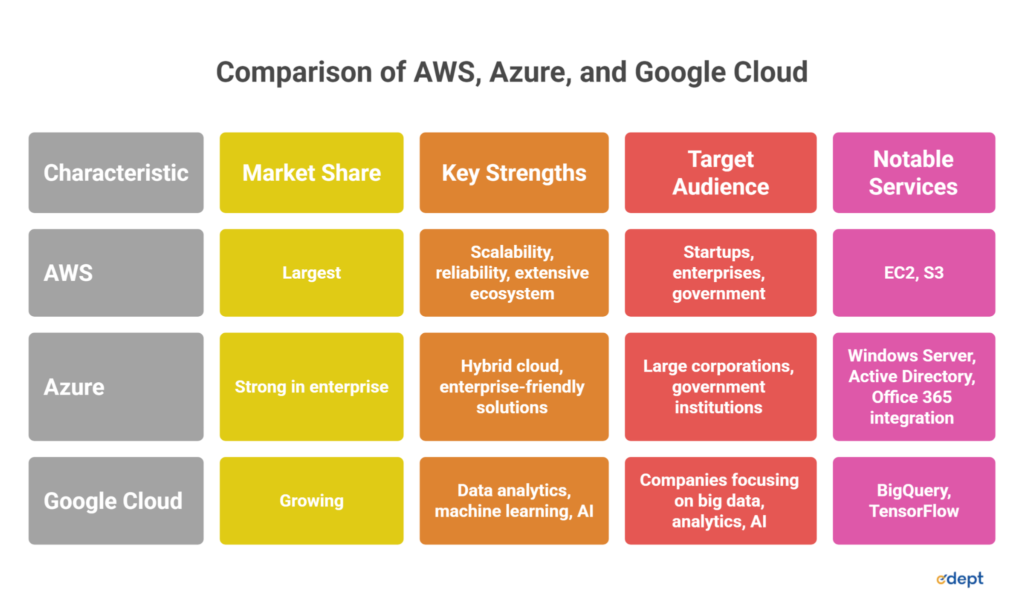
Amazon Web Services (AWS) is the world’s leading cloud platform, which holds the largest market share among cloud services vendors globally. Launched by Amazon in 2006, AWS offers over 200+ cloud services, including computing (EC2), storage (S3), databases, machine learning, and DevOps tools. AWS is mostly used by startups, enterprises, and government organizations due to its scalability, reliability, and extensive ecosystem, making it the default choice for cloud computing.
What is Microsoft Azure?
Microsoft Azure is another cloud computing platform developed by Microsoft, known for its strong demand in enterprise environments. Its speciality is it can integrate easily with Microsoft tools like Windows Server, Active Directory, and Office 365. It makes Azure the perfect choice for organizations already using Microsoft technologies. Azure is widely used by large corporations and government institutions. It also offers services similar to AWS, the only thing making it stand out ahead of AWS is its hybrid cloud capabilities and enterprise-friendly solutions. This benefit makes it ideal for professionals targeting corporate IT roles.
What is Google Cloud Platform (GCP)?
Google Cloud Platform (GCP) is Google’s cloud offering. It is famous for its strengths in data analytics, machine learning, and artificial intelligence. It powers services like Google Search, YouTube, and Gmail. GCP is popular among companies focusing on big data, analytics, and AI-driven applications. Famous data-based tools like BigQuery and TensorFlow make it a strong choice for data engineers and machine learning professionals.
Also Read: Complete Guide to Cloud Security
Market Share & Industry Demand Comparison
Understanding where the market share is inclicing towards is crucial when deciding which cloud platform to learn first, as it directly reflects the current demand in industry, thus directly affecting the job opportunities.
AWS Market Dominance
AWS leads the cloud market with the highest adoption rate. As of recent industry reports, AWS holds approximately 30-32% of the global cloud market share, making it the most used cloud platform. `
AWS domination starts from early entry, a vast service portfolio, and strong adoption across startups and government sectors. This makes AWS skills consistently in high demand, especially for roles like cloud engineer, DevOps engineer, and solutions architect.
Azure Enterprise Growth
Microsoft Azure holds the second-largest share, with around 22-25% of the global market, and is rapidly growing. Its main strength lies in its deep integration with Microsoft products like Windows Server, Office 365, and Active Directory. This makes it a preferred choice for large organizations already using Microsoft ecosystems. This high demand is making for Azure professionals in corporate IT and enterprise cloud roles.
GCP Niche Strength
Google Cloud Platform (GCP) has a smaller share in the cloud market with typically around 10-12%, but is steadily growing, particularly in data-driven industries.
GCP is known for its advanced capabilities in data analytics, machine learning, and AI. This is making it a top choice for companies focused on big data and modern applications. While its job market is smaller compared to AWS and Azure, it offers strong opportunities in specialized roles like data engineering and AI/ML engineering.
Key Feature Comparison as a Cloud Platform (AWS vs Azure vs GCP)
When comparing AWS vs Azure vs Google Cloud, all three cloud platforms offer similar core services. But, their main difference arises in usability, ecosystem, and specialization. Your choice should definitely depend on how easy the platform is to learn and what tools it will offer, integrating with existing technologies.
Ease of Learning (Beginner-Friendlies)
AWS is generally considered the most beginner-friendly due to its vast documentation, tutorials, and community support. Azure is easier to use if you are familiar with Microsoft tools. GCP has a clean interface but fewer beginner resources compared to AWS.
Services & Tools Offered
AWS do offer the widest range of services covering everything from compute and storage to AI and IoT. Azure also provides strong enterprise-focused tools and hybrid cloud solutions. GCP stand out here with powerful tools like BigQuery and TensorFlow, especially for data and AI use cases.
Integration & Ecosystem
Azure is known to integrate seamlessly with Microsoft products, making it ideal for enterprise environments. AWS supports a wide range of third-party tools and services. GCP integrates best with Google’s ecosystem and excels in open-source and Kubernetes based environments.
Comparison Table (AWS vs Azure vs GCP)
| Feature | AWS | Microsoft Azure | Google Cloud(GCP) |
| Market Share | Highest (~30-32%) | Strong (~22-25%) | Growing (~10-12%) |
| Service Range | 200+ services | Wide enterprise tools | Strong in AI and tools |
| Best For | General cloud + DevOps | Enterprise IT roles | Data, AI, ML |
| Ecosystem | Large + flexible | Microsoft ecosystem | Google Ecosystem |
In short, when choosing between AWS, Azure and GCP, go for AWS for maximum opportunities, Azure for enterprise environments, and GCP for data and AI-focused careers.
Career Opportunities & Job Demand
With current market trends showing high demand for cloud professionals across industries, cloud computing is one of the most lucrative career paths in 2026 and beyond. Whether you choose AWS, Azure, or Google Cloud, each platform offers strong career opportunities.
AWS Career Opportunities
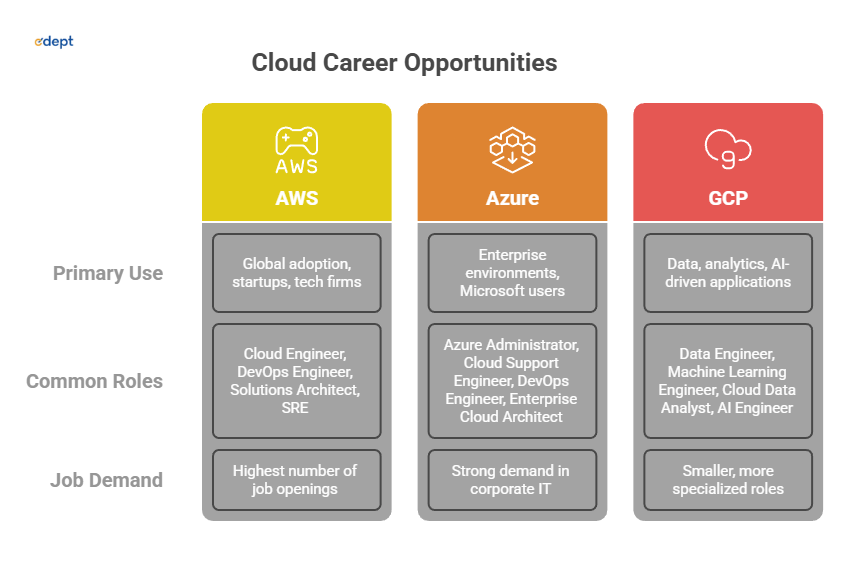
AWS dominates the job market due to its global adoption throughout organizations. Most companies, mainly startups and tech firms, use AWS for their infrastructure.
Common roles include:
- Cloud Engineer
- DevOps Engineer
- Solutions Architect
- Site Reliability Engineer (SRE)
Due to its huge market share, AWS has the highest number of job openings globally, making it the safest choice for beginners entering cloud computing.
Azure Career Opportunities
Azure is used mainly in enterprise environments, especially by organizations already using Microsoft technologies. This creates strong demand in corporate IT sectors.
Common roles include:
- Azure Administrator
- Cloud Support Engineer
- DevOps Engineer
- Enterprise Cloud Architect
Azure is particularly valuable for professionals targeting enterprise IT and corporate roles, where Microsoft tools are deeply integrated.
GCP Career Opportunities
GCP is growing in companies focused in data, analytics and AI-driven applications. While the number of roles is smaller, they are often more specialized.
Common roles include:
- Data Engineer
- Machine Learning Engineer
- Cloud Data Analyst
- AI Engineer
GCP is perfect for professionals who are interested in data science, big data, and machine learning careers, where advanced analytics plays a key role.
Salary Comparison Across Different Cloud Platform
Among all the top-paying tech roles, cloud computing roles are among the top, where salaries are based on platform, experience, and role specialization. While AWS, Azure and GCP all offer strong earning potential, there are certain differences based on demand and skills.
AWS Salary Trend
AWS professionals generally have higher salaries due to strong global demand. In India, entry-level roles start around 5-8 LPA INR, while mid-level professionals earn 10-20 LPA INR. Senior roles like Solutions Architect can go beyond 25-40 LPA INR. AWS certified professionals are among the highest-paid cloud experts.
Azure Salary Trends
Azure salaries are very competitive, especially in enterprise environments. Entry-level roles in Azure have salary between 4-7 LPA INR, while experienced professionals earn between 10-18 LPA INR. Senior enterprise cloud roles can exceed 30 LPA INR.
GCP Salary Trends
GCP roles often offer slightly higher salaries in specialized domains like data engineering and AI. Entry-level salaries range from 5-9 LPA, while mid-level roles can reach 12-22 LPA INR. Advanced roles in AI/ML or data engineering can exceed 30-45 LPA INR.
Certifications Comparison
Certifications do play a key roles in validating your skills in cloud and improving your chances of getting hired. Whether you choose AWS, Azure, or Google Cloud, each platform offers beginners to advanced certifications aligned with industry roles.
AWS Certifications
AWS offers a structured certification path, making it ideal for beginners. Some famous AWS certifications include:
- AWS Certified Cloud Practitioner (Beginner)
- AWS Solutions Architect – Associate (Intermediate)
- Advanced certifications for DevOps, security, and architecture
AWS certifications are widely recognized by big organizations, making it the most valuable due to AWS’s global dominance.
Azure Certifications
Azure certifications are highly valued in enterprise environments, especially for professionals working with Microsoft technologies. Some in-demand Azure certifications include:
- Microsoft Azure Fundamentals (AZ-900)
- Azure Administrator Associate (AZ-104)
- Advanced certifications in DevOps and architecture
Azure certifications are ideal for those targeting corporate IT and enterprise cloud roles.
GCP Certifications
GCP certifications are focused on data, AI, and modern cloud architecture. Some famous certifications include:
- Associate Cloud Engineer
- Professional Data Engineer
- Professional Cloud Architect
GCP certifications are particularly valuable for professionals aiming for data engineering roles.
Which Cloud Platform is Best for Beginners?
It might be confusing when deciding on which platform to go for between AWS vs Azure, and Google Cloud, particularly when you are new. Your goals determine the right platform, but certain platforms are simpler to start with due to resources, demand, and the learning curve.
AWS for Beginners
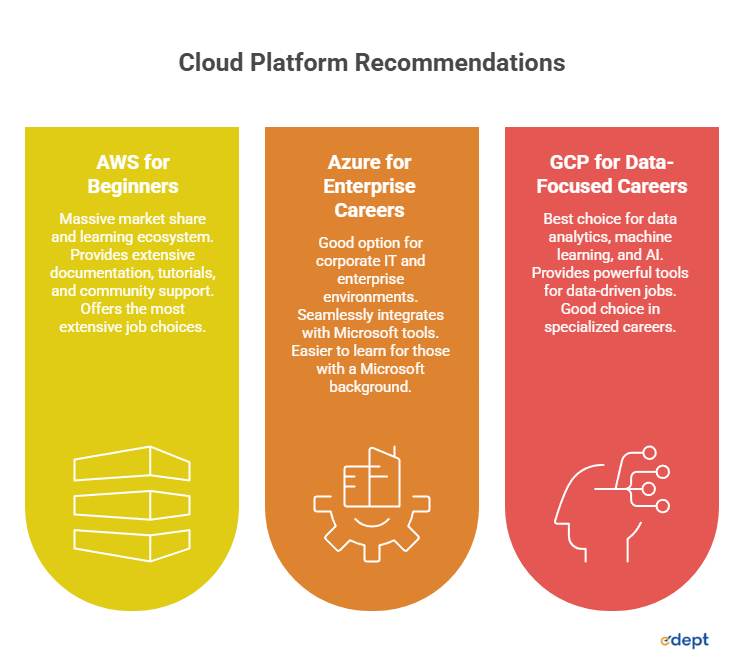
AWS is often the best starting point for beginners as it possesses a massive market share and learning ecosystem. It provides a lot of documentation, tutorials, and community support. Because AWS is utilized by the majority of companies, acquiring it initially will provide you with the most extensive job choices.
Azure for Enterprise Careers
Azure is a good option when you are focusing on corporate IT or enterprise environments, and when you are proficient with Microsoft tools. It can be seamlessly integrated with Windows server, Office 365, and Active Directory, making it easier to learn among those with a Microsoft background.
GCP for Data-Focused Careers
GCP is the best choice if you want to be involved in data analytics, machine learning, or AI. Although it does not have as many entry-level resources as AWS, it also provides powerful tools for data-driven jobs, so it can be a good choice in specialized careers.
Why Choose edept for Cloud Computing Training
Learning theory is not sufficient to establish a career in cloud computing, it requires you to have practical experience with actual cloud systems and data environments. The B.Voc in Big Data & Cloud Computing offered by Shree L.R. Tiwari College of Engineering, University of Mumbai, and enabled by edept is created precisely to equip students to meet this industry need.
Industry-Aligned Curriculum
Our program concentrates on establishing robust backgrounds in cloud computing, data structures, big data, machine learning, and cloud security, so that students can develop depth in the field, as well as practical skills. Students learn how to design, implement, and operate scalable cloud solutions, and this is essential in career paths such as cloud engineer and DevOps professional.
Hands-On Learning with Global Exposure
The unique feature of this program is the global industry immersion paradigm, where students work on real projects with organizations such as Deloitte, IBM, Practera, and HEX. These projects enable the students to develop an international portfolio and get real-world experience before their graduation.
Certifications, Internships & Career Support
Students also receive Deloitte Learning Academy certifications, IBM-sanctioned internships, and NASSCOM-certified credentials, and have performance rewards that can be offered on a stipend basis. Moreover, the program offers resume development, mock interviews, and job placement in a 300+ recruiting network that enables students to move into high-demand cloud jobs.
How to Choose the Right Cloud Platform for You
The decision between AWS, Azure, and Google Cloud is based on your career choices, industry choice, and the use of cloud skills. Instead of, but you are expected to make a decision that is in line with the long-term opportunities.
Based on Career Goals
Whether you want to be a cloud engineer, DevOps engineer, or solutions architect, AWS is a good place to start because it is highly adopted. Azure becomes more applicable to you if you seek enterprise IT positions. GCP is frequently the preferred option to careers in data science, machine learning, or analytics.
Based on Industry Demand
Industries like medical, manufacturing, and tourism prefer different platforms. Start-ups and tech businesses usually tend to use AWS, whereas large corporations and business settings employ Azure. GCP is also more likely to be used in data-driven companies and AI-oriented organizations. Making your decision according to industry needs will enhance your chances of being hired sooner.
Based on Learning Ease
AWS is usually less challenging for beginners because of the vast learning materials and community. Azure is less of a challenge when you are already familiar with the Microsoft tools. GCP is less complex in context to its interface, and you might need a better command of data concepts.
Recommended Learning Path (Step-by-Step)
When you take a step-by-step smart approach, starting your cloud computing journey will become a lot easier. Rather than attempting to master all at once, work on mastering one skill at a time.
Start with One Platform (AWS, Azure, GCP)
AWS can be a good place to start because of its demand and learning resources, and this is the case with most beginners. Before proceeding, it is important to learn fundamental concepts such as compute, storage, networking, and security.
Build Hands-on Projects
Real-world experience is a prerequisite in cloud computing. Examples of projects to work on include the deployment of a site, the implementation of cloud storage, or the creation of a simple cloud-based application. Practical learning will assist you in knowing how cloud systems perform in practical settings.
Earn Certificates & Apply for Jobs
After learning the basics and gaining experience working on a project, take entry-level certifications such as AWS Cloud Practitioner, Azure Fundamentals, or GCP Associate Cloud Engineer. The certifications will authenticate your competencies and enhance your success in being shortlisted for jobs.
Common Mistakes to Avoid
Beginners who start with AWS, Azure, or Google Cloud often slow their progress and make unnecessary errors. Knowing these will save you time and enable you to learn more effectively.
Learning Multiple Platforms at Once
Attempting to master AWS, Azure, and GCP can result in confusion and a shallow understanding. There are ecosystems and services on each platform. It is more appropriate to begin with a single platform, build strong fundamentals, and expand afterwards.
Ignoring Hands-On Practice
Cloud computing is a practical skill. It is not enough to just watch some tutorials or simply read some documentation. In the absence of practical projects such as the implementation of applications and cloud services, it is hard to practice in practice.
Skipping Certifications
Certifications are optional, yet they are important in certifying your expertise. Certifications are used as a filtering tool by many recruiters. Not doing them may decrease your chances of being shortlisted, particularly as a beginner.
Conclusion
The decision between AWS, Azure, and Google Cloud is based on what you want to achieve, but the strategy is simple. AWS is the least risky place to start as a beginner, with the resources, demand, and employment opportunities it offers. Azure will be more suitable for enterprise and corporate, whereas GCP will be more suitable for data, AI, and analytics-oriented professions.
The key is not the selection of the best platform, but rather the proper starting point. Develop strong fundamentals, practical experience, and expand your expertise on platforms.
Cloud computing, in 2026 and beyond, is not an option. It is a fundamental skill for any tech career.
Related Links: