Business management students often make avoidable mistakes that quietly hold back their careers. From poor networking and skipping internships to weak career planning, these missteps add up fast. Knowing the top mistakes business management students make is the first step toward avoiding them entirely.
Starting a business management degree feels exciting, and it should. But the shift from school to a competitive business education environment catches a lot of students off guard. The pace is different, the expectations are higher, and the decisions you make in the first year carry more weight than most students realise. The top mistakes business management students make are rarely dramatic. They are quiet, gradual, and easy to justify in the moment. Skipping a networking event because you are busy. Choosing safe electives over challenging ones. Putting off internship applications until the second year. These are the kinds of business student mistakes that do not feel serious until placement season arrives and the gap between prepared and unprepared students becomes impossible to ignore.
According to the Graduate Management Admission Council, nearly 89% of employers plan to hire MBA graduates, yet many students still struggle to land roles that match their potential. The difference often comes down to how students use their time in business school, not just how well they perform academically.
This blog covers the most common mistakes in business school, why they matter more than students expect, and what to do instead.
Why Early Career Mistakes Can Impact Business Students
Early mistakes in business school have a way of compounding. A skill gap that develops in the first semester becomes harder to close by the third. A networking opportunity missed in the first year is a connection that never gets made. These are not abstract risks. They show up in very concrete ways by the time placements begin.
Skill gaps are one of the most common consequences of business students’ mistakes made early on. Business management programs move fast, and students who do not actively build practical skills alongside their academic work often find themselves underprepared for what recruiters are actually looking for.
Missed networking opportunities are another real cost. The connections students make during their program, with peers, faculty, alumni, and industry professionals, often matter as much as the degree itself. Students who treat networking as optional tend to enter the job market with a much thinner professional circle than those who made it a priority from the start.
Weak industry exposure compounds the problem further. Recruiters consistently say they want candidates who understand the business environment they are entering, not just the theory behind it. Students who stay inside the classroom and avoid internships, industry events, and live projects often struggle to demonstrate that kind of real-world awareness.
The impact on placements is where all of these mistakes in business school tend to surface at once. Students who avoided these pitfalls are simply better positioned, and the gap is usually visible well before the final semester.
Read More: Data-Driven Business Management: Powerful Strategies for Smarter, High-Impact Decisions
10 Common Mistakes Business Management Students Make
Here are the top mistakes business management students make and why each one matters more than it might seem in the moment.
1. Ignoring Practical Skills
One of the most common business student mistakes is treating the degree as purely academic. Business management is a practical discipline, and employers expect graduates to bring more than theoretical knowledge to the table. Students who focus only on what is covered in lectures and ignore case competitions, simulations, workshops, and live projects often graduate with strong transcripts but thin practical experience. That gap becomes very visible in interviews and assessment centres where practical thinking is tested directly.
2. Focusing Only on Grades
Grades matter, but they are not the whole picture, and this is one of the mistakes in business school that trips up even hard-working students. Recruiters look for well-rounded candidates who have done things outside the classroom. A student with a slightly lower GPA who has led a student club, completed two internships, and participated in industry competitions will often edge out a higher-scoring peer who spent all their time studying. Business management career advice from most hiring managers points in the same direction: balance academic performance with real-world involvement.
3. Poor Networking Habits
Networking is one of those things that business management students know they should be doing but consistently put off. This is one of the top mistakes business management students make because the cost is not immediately obvious. Connections built during a program open doors to internships, referrals, mentorship, and job opportunities that never get publicly advertised. Students who wait until their final semester to start networking are essentially starting from scratch at the worst possible time.
4. Weak Communication Skills
Business school teaches strategy, finance, and operations, but communication is the skill that ties everything together. MBA student mistakes in this area are surprisingly common. Many students can analyse a case brilliantly, but they struggle to present their findings clearly or write a concise professional email. Strong written and verbal communication skills are consistently listed among the top qualities employers look for in business graduates, and they take time and deliberate practice to develop.
5. Lack of Internship Experience
Internships are one of the most valuable things a business management student can do, yet many treat them as optional or leave them too late. This is a significant management student tip that does not get enough attention early in the program. Internships provide real industry exposure, build professional networks, and often lead directly to job offers. Students who graduate without internship experience frequently find themselves competing against candidates who have already proven themselves in professional environments.
6. Ignoring Data and Technology Skills
The modern business environment runs on data, and business management students who do not develop at least a working familiarity with data analysis tools and digital platforms are putting themselves at a disadvantage. This is one of the business student mistakes that has become more costly in recent years as companies across every sector expect graduates to be comfortable working with data, using business intelligence tools, and understanding how technology affects their industry.
7. Poor Time Management
Business management programs are demanding, and poor time management is one of the mistakes in business school that affects everything else. When students cannot manage their time effectively, assignments pile up, networking gets skipped, internship applications get delayed, and stress levels rise. The ability to manage competing priorities is also a skill recruiters look for because it translates directly to how well someone will perform in a fast-paced work environment.
8. Avoiding Leadership Opportunities
Student clubs, project teams, competitions, and committee roles all offer chances to build and demonstrate leadership. Yet many students avoid these opportunities because they feel too busy or too uncertain. This is one of the top mistakes business management students make because leadership experience is something employers look for and something that cannot easily be faked on a resume. Taking on responsibility during the program, even in small ways, builds a track record that matters.
9. Not Understanding Industry Trends
One of the more overlooked MBA student mistakes is graduating without a strong grasp of what is actually happening in the industry a student wants to enter. Business management career advice from working professionals almost always includes staying current with industry news, understanding competitive dynamics, and being able to discuss trends intelligently in interviews. Students who only engage with what is on the syllabus often struggle to demonstrate the kind of commercial awareness that employers are specifically looking for.
10. Lack of Career Planning
Perhaps the most impactful of all the top mistakes business management students make is simply not having a plan. Many students arrive at business school with a vague sense of what they want to do but never take the time to map out a clear direction. Without career planning, students drift through their program, making decisions reactively rather than strategically. By the time placements arrive, students with clear goals, targeted experience, and a focused network are in a significantly stronger position than those who left it all to chance.
Also Read: Globalization Driving Business Management Growth in India (Insights & Growth)
How Students Can Avoid These Mistakes
Avoiding business student mistakes starts with awareness, but it requires deliberate action to make a real difference.
Build a skill development roadmap
From the first semester, identify the skills most relevant to your target industry and build them systematically. This means going beyond the curriculum to seek workshops, online courses, certifications, and competitions that fill the gaps. Management student tips from working professionals consistently point to practical skill-building as one of the most valuable things students can invest time in during their program.
Take Networking Seriously From Day One
Networking does not have to feel forced or transactional. Start with your cohort, connect with faculty, attend alumni events, and reach out to professionals whose careers interest you. Building genuine relationships over time is far more effective than scrambling to connect with people right before placement season. This is one of the most repeated pieces of business management career advice for a reason.
Plan Internships Early
Do not wait until the second year to start thinking about internships. Research companies, identify application deadlines, and start preparing well in advance. Internships are one of the fastest ways to close the gap between classroom learning and real-world readiness, and they are one of the clearest signals to recruiters that a candidate takes their career seriously.
Get Outside The Classroom Regularly
Industry exposure does not only come from internships. Guest lectures, industry conferences, case competitions, business simulations, and informational interviews all build the kind of contextual understanding that makes a candidate stand out. Students who engage actively with the world outside their program develop a perspective that purely academic students rarely match.
Track Your Career Goals And Revisit Them Often
Set clear goals at the start of each semester and measure your progress against them. Knowing where you want to end up makes it easier to make better decisions about where to spend your time and energy throughout the program.
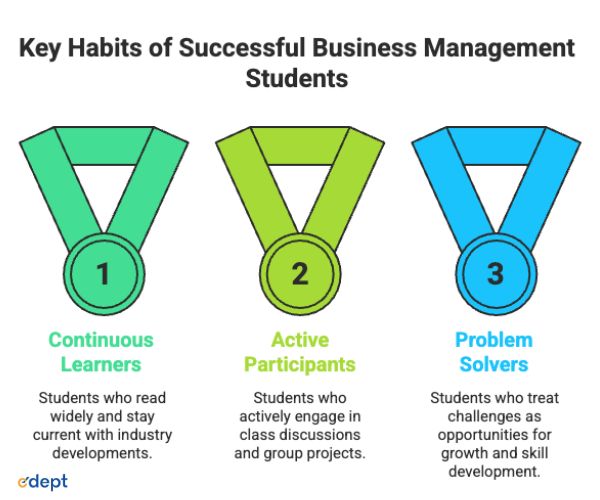
Conclusion: The Sooner You Avoid These Mistakes, the Better Your Career Will Look
The top mistakes business management students make are not always obvious in the moment, but their effects tend to show up clearly by the time graduation arrives. Avoiding business student mistakes is less about being perfect and more about being intentional. Students who build practical skills, invest in relationships, seek real-world experience, and plan their careers with purpose consistently outperform those who leave things to chance. The program gives you the tools. What you do with them is what determines where you end up. Start making deliberate choices early, and the results will follow.
Related Links: