Older adults face chronic illnesses, cognitive decline, mobility challenges, and emotional vulnerabilities that require expert medical and emotional support. As the global population ages, the requirement for specialized care for elderly people has increased exponentially. The role of nurse in care of elderly people becomes indispensable. Elderly care nurses act as frontline caregivers, accountable for coordinating medical expertise with compassion to improve the quality of life of geriatric patients. The role started from assisting in daily activities such as dressing, grooming, and bathing to monitoring complex health conditions. The nurses provide holistic care that supports both the mental and physical well-being of aged adults. In this blog, we will discuss the role of nurses in care of elderly people.
Start Your Elderly Care Nursing Journey Today
Become a certified geriatric nursing professional with Edept’s comprehensive training.
Understanding Role of Nurse in Care of Elderly Needs
Let’s understand what are the elderly care needs are. Elderly care, which is also known as geriatric care, focuses on meeting the unique needs of an elderly individual, including physical, emotional, and social needs. As age advances, people are experiencing weakened immunity, slow healing, and increased health conditions such as heart disease, diabetes, arthritis, and dementia. Along with medical care, elderly people require assistance in everyday chores such as hygiene, medical support, nutrition, and emotional support. The key aspects of elderly care include:
- Daily activities require support with bathing, dressing, toileting, and mobility.
- Medical monitoring is needed to check vital signs, manage chronic conditions, and administer medications.
- They are also responsible for fall and injury prevention by creating a safe environment to reduce risks.
- An elderly caregiver provides emotional and mental support. They address loneliness, cognitive impairments, and depression.
Therefore, nurses trained in geriatric care understand the intricacies and bridge the gap between personal care and medical practice.
Check How to Become a Home Caregiver
Role of Nurse in Care of Elderly People
The role of a nurse in care of elderly expands far beyond any basic medical tasks. The nurses function as educators, caregivers, and companions for elderly patients. The duties possess-
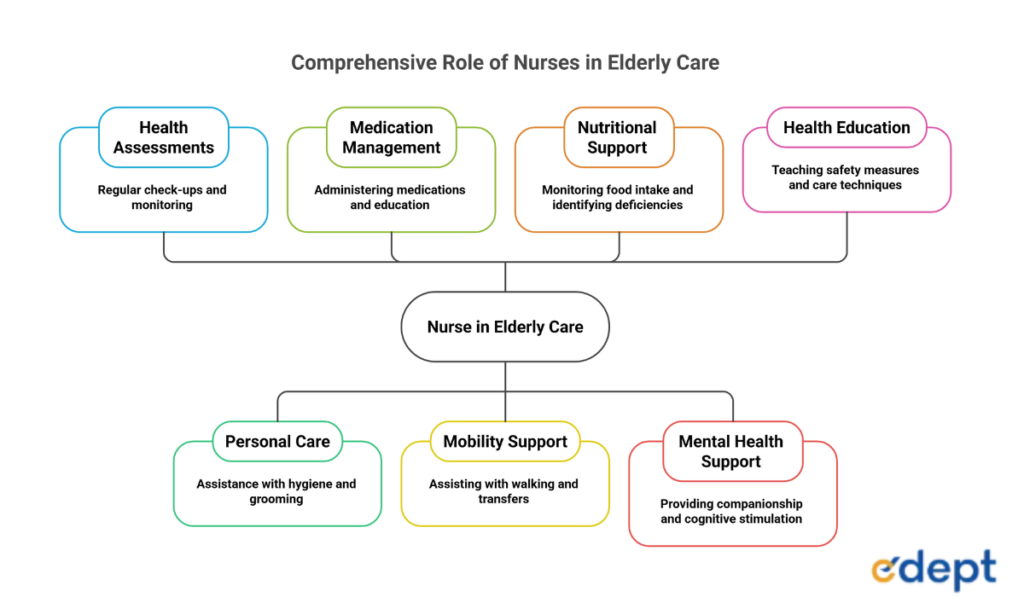
- Health assessments where a Nurse in Elderly Care conducts regular check-ups, coordinating with doctors, and monitors chronic illness for ongoing treatment plans.
- Personal care assessments, which include helping with hygiene, grooming, bathing, and dressing, are used to maintain dignity and comfort.
- Medication management which administering prescribed medications on time, and educating patients and their families about the side effects and dosages.
- Elderly patients need mobility support by assisting them with walking, exercises to maintain, and transferring them from bed to wheelchair and vice versa.
- They are responsible for monitoring daily intake of food, helping them to walk, and identifying nutritional deficiencies.
- Nurse in care of elderly offer mental health support by offering companionship, cognitive stimulation activities such as memory exercises, and emotional counselling.
- Health education should be taught to the patient as well as their families. Teaching about safety measures, elderly care techniques, and managing chronic conditions.
By combining compassion with clinical skills, nurses help elderly patients maintain independence, enjoy an improved quality of life, and manage health conditions.
Upgrade Your Skills in Elderly Nursing Care
Master advanced elderly care techniques, dementia support, and clinical skills with expert-led programs.
Specialized Roles in Elderly Care
The specialized roles in nursing elderly care ensure that elderly patients get all the tailored care by addressing their unique physical and mental health conditions. Check the specialized Role of Nurse in Care of Elderly.
- Geriatric Nurses: Experts in addressing chronic conditions, preventative screenings, and overall senior wellness.
- Home Care Nurses: Provide in-home care, helping elderly patients to recuperate or live comfortably in a familiar environment.
- Rehabilitation Nurses: Concentrate on supporting elderly patients to recover functionality after surgery, injury, or illness.
- Palliative Care Nurses: Provide pain management and emotional support for terminally ill elderly patients.
- Memory Care Nurses: Specialize in dementia, Alzheimer’s, and other mental disorders, delivering behavioural aid and security interventions.
Skills & Qualities Required
If you want to excel in the role of nurse in care of elderly you may need a blend of technical expertise and interpersonal skills. The key skills and qualities are listed below.
- Clinical Competence requires an understanding of medical procedures, geriatric diseases, and emergency maintenance.
- Patience & Empathy are other features that you need to possess as a elderly care nurse. You have to understand the emotional and physical struggles of elderly patients.
- Communication Skills are essential for a nurse. Without a clear interaction with patients, their families, and healthcare units, you won’t be able to function well.
- A Physical Stamina to cope with the inability of the patients will be required. The ability to help with mobility, transfers, and long shifts is essential when it comes to handling old-age patients.
- As a nurse, you need to possess Problem-Solving Abilities, such as in quick response to emergencies and changes in patient conditions.
- Early detection of health deterioration or subtle shifts in behaviour is to be noticed beforehand. Therefore, Observation Skills will be essential.
These skills permit the nurses to provide complete care that preserves pride and liberty while managing possible health challenges.
Want a Career in Elderly Care Nursing?
Get expert guidance, practical training, and job-focused learning with Edept.
→ Book a Free Counseling Session
Common Elderly Care Mistakes Without Trained Nurses
Having a qualified nurse helps prevent any mistakes that ensure the creation of structured care plans and monitoring. When the elderly care is handled without any trained professionals, several issues may come up that have been mentioned below.
- Medication Errors, which include missed doses or incorrect administration, can turn out to be fatal.
- Neglect of Hygiene, such as grooming, poor bathing, or wound care, can lead to infections.
- Poor Nutrition can be improper. Therefore, a lack of dietary monitoring causes malnutrition or dehydration.
- Increased risk of falls and injuries due to improper transfers; therefore, Inadequate Mobility Support will be required.
- Delayed Medical Intervention can take lives. So nurses need to make sure that there is no failure to recognize early warning signs of deterioration.
- Lack of companionship leading to depression, anxiety, or cognitive decline. Therefore, you cannot skip Emotional Neglect as a nurse in care of the elderly care.
Courses & Training in Elderly Care Nursing
If you are interested in joining Elderly Care Nursing, it is a rewarding field. At edept, the aspiring nurses can enroll in courses designed to grow expertise in geriatric nursing. Let’s check what exactly the courses focus on:
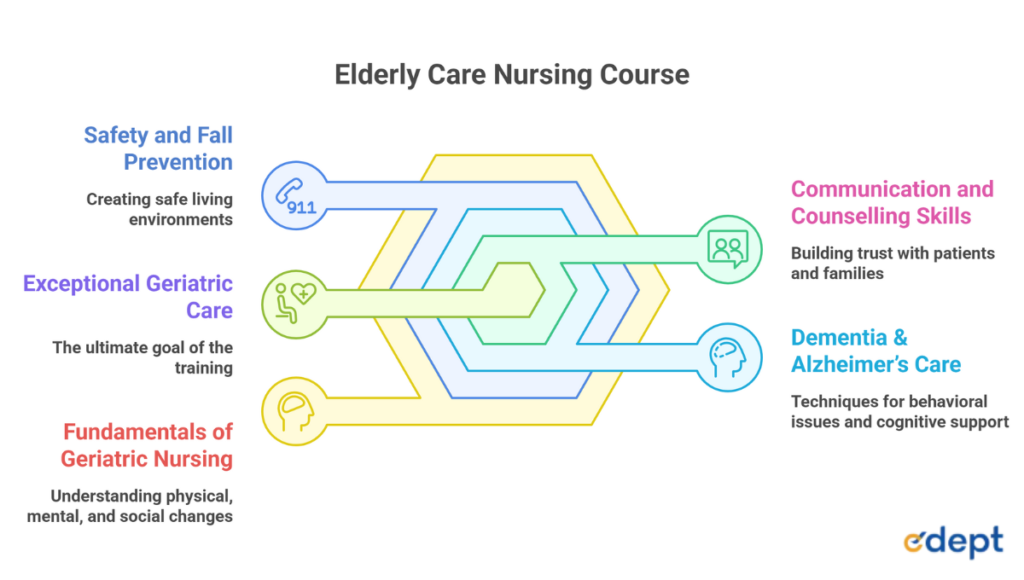
- Fundamentals of Geriatric Nursing requires understanding the physical, mental, and social changes in older adults.
- Hands-on clinical training with practical experience in bathing, grooming, dressing, administering medications on time, and monitoring health conditions.
- Safety and fall prevention training are the best practices to create safe living environments.
- Special modules are provided for Dementia & Alzheimer’s Care, where candidates get to know about the techniques to address behavioural issues and cognitive support.
- Communication and counselling skills help in building trust with elderly patients and their families.
After you complete these courses, nurses gain the skills and confidence to deliver exceptional geriatric care in hospitals, nursing homes, or home care settings.
How Nurses Transform the Elderly Care Experience?
The role of nurse in care of elderly is extremely important in shaping the health, dignity, and well-being of older adults. Starting from medical care and daily activities to emotional support and preventive strategies, the nurses are experts in bringing compassion to every aspect of elderly care. With proper training and specialized skills, nurses not only improve the quality of life of elderly patients but also offer peace of mind to the elderly families. As the aging populations continue to grow worldwide, the demand for nursing in elderly care will grow, making it a robust and fulfilling career pathway.
Related Links: