Cybersecurity is growing fast. 2026 is a genuinely good time to get into it. This guide covers everything you need as a beginner. It covers core cybersecurity skills for beginners, essential cybersecurity tools and technologies, cybersecurity certifications for beginners worth pursuing, and entry-level cybersecurity jobs well within your reach. Consider it your practical cybersecurity roadmap for beginners.
Cybersecurity is one of the few fields where the demand for talent is genuinely outpacing the ability to fill it, and the gap is only widening. Nearly four million cybersecurity roles were unfilled globally in 2025, and only 15% of firms expect significant cyber skills growth by 2026, according to World Economic Forum findings. For anyone considering a career in this space, that gap is not a warning. It is an opportunity.
So, how do you start a cybersecurity career in 2026? The short answer is that you need the right foundations, the right certifications, and the right practical experience, and none of it requires a computer science degree to get started.
This blog lays out a complete cybersecurity career roadmap for beginners to professional, covering the skills you need, the entry-level cybersecurity jobs worth targeting, the certifications that actually open doors, and the step-by-step path from complete beginner to working professional.
What is Cybersecurity?
Cybersecurity is the practice of protecting computer systems, networks, applications, and data from digital attacks, unauthorised access, and damage. The scope of it is wider than most people realise. It takes in the firewalls that keep unwanted traffic away from a company’s internal network, the encryption that keeps your banking transactions private, and the forensic investigation that follows a breach.
As more of daily life and commercial activity shifts online, the number of possible entry points for attackers grows alongside it. Every new device connected to a network, every cloud application deployed, and every new payment system introduced are potential vulnerabilities. Cybersecurity sits between those vulnerabilities and the sensitive data behind them. It draws on technical knowledge, analytical thinking, and a willingness to keep learning in a field where the threat landscape is in constant motion.
Read More: Is Cybersecurity a Good Career in india? Salary, Scope & Growth in India
Why Should You Choose a Career in Cybersecurity in 2026?
The case for entering cybersecurity in 2026 is not complicated. Demand is high, qualified professionals are scarce, salaries reflect that scarcity, and the work carries real consequences.
CISSP is the most-requested certification in job postings globally, appearing in 82,494 postings, followed by CompTIA Security+ at 70,019. The Bureau of Labour Statistics projects 29% employment growth for information security analysts between 2024 and 2034. That kind of sustained, decade-long projection does not describe a passing trend. It reflects a permanent shift in how organisations function and what they need to stay protected.
Perhaps the most telling development in 2026 is that AI has become the single most in-demand skill in cybersecurity, cited by 41% of respondents as the top capability gap, surpassing cloud security at 36% for the first time. The field is not just growing in volume. It is growing in complexity, and that complexity creates more room for people who build the right skills and keep pace with how the technology is changing.
For students and professionals in India specifically, the timing is strong. India’s digital economy continues to expand at a pace, cyberattacks on Indian organisations are rising year on year, and the domestic shortage of qualified cybersecurity professionals remains severe. Anyone who builds solid, demonstrable expertise in this space right now is entering a market that will need them for a long time.Read More: Cyber Threat Intelligence: A Complete Guide to Types, Uses & Importance
What Skills Do You Need to Start a Career in Cybersecurity?
A solid cybersecurity career roadmap starts with building the right technical and analytical foundations. Here are the core cybersecurity skills for beginners that form the basis of almost every role in the field.
Networking Fundamentals
Getting to grips with how networks actually operate is where almost everything else in cybersecurity begins. You need to understand how data travels between devices, how protocols like TCP/IP, DNS, and HTTP do their job, and how routers, switches, and firewalls are set up and managed day to day. A large proportion of real-world attacks target weaknesses at the network level, which means defending against them properly requires you to genuinely know the environment you are working within, not just recognise the terminology. Concepts like subnetting, VPNs, and network segmentation all sit within this foundational layer and are worth getting comfortable with early on.
Knowledge of Operating Systems (OS)
Cybersecurity professionals regularly work across Windows, Linux, and macOS, and each environment has its own quirks and security considerations. Linux is particularly important because most security tools are developed for and run on Linux systems. Knowing how to navigate the command line, manage file permissions, interpret system logs, and understand process behaviour across different operating systems gives you the situational awareness needed to investigate incidents and build secure configurations from the ground up.
Cryptography
Cryptography is what keeps data private and communications secure across the internet, and it underpins a remarkable number of the systems that cybersecurity professionals work with daily. Cybersecurity skills for beginners in this area include understanding how symmetric and asymmetric encryption works, what hashing algorithms do, how digital certificates function, and how public key infrastructure supports systems like HTTPS, VPNs, and encrypted storage. Without this grounding, it is genuinely difficult to assess whether a system’s data protection is doing its job.
Threat Intelligence and Security Tools
Knowing how attacks work is just as important as knowing how to stop them. Threat intelligence involves tracking how attackers operate, understanding how malware behaves, and staying aware of emerging attack techniques. Alongside this, familiarity with the cybersecurity tools and technologies used for threat detection, log analysis, and vulnerability scanning is a practical requirement. Employers value candidates who can demonstrate both the conceptual understanding and the hands-on tool knowledge that goes with it.
Programming and Scripting
You do not need to be a developer to work in cybersecurity, but knowing how to write and read code makes you considerably more effective. Python is the most widely used language across cybersecurity tasks, from automating repetitive work and building custom scripts to interacting with security APIs. Bash scripting is essential for anyone working in Linux environments. Understanding how code is structured also helps significantly when analysing malware or identifying vulnerabilities in applications.
Incident Response and Recovery
When something goes wrong, the ability to respond quickly and methodically is one of the most practically valuable things a cybersecurity professional can offer. Incident response covers the full cycle: detecting that something has happened, containing the impact, removing the threat, restoring affected systems, and documenting what occurred so the organisation can improve. This is one of the cybersecurity skills for beginners worth developing early, because how well an organisation responds to an incident directly affects how much damage it ultimately suffers.
Cloud Security Fundamentals
Most organisations now operate partly or entirely in cloud environments, and cloud security has become one of the most sought-after specialisations in the field. Understanding how AWS, Azure, and Google Cloud handle identity and access management, data storage, network configuration, and monitoring is increasingly important regardless of which role you are targeting. Cloud misconfiguration remains one of the leading causes of data breaches worldwide, which means cloud security knowledge is directly applicable from the moment you step into most organisations.
What Tools and Technologies Are Used in Cybersecurity?
Building familiarity with the cybersecurity tools and technologies used in real environments is an important part of any cybersecurity roadmap for beginners.
Network Security Tools
Wireshark is the most widely used packet analyser in the industry, allowing security professionals to capture and examine traffic moving across a network in real time. Nmap is used for network discovery and security auditing, mapping out live hosts, open ports, and active services. Both are cybersecurity tools and technologies that appear consistently across roles involving network-level analysis.
Penetration Testing Tools
Metasploit is the most established penetration testing framework available, providing a structured environment for testing known vulnerabilities in an authorised setting. Burp Suite is the standard tool for web application security testing, letting testers intercept and analyse HTTP traffic between a browser and a server. Both sit at the core of the cybersecurity tools and technologies stack for anyone pursuing an offensive security path.
Vulnerability Assessment Tools
Nessus and OpenVAS are the go-to choices for vulnerability scanning across most security teams. Both tools are built to surface known weaknesses in systems, applications, and network devices before someone with bad intentions gets there first. What makes vulnerability assessment a particularly sensible starting point for anyone building cybersecurity skills for beginners is that it does not demand deep specialisation straight away. You are learning to use structured tools, interpret results, and think through risk in a logical, methodical way, which is a combination that transfers well into almost every other area of the field.
SIEM Tools
Security Information and Event Management platforms sit at the heart of how most organisations detect threats in real time. They pull in log data from across the infrastructure, correlate it, and flag activity that looks out of place. Splunk has long been the dominant choice in enterprise environments, while Microsoft Sentinel has grown steadily as more organisations move their operations to the cloud. If your target is a SOC analyst role as part of your entry-level cybersecurity jobs search, getting comfortable with at least one SIEM platform before you apply will put you noticeably ahead of candidates who have not.
Cloud Security Tools
AWS Security Hub, Microsoft Defender for Cloud, and Prisma Cloud are among the most widely deployed platforms for monitoring and securing cloud environments. As organisations continue shifting infrastructure to the cloud, the ability to configure and interpret outputs from these cybersecurity tools and technologies is becoming a baseline expectation rather than a specialism.
Endpoint Security Tools
Endpoint detection and response platforms like CrowdStrike Falcon and SentinelOne monitor individual devices for signs of compromise and provide rapid response capabilities when threats are confirmed. Since most attacks eventually land on an endpoint, these tools sit at the centre of how modern security operations function day to day.
Also Read: Everything You Need To Know About Cyber Threat Intelligence: Process, Tools & Use Cases
What Educational Qualifications Do You Need for a Cybersecurity Career?
- A bachelor’s degree in computer science, information technology, or a related subject gives you a solid theoretical grounding to build on, though it is far from the only route into the field.
- Purpose-built programmes tend to close the gap between classroom learning and what employers actually need from day one. The B.Voc in Cybersecurity and Digital Forensics offered through platforms like Edept is a strong example, combining practical, industry-aligned training with a structured curriculum that maps directly to roles organisations are actively recruiting for.
- For career changers and those coming in through non-traditional routes, the picture is more encouraging than many assume. Certifications paired with hands-on experience from labs, personal projects, and internships carry genuine weight with hiring managers.
- The numbers reflect this clearly. 69% of hiring managers favour candidates who have recently upskilled or gained certifications, which makes the practical experience route a genuinely competitive one for entry-level cybersecurity jobs.
- Perhaps the most telling figure is this: 89% of security managers will not consider candidates without a cybersecurity certification. At this point, certification is less of a bonus and more of a baseline expectation across most hiring processes.
What Are the Best Entry-Level Jobs in Cybersecurity?
Understanding which entry-level cybersecurity jobs are genuinely accessible to beginners helps focus the cybersecurity roadmap for beginners toward realistic starting points.
1. SOC Analyst
A Security Operations Centre analyst monitors networks and systems for signs of attack, investigates alerts from security tools, and escalates confirmed incidents to response teams. It is one of the most common first roles in the field because it offers broad exposure to real threat activity and the tools used to detect it. Tier 1 SOC analyst positions are achievable for beginners who have the right foundations and at least one relevant certification.
2. Security Analyst / Cybersecurity Analyst
Security analysts are responsible for looking at an organisation’s overall security posture, keeping on top of threat intelligence, digging into incidents as they arise, and putting forward practical recommendations to reinforce existing defences. It sits a natural step above pure SOC monitoring in terms of seniority, and doing it well calls for a genuine blend of technical knowledge and clear analytical thinking. For anyone working through a cybersecurity roadmap for beginners, it is worth knowing that this remains one of the most reliably advertised entry-level cybersecurity jobs across industries and regions, making it a worthwhile target as you build out your cybersecurity career roadmap.
3. IT Security Technician / Support
IT security technician roles sit right at the intersection of traditional IT support and security work, covering day-to-day tasks such as configuring security software, managing access controls, applying patches, and assisting with security audits. Building familiarity with core cybersecurity tools and technologies is central to performing well in these positions. For those developing their cybersecurity skills for beginners, and particularly for people transitioning from a general IT background, these roles offer one of the most accessible starting points available, giving you genuine, practical exposure to how security operates within a real organisational environment from early on.
4. Junior Penetration Tester
Junior penetration testers work closely with more experienced colleagues to carry out authorised tests on systems and applications, with the aim of uncovering vulnerabilities before they can be exploited. The technical demands of these roles are fairly high, and breaking in without hands-on experience can take some effort. That said, combining recognised certifications such as CEH and OSCP with regular practice on platforms like HackTheBox makes these positions genuinely achievable for dedicated beginners who are willing to put the work in.
5. Vulnerability Assessment Analyst
Vulnerability assessment analysts run scheduled scans of an organisation’s systems and networks, sort through the results, prioritise remediation based on actual risk, and track progress on fixes. It is a methodical role that suits people who enjoy working through structured analytical processes, and it is one of the more accessible entry-level cybersecurity jobs for beginners with solid foundational knowledge in place.
6. Information Security Associate
An information security associate is a broad entry-level title found across larger enterprises, covering support tasks across policy development, compliance monitoring, risk assessment, and security awareness training. It provides useful exposure to the governance and compliance side of cybersecurity alongside more technical work, which is valuable grounding for anyone thinking about longer-term career direction.
Which Cybersecurity Certifications Are Best for Beginners?
Cybersecurity certifications for beginners do more than add letters after your name. They give employers a standardised, verifiable signal that you have specific knowledge in an area they care about. These are the certifications most worth pursuing as part of a cybersecurity career roadmap.
Certified Information Systems Security Professional (CISSP)
CISSP is the most frequently requested certification in cybersecurity job postings worldwide. It spans eight security domains, including asset security, security architecture, network security, and software development security. It is not a beginner-level credential, but it is the one most beginners should be working toward as a medium-term target. The knowledge required to earn it produces professionals with a genuinely well-rounded view of how security works across an organisation.
Certified Ethical Hacker (CEH)
CEH is one of the most recognised cybersecurity certifications for beginners with an interest in offensive security and penetration testing. It covers hacking techniques, tools, and methodologies in a structured way and is particularly valued by organisations that operate internal red teams or penetration testing services. For motivated beginners who have built some technical foundation, it is an achievable and worthwhile credential.
CompTIA Security+
CompTIA Security+ is the most widely recommended first certification for anyone following a cybersecurity career roadmap. It covers threats, vulnerabilities, architecture, implementation, and compliance in a vendor-neutral format and is accessible to people who are relatively new to the field. It is recognised across industries and regions, and for most beginners, it is the right place to start.
Certified Cloud Security Professional (CCSP)
CCSP is the leading certification for cloud security expertise, covering architecture, data security, platform and infrastructure security, application security, and cloud compliance. As cloud adoption continues to accelerate and cloud security remains one of the most in-demand specialisations in the market, CCSP is an increasingly valuable credential for anyone targeting cloud-focused roles on their cybersecurity career roadmap.
How Can You Start a Career in Cybersecurity Step by Step Roadmap?
This cybersecurity roadmap for beginners to advanced breaks the journey into six clear and actionable steps.
- Step 1: Understand the Fundamentals
- Step 2: Improve Technical Skills
- Step 3: Participate in Cyber Security Badge
- Step 4: Start Doing Practical Exercises
- Step 5: Acquire Certifications
- Step 6: Apply for Internships and Entry-Level Jobs
Step 1: Understand the Fundamentals
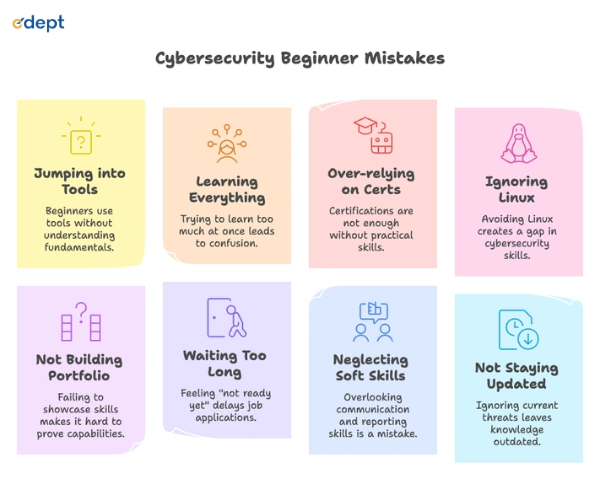
Resist the urge to jump straight into tools. The groundwork always comes first, and that means getting comfortable with networking, operating systems, and core security concepts before anything else. For anyone at the start of a cybersecurity roadmap for beginners, this stage is not optional; it is what everything else builds on. Resources like Professor Messer’s CompTIA materials, Cisco’s Introduction to Cybersecurity, and TryHackMe’s beginner paths make this stage far more approachable than it might initially seem. Give it two to four months of steady, genuine effort, and you will find the later stages considerably easier to navigate.
Step 2: Improve Technical Skills
Once the foundations are genuinely solid, the focus shifts to building real technical depth, and the direction you take here should follow the type of role you are actually aiming for. If SOC or analyst work is the goal, spend your time on log analysis, SIEM tools, and threat intelligence. If penetration testing is the direction, then networking protocols, scripting, and exploitation techniques deserve your attention. Either way, your cybersecurity career roadmap at this point should be built around doing rather than just reading. TryHackMe, HackTheBox, and PentesterLab are all worth your time here, offering structured exercises that sharpen genuine cybersecurity skills for beginners through practice that actually mirrors what the job involves.
Step 3: Participate in Cyber Security Badge Programs
Bug bounty programmes, Capture the Flag competitions, and cybersecurity badge programmes all serve as documented proof of practical ability that a CV simply cannot replicate on its own. Platforms including HackerOne, Bugcrowd, and CTFtime regularly host competitions where beginners can demonstrate real-world skills, build a credible track record, and in some cases earn money whilst learning. For anyone working through a structured cybersecurity roadmap for beginners, this kind of active participation stands out considerably to employers.
Step 4: Start Doing Practical Exercises
Building a home lab is one of the most effective things a beginner can do. A basic setup with virtual machines running different operating systems, network simulation tools, and vulnerable practice environments creates a safe space to experiment with cybersecurity tools and technologies in a way that textbooks and courses simply cannot replicate. Document everything you work through in the lab. The documentation eventually becomes solid portfolio material.
Step 5: Acquire Certifications
Once foundational knowledge and practical experience are in place, pursue certifications strategically. Start with CompTIA Security+ as the most accessible and broadly recognised of the cybersecurity certifications for beginners. From there, follow your target role toward CEH for offensive security paths or cloud-specific certifications for cloud security paths. Certifications confirm knowledge to employers in a standardised and verifiable way.
Step 6: Apply for Internships and Entry-Level Jobs
Start applying before you feel entirely ready. Entry-level cybersecurity jobs are genuinely within reach for anyone with solid foundational knowledge, relevant certifications, and some practical experience from labs and competitions. Tailor each application to highlight specific technical knowledge and hands-on exposure rather than generic statements about interest in the field. Many professionals working in cybersecurity today began in IT helpdesk or general IT support roles and transitioned into security over time.
Salary Expectations in India
Understanding where salaries sit at each stage helps you plan your cybersecurity career roadmap with realistic expectations rather than guesswork.
Entry-Level
Most entry-level cybersecurity professionals in India start out earning somewhere between Rs. 3.5 lakh and Rs. 7 lakh per annum. Roles at this stage typically include SOC Tier 1 analyst, IT security technician, and junior vulnerability assessment analyst. It is worth noting that coming in with certifications already on your profile, particularly CompTIA Security+ or CEH, can make a noticeable difference to the initial offer you receive. For those working through a cybersecurity roadmap for beginners, these credentials are among the more practical investments you can make early on.
Mid-Level
Professionals who have built up three to six years of experience and hold relevant certifications generally find themselves earning between Rs. 8 lakh and Rs. 18 lakh per annum. At this point in the cybersecurity career roadmap, roles tend to include security engineer, penetration tester, incident response analyst, and cloud security specialist. Certifications like CISSP and CCSP are particularly worth pursuing at this stage, as both carry a reputation for attracting meaningful salary premiums with most employers who recognise them.
Senior-Level
Senior cybersecurity professionals, including security architects, red team leads, and chief information security officers, can command salaries ranging from Rs. 20 lakh to Rs. 50 lakh or beyond, depending on the organisation, sector, and area of specialisation. The talent shortage at the senior end of the market is particularly sharp, and that keeps compensation strong for those who reach this point on the cybersecurity career roadmap.
How Can Beginners Grow Faster in Cybersecurity?
Create a Portfolio
Keep a running record of your lab work, CTF write-ups, course completions, and personal projects in a format employers can actually look at. GitHub, a personal blog, and LinkedIn articles all work well for this. In a field where many applicants hold similar certifications, a portfolio of practical work is what sets a candidate apart.
Connect with Industry Experts
LinkedIn, Twitter, and cybersecurity community forums are where a significant amount of real professional knowledge gets shared. Following practitioners, researchers, and thought leaders keeps you informed about what is actually happening in the field. Engaging genuinely with shared content, rather than just consuming it, builds visibility and can lead to mentorship opportunities and job referrals that passive applications rarely produce.
Establish Attainable Objectives
The cybersecurity career roadmap is not something you sprint through; it unfolds over several years, and treating it like a race tends to lead to burnout well before you reach the finish line. Rather than measuring yourself against a vague feeling of being ready, set specific and measurable milestones you can actually track. Finishing a particular course, booking and sitting a certification exam, or working through a defined set of labs all count as meaningful progress. Keep your targets concrete and your expectations realistic, and the journey becomes far more manageable.
Stay Updated with Cybersecurity Trends
Keeping up with the threat landscape is not something you do on top of the job in cybersecurity; it is very much part of it. Things shift quickly, and falling behind on current developments is a real disadvantage both in practice and in interviews. Sources like Krebs on Security, The Hacker News, SANS Internet Storm Centre, and CERT-In advisories are worth following regularly. When you can speak about recent incidents and emerging threats from genuine familiarity rather than last-minute cramming, it comes across in conversations with hiring managers in a way that prepared talking points simply do not.
Join Cybersecurity Communities
There is a limit to how far you can go learning entirely on your own, and communities exist precisely to push past that limit. OWASP local chapters, Reddit threads like r/netsec and r/AskNetsec, Discord servers built around specific tools and certifications, and regional cybersecurity associations all offer something that solo study cannot replicate: direct access to peers, experienced practitioners, and the kind of candid advice that rarely makes it into formal courses. Active participation in these spaces tends to accelerate learning noticeably and opens doors to opportunities that would otherwise be difficult to find.
Attend Workshops
Online courses are valuable, but they have a ceiling. Security conferences and workshops offer concentrated exposure to current research, hands-on learning, and the sort of in-person networking that genuinely moves careers forward. Events like DEFCON, Black Hat, Nullcon, and c0c0n here in India, along with local OWASP chapter meetups, are worth putting on your radar as early in your cybersecurity career roadmap as you reasonably can.
What Challenges Do Beginners Face in Cybersecurity?
Getting started in cybersecurity is genuinely rewarding, but the path comes with a few real hurdles worth understanding before you dive in headfirst.
The field is broader than most beginners expect
- Cybersecurity covers network security, application security, cloud security, forensics, compliance, incident response, and considerably more besides
- Attempting to absorb all of it at once is one of the most common early mistakes, and it rarely leads anywhere productive
- A far better approach is to pick one starting specialisation, build genuine depth in it, and branch outward from a position of actual confidence rather than surface-level familiarity
The practical experience gap is a real and persistent frustration
- Many organisations claim to be open to entry-level candidates, but then list experience requirements that no genuine beginner could reasonably meet
- Waiting for someone to take a chance on you is rarely the answer
- Building a portfolio through labs, CTF competitions, open-source contributions, and personal projects is the most dependable way to demonstrate real capability and close that gap on your own terms
Keeping up with how quickly things change is an ongoing commitment
- The tools, threats, and techniques that matter today look quite different from those of three years ago, and the same will be true three years from now
- This is not a challenge that settles down once you land your first role; it stays with you throughout your career
- The professionals who build lasting careers in cybersecurity are those who treat continuous learning as a regular professional habit rather than something they switch off once they are through the door.
How edept’s B.Voc. in Cybersecurity Prepares You for Real-World Roles
Following a structured cybersecurity roadmap for beginners is one thing. Having a degree programme that actively builds on it is another. edept’s B.Voc. in Cybersecurity and Digital Forensics, delivered in partnership with Shree L. R. Tiwari College of Engineering under Mumbai University, is designed to take you from foundational knowledge to genuine industry readiness. Here is how it does that:
- Deloitte-Certified Curriculum Built Around Real Skills: Every module is authored and quality-checked by the Deloitte Learning Academy, the same content used to train their own professionals globally. Rather than teaching purely to exams, the programme focuses on cybersecurity skills for beginners that translate directly into the workplace, covering what the job actually requires from day one.
- IBM-Guided Live Industry Projects: This is not a classroom simulation. Through the IBM Internship Programme, students work on live project briefs guided by IBM and industry experts. For anyone mapping out a cybersecurity career roadmap, this kind of hands-on, real-world exposure is exactly what separates candidates in competitive job markets.
- Hands-On Exposure to Cybersecurity Tools and Technologies: The programme gives students access to IBM’s industry-grade courseware and a dedicated Cyber Security and Blockchain Centre of Excellence on campus. Students gain practical familiarity with cybersecurity tools and technologies in active use across the industry, rather than studying them in theory alone.
- Industry Certifications That Carry Weight: On successful completion, students earn a certification issued directly by Deloitte, along with a joint IBM and NASSCOM co-certification for project work. These are among the most credible cybersecurity certifications for beginners to hold when entering the job market, carrying recognition that extends well beyond the campus.
- Global Industry Immersion Programme: Through a structured three-step industry journey, students progress from foundation immersion through to leading a global capstone project. Working alongside peers from institutions across India, and presenting to executive-level audiences, students build the kind of portfolio and professional network that genuinely strengthens their prospects for entry-level cybersecurity jobs.
- A Recruiting Network of 300+ Organisations: The programme is backed by a placement network of over 300 recruiting organisations, supported by a dedicated Career Development Cell. For graduates ready to move from a cybersecurity roadmap for beginners into their first professional role, this access to established industry connections makes a meaningful practical difference.
Conclusion
The cybersecurity field in 2026 represents one of the most genuinely compelling career opportunities available to anyone prepared to put in the work to build real skills. The World Economic Forum’s Future of Jobs Report 2025 places networks and cybersecurity among the top three fastest-growing skills through 2030, with Security Management Specialists ranking among the top five fastest-growing roles globally. That is not a niche observation. It is a structural signal about the direction the economy is heading and what it needs from the people working within it.
The cybersecurity roadmap for beginners outlined in this guide is not a shortcut. It is a realistic framework for building the kind of capability that the field genuinely rewards. Cybersecurity skills for beginners take time and consistency to develop. The cybersecurity certifications for beginners that carry real weight require serious study to earn. Entry-level cybersecurity jobs go to candidates who can demonstrate practical capability alongside theoretical knowledge. Start with the fundamentals, build steadily, get certified, and apply while you are still learning. The industry needs people who genuinely want to do this work, and 2026 is a very good time to begin.
Related Links: